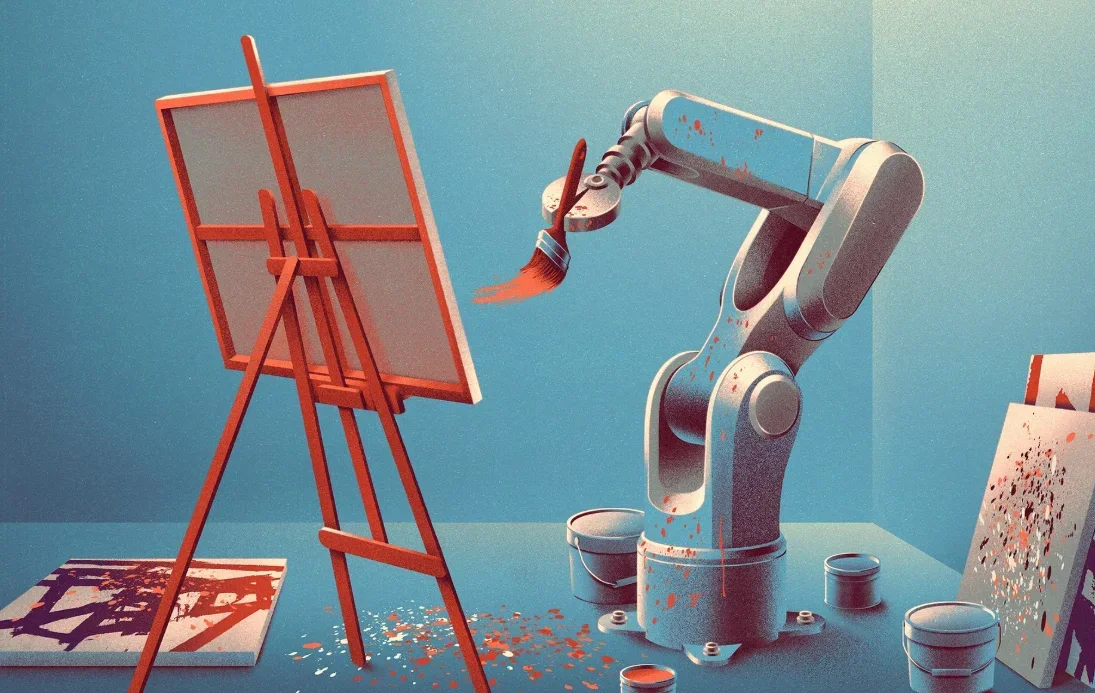
A recent study reveals that the apparent creativity in AI image generators, such as DALL-E and Stable Diffusion, is not the result of true "intelligence", but rather due to structural properties in the diffusion models. These models are designed to recreate images from their training data via a de-noising process, but they produce new images because the technical constraints imposed on them unintentionally drive them to innovate.
The researchers explain that creativity arises from two key features of these models: "localization," which makes them work on small parts of the image at a time, and "transient variation," which maintains the coherent structure of the image at any modification. This interaction leads to the generation of new patterns that resemble a "living system" that grows spontaneously.
The study, presented at the International Conference on Machine Learning 2025, emphasizes that creativity in these models is deterministic rather than random, which could change our view of the future of AI and even the concept of human creativity itself.