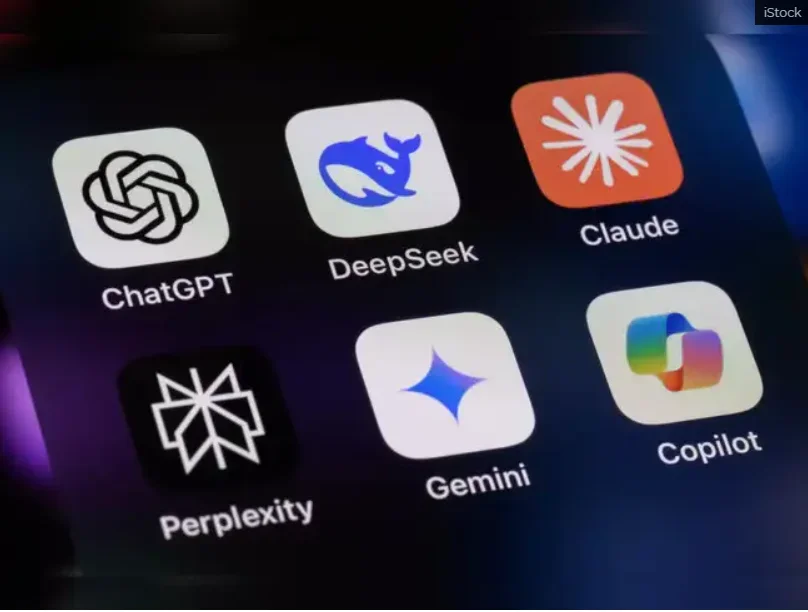
During the first week of August 2025, AI tools witnessed significant developments, most notably the rise of new tools that strongly compete with ChatGPT such as xAI's Grok, Monica's Manus, and models such as Claude, DeepSeek, and Gemini. These tools now offer intelligent text and video interaction capabilities, and have even surpassed GPT in some specific tasks such as advanced reasoning and multitasking. Grok 4, for example, is a model that outperforms GPT in reasoning tests and is able to act as autonomous agents that perform tasks automatically without direct human intervention.
In the multimedia space, DeepMind launched Veo and Flow models that produce 4K videos with built-in audio and music to support Google's Gemini platform. At the recent I/O conference, Google also added enhancements to Gemini 2.5 to become more contextually aware, with tools like Inbox Cleanup, Beam, and Agentic Shopping that enhance the user's ability to organize and interact with their information through AI.
On the advanced technical side, we saw the release of tools to integrate AI with quantum computing such as D-Wave's Quantum AI toolkit, which allows developers to create AI applications based on quantum data within the PyTorch framework, opening a new door to revolutionize computational performance. Mistral has also released open-source models such as Magistral for logic and analysis and Devstral for software developers.
On the regulatory front, Europe has begun implementing a new code of conduct that obliges companies developing powerful AI models such as GPT and Gemini to have independent risk assessments, legal safeguards, and transparency in training sources. The move comes amid growing concerns about privacy breaches, especially after an IBM report that confirmed that 13% of organizations experienced AI-related data breaches over the past year.
In terms of statements by industry leaders, DeepMind's Demis Hassabis emphasized that AI will change the world ten times faster than the Industrial Revolution, predicting the emergence of general intelligence in 5 to 10 years if it is handled responsibly. In contrast, OpenAI President Brett Taylor expressed the difficulty of keeping up with the acceleration of progress in this field even within the leading companies themselves, describing what is happening as a "crazy boom".
In terms of real-world applications, a new tool in the medical field is beginning to rely on small amounts of data to teach itself to read medical images, reducing costs and increasing the speed of diagnosis. Initiatives have also emerged in education to promote the responsible use of AI among students, with advice to disclose its use, include it in the curriculum, and educate students on the ethics of use.
These developments indicate that we have entered a new phase of the AI race, in which ChatGPT is no longer the only player, but the market is full of models of diverse use and specialization, integrated with tools for video production, quantitative analysis, and medical diagnosis, with a growing need for a regulatory and ethical framework to control this accelerated progress.