Segment
Description
️ 🖼Tool name:
Segment
🔖 Tool Category:
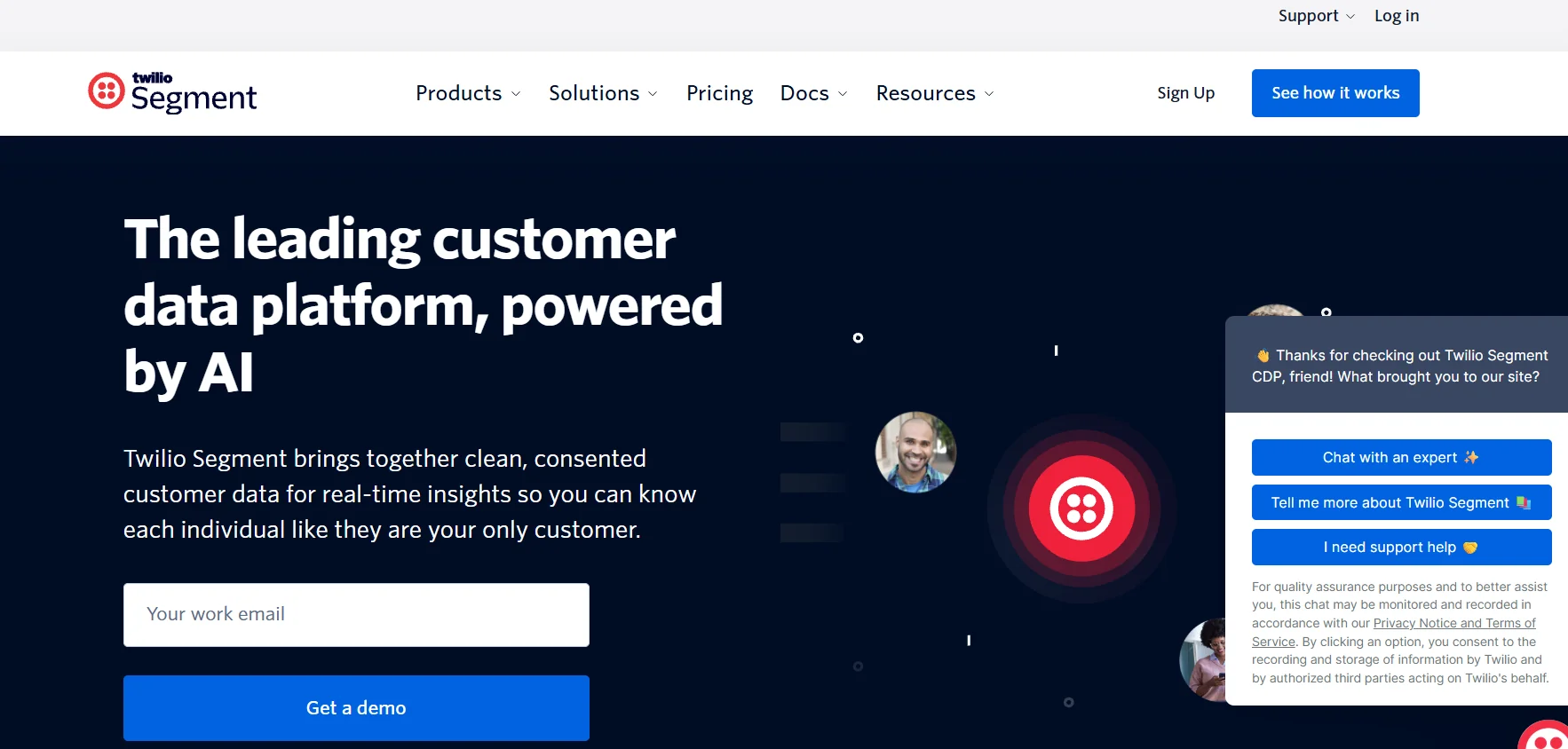
An advancedCustomer Data Platform (CDP) used to collect, consolidate, and optimize customer data from multiple sources such as web, apps, email, etc. and route this data to analytics, marketing, and warehousing tools to enhance decision-making and improve customer experiences.
️ ✏What does it do?
Segment provides an integrated environment to collect customer data and behavior across websites, apps, and other digital touchpoints using a single interface and unified API, then cleans and standardizes this data and routes it to more than 750 tools and destinations such as analytics tools, data warehouses, and marketing systems, enabling companies to gain a unified view of customers and improve their marketing strategies.
⭐ What does it actually offer based on user experience?
User experiences indicate that Segment enables companies to unify data across channels and better understand customer behavior, has a large library of integrations with multiple platforms, and helps build unified customer profiles to facilitate campaign personalization and improved targeting, although some users note initial learning challenges and the complexity and high cost of setting up some advanced plans.
🤖 Does it include automation?
Yes, Segment includes automation capabilities to automatically manage the flow of data from all supported sources, collecting, organizing, transforming, and sending data to selected destinations without ongoing manual intervention, automating the creation of standardized customer profiles, and getting data ready for use in analytics tools or campaigns.
💰 Pricing Model:
The pricing model is based on a paid subscription that varies according to the volume of data, the number of visits, and the needs of the organization, and the plans start from a free level to Team, Business, and Advanced CDP plans whose prices are determined by the volume of use and the needs of the organization, and obtaining the final price requires contacting the sales team.
🆓 F ree plan details:
Segment offers aFree plan that allows you to connect two data sources, track up to 1000 visitors per month, send data to a single data store, and access hundreds of basic integrations, enabling startups or small businesses to start consolidating data with no upfront cost.
💳 Paid plans details:
Paid plans include the Team plan starting at around $120 per month, which offers unlimited data sources and tracking of up to 10,000 visitors per month with higher registration capacity and public API capabilities, while higher plans (Business/CDP) come with advanced data consolidation capabilities, information governance, building unified customer profiles, permission control, and wider customization based on usage volume, with pricing determined after discussing the organization's needs.
🧭 How to access the tool:
Segment can be accessed via a web browser after creating an account and logging in to configure the sources (Sources) and destinations (Destinations) to which you want to direct customer data, and the SDK and API libraries can be used in sites and applications to capture data directly and send it to the unified system.
🔗 Link to the demo or official website:
https://segment.com/