Description

️ Tool Name: 🖼
Optro

Tool Category: 🔖
Governance, Compliance, and Policies
Business and Operations Management
Data and Analytics

️ What does this tool offer? ✏
Optro offers an advanced Governance, Risk, and Compliance (GRC) management platform powered by artificial intelligence to help organizations monitor risks, improve compliance processes, and strengthen corporate oversight. The platform consolidates data and processes related to risks and regulatory controls into a single, interconnected system, allowing companies to manage complex compliance environments more efficiently.
The platform includes components such as the Connected Risk Platform and Optro AI, which analyzes data and provides recommendations, as well as integration with various systems via Integrations and APIs, along with analytical tools that help transform data into actionable insights.

What does it actually offer based on user experience? ⭐
When using Optro, regulatory systems and data are linked within the platform, allowing the tool to automatically analyze risks and regulatory controls. The platform displays analysis results in the form of audit-ready Control Tests and alerts regarding issues that have been detected or addressed.
It also provides actionable recommendations to help teams resolve issues quickly, while displaying progress metrics such as the number of resolved issues or tests requiring review. This approach enables organizations to continuously monitor compliance and risk processes rather than relying on traditional manual audits.

Does it include automation? 🤖
Yes, Optro leverages artificial intelligence and automation to perform control testing, analyze risk-related data, and provide recommendations on appropriate actions. The platform can also perform continuous analytics to help organizations detect potential issues early and improve decision-making in governance and compliance.

Pricing Model: 💰
Optro uses a custom pricing model based on direct communication with the sales team. Specific prices or fixed subscription plans are not listed on the website; instead, pricing is determined based on the organization’s needs, data volume, and the number of users who will utilize the platform.
A quote is typically provided after a platform demo and an understanding of the client’s requirements, allowing for a solution tailored to each company’s specific work environment.

🆓 Free Plan Details:
The platform does not offer a publicly advertised free plan for immediate use. Instead, interested users can request a demo of the platform to learn about its features and how it works before deciding to subscribe.

Paid Plan Details: 💳
There are no fixed-price paid plans published on the website. Optro relies on custom pricing determined after contacting the sales team. During this process, the organization’s needs are assessed—including the number of users, the complexity of the governance and risk environment, and the volume of data to be analyzed—and a quote tailored to those requirements is then provided.

How to Access the Tool: 🧭
Optro can be accessed through the platform’s official website, where users can explore information about the platform and its features. To get started with the tool, users are directed to the “Get Started” or “Schedule a Demo” option, where they can book a demo to learn about the platform and receive a customized quote tailored to their organization’s needs.

Demo link or official website: 🔗
https://optro.ai/

Pricing Details

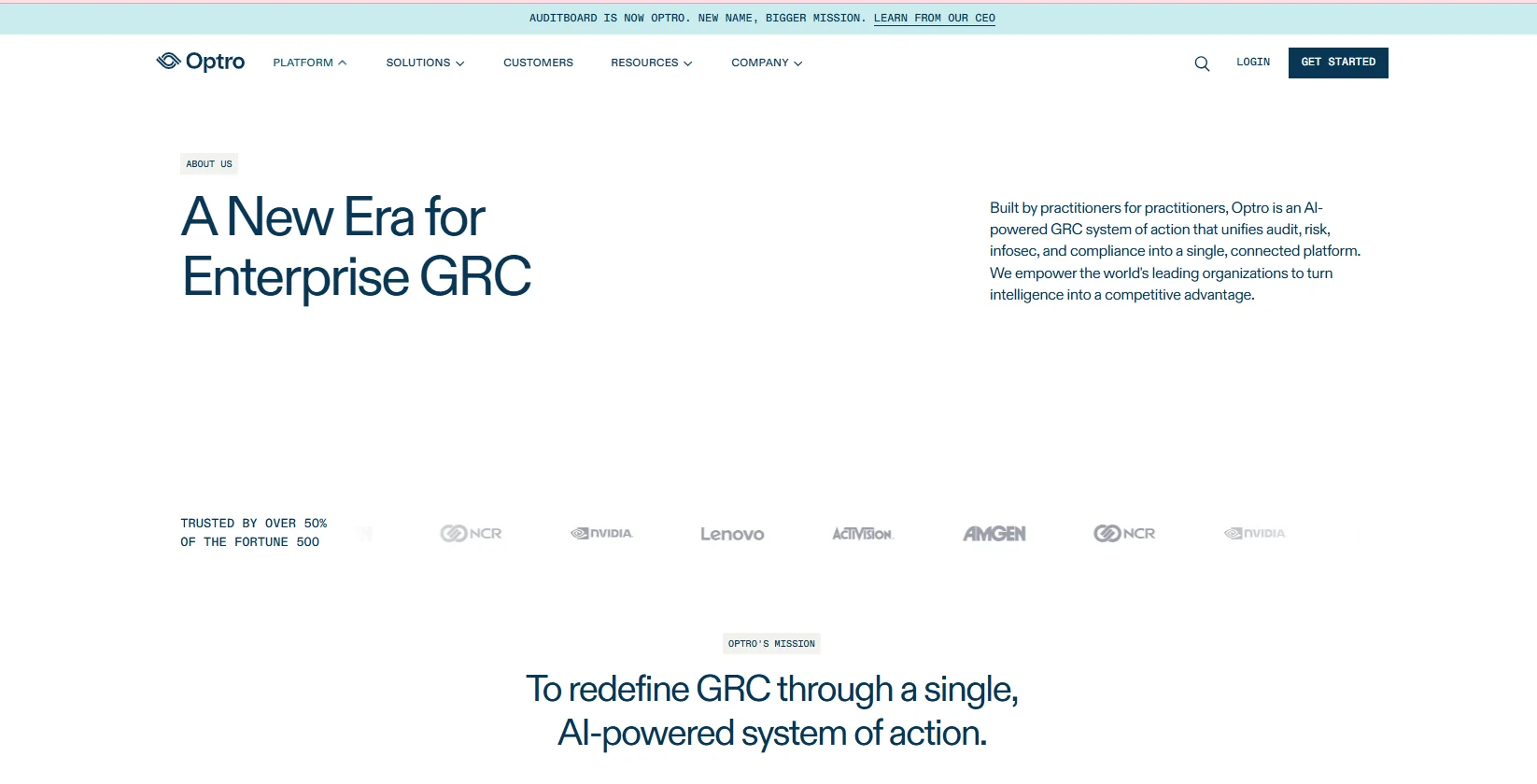
This interface does not display any direct pricing or specific plan details; instead, the Optro platform clearly relies on a custom pricing model based on direct sales engagement (Demo-Based Pricing), where users are strategically guided toward buttons such as “GET STARTED” and “SCHEDULE A DEMO” instead of explicitly displaying prices. This approach reflects the platform’s positioning as an advanced enterprise solution aimed at large companies, rather than a consumer product based on fixed subscriptions. The absence of a price here is not a shortcoming, but rather an intentional marketing element that reinforces perceived value and gives the sales team an opportunity to tailor the offer based on the organization’s size, number of users, and the complexity of its GRC environment. Messages such as “TRUSTED BY OVER 50% OF THE FORTUNE 500” also support this approach, as pricing is implicitly linked to the level of large enterprises, helping the user understand that the price is not fixed but tailored to their needs. This model also allows for pricing flexibility and increases the likelihood of conversion by offering a customized proposal to each client, rather than losing potential customers due to a fixed price that may not suit everyone. Consequently, pricing shifts from a static offering to a negotiation tool within the sales experience itself.