MindBridge
Features
- Detects unusual patterns in financial transactions, such as duplicate invoices
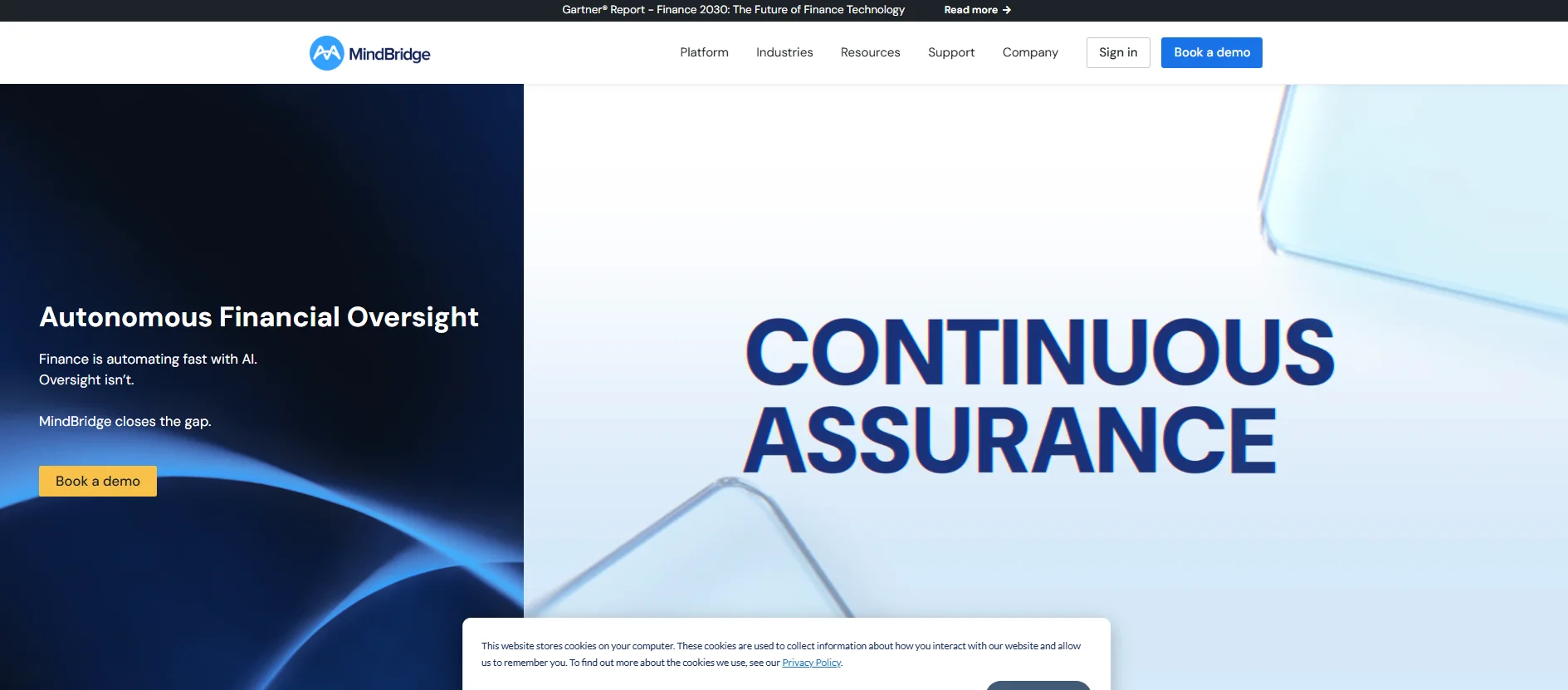
- Monitors financial operations continuously through Autonomous Financial Oversight
- Categorizes risks as high, medium or low
- Explains each analytical finding
- Presents results in a simplified visual format
- Analyzes large volumes of financial data with machine learning
- Offers learning resources through a blog, knowledge base and MindBridge Academy
Pricing Details
Instead of displaying prices explicitly. This approach reflects a clear focus on targeting large companies and organizations, where pricing is customized based on data volume, usage type, and the number of users. The presence of a form containing fields such as “Company name,” “Job title,” and “Revenue Dropdown” indicates that pricing is tied to specific business factors, rather than a fixed price for everyone. This approach is used strategically to elevate the product’s perceived value in the user’s mind, making them feel that the tool is not just an ordinary service but a customized enterprise solution. It also allows the sales team to directly influence the purchasing decision during the demo. Additionally, the absence of a price creates a kind of “intentional ambiguity” that prompts curious or genuinely interested users to take an extra step (booking a demo), thereby increasing the quality of high-intent leads. Thus, it’s clear that MindBridge relies on a flexible, customized pricing model determined after understanding the client’s needs, which reinforces its position as a high-value, professional product aimed at businesses rather than individuals.