AI Bosala

العربية

Brand Guidelines

Tools in Brand Guidelines

100 tools

Filter and sort these tools

  1. Kontentino

    New this week

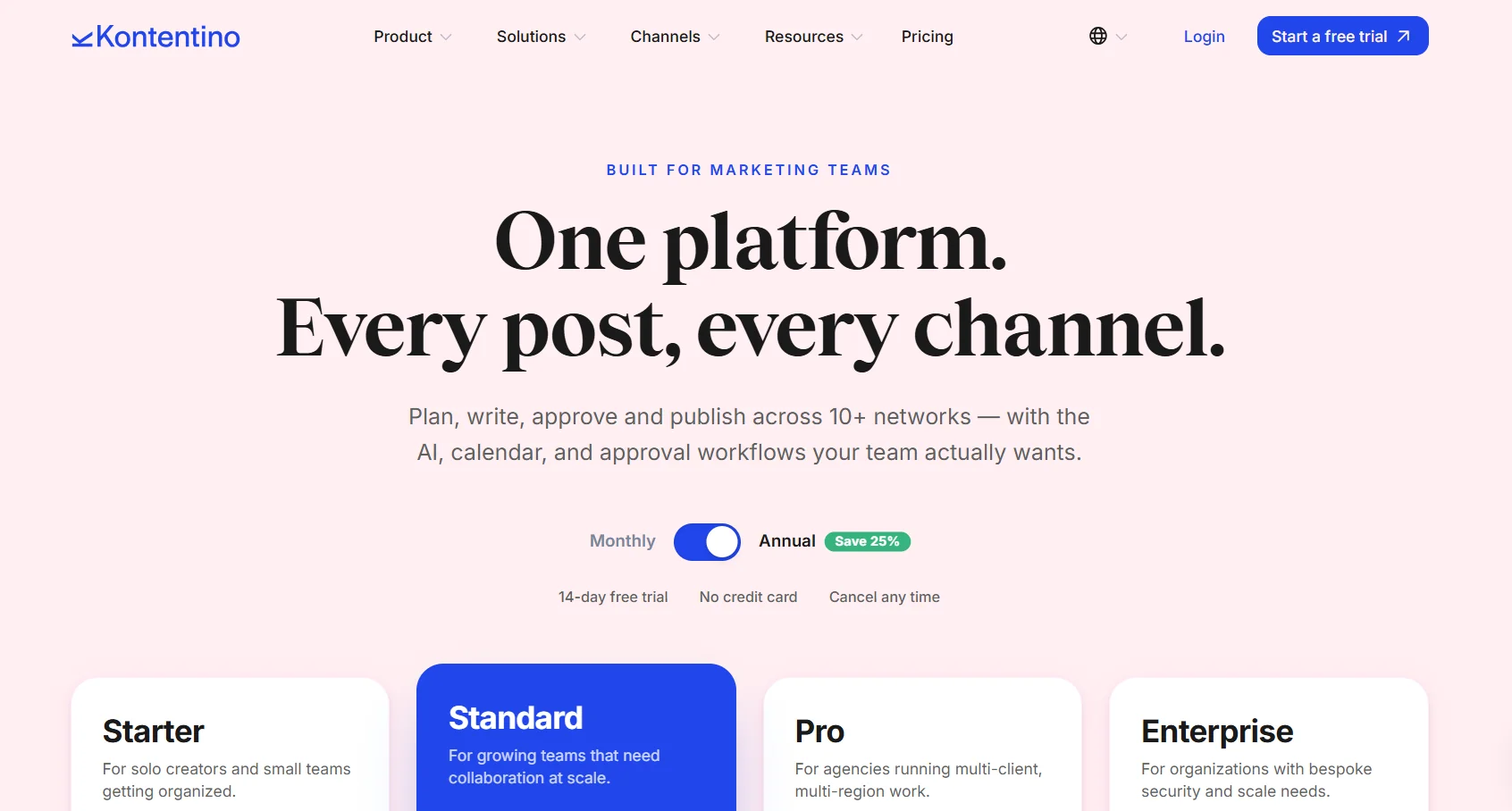
    Kontentino is a social media management platform designed for marketers, content creators, agencies, and brands, helping them plan, write, review, approve, schedule, publish, and analyze the performance of their content—all from one place. The platform supports content management across more than 10 social networks and provides AI tools for creating captions, translating content, generating images, and optimizing text, as well as content grading, approval workflows, and collaboration tools for team members and clients. It also offers brand management capabilities, content standardization across global and local markets, performance analytics, and competitor comparisons, along with human technical support and a mobile app. The platform offers plans tailored to freelance content creators, small teams, agencies, and large organizations.

  2. VistaCreate

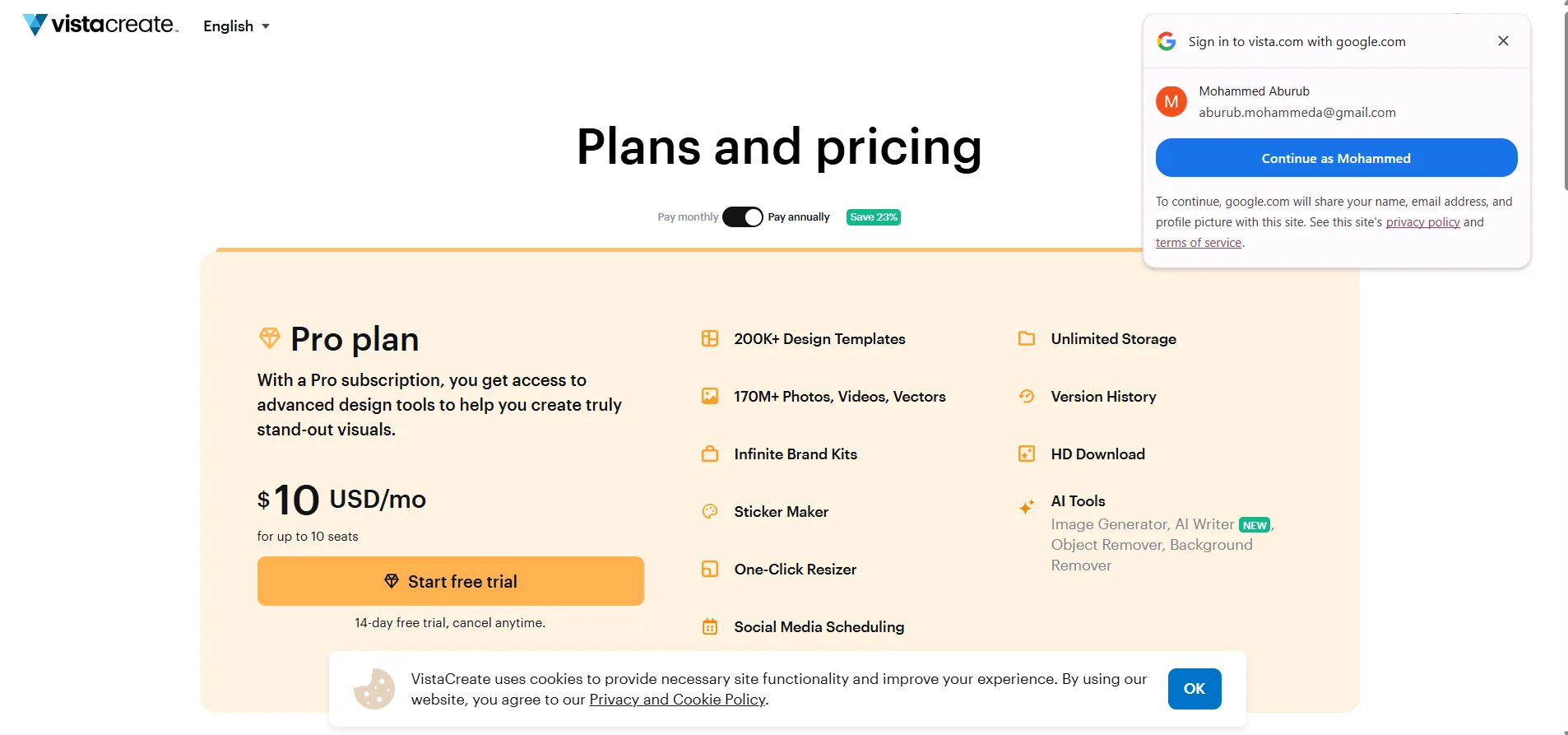
    VistaCreate is a graphic design tool that helps users easily create professional designs using a vast library of ready-made templates and built-in AI tools. The platform allows users to turn their ideas into complete visual content by selecting a suitable template, then customizing it by adding visual elements, editing text, and refining the design before publishing or printing it.

  3. Lytho

    Lytho is a SaaS (cloud) platform designed to manage "creative operations" - meaning creative work coordination, brand asset management (images, logos, videos, documents...), process mapping, and end-to-end project tracking.

  4. Visme

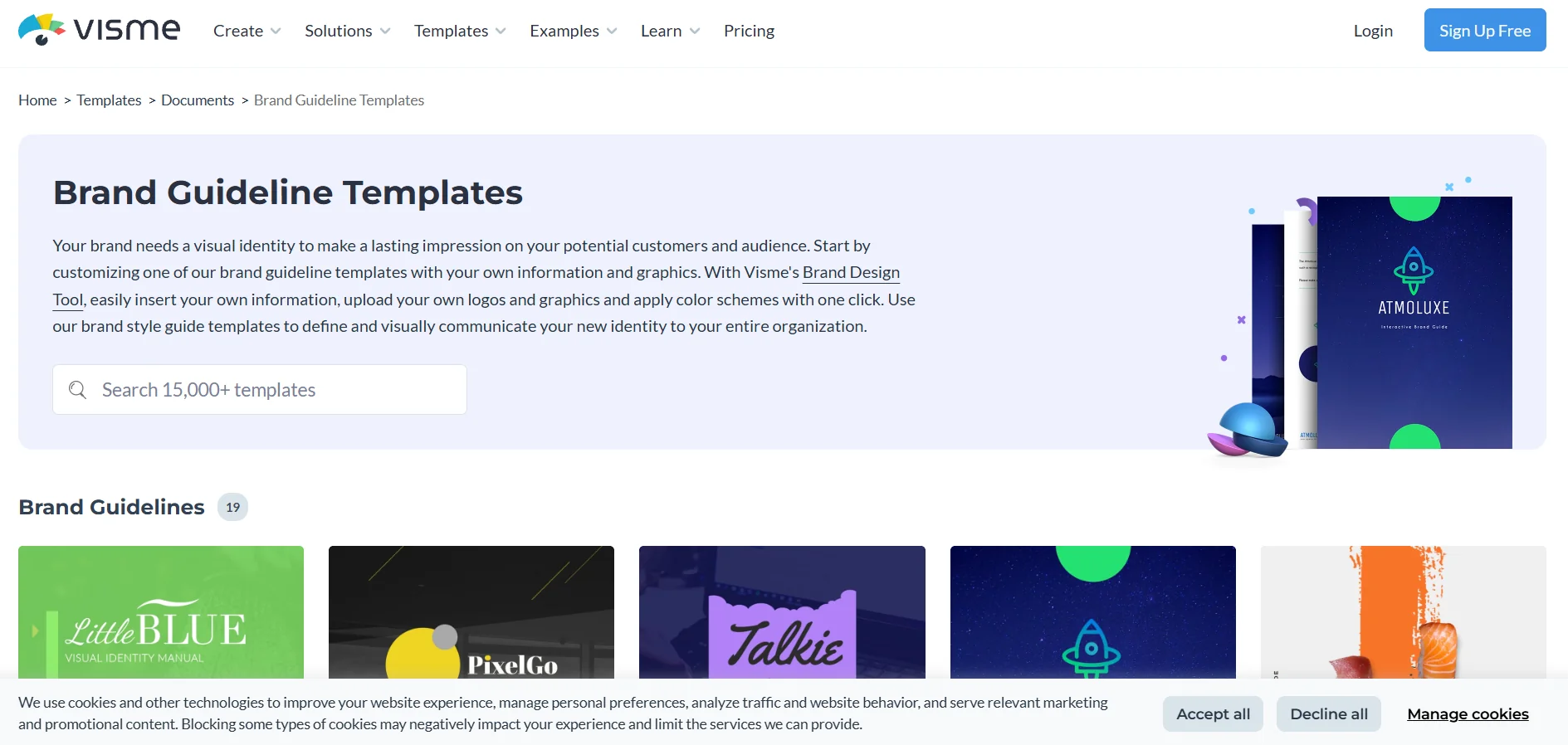
    Visme is a cloud-based design/display tool that enables you to create documents, presentations, infographics, and flexible documents - without needing to be a professional designer. In addition, Visme provides a library of ready-made Brand Guidelines/style-guide templates to get you started.

  5. Figmalate

    Figmalate This template is a ready-made file in Figma that is used to build a "Brand Identity Manual" - a document that brings together all the components of an identity: Logo, Brand Colors (Color Palette), Fonts (Typography), Logo/Color/Font Usage Rules, Images, and possibly also Brand Tone/Brand Voice/Messages.

  6. RelayThat

    RelayThat is a cloud-based design-automation platform used to create images and visual content (ads, social media posts, banners, covers, ...) quickly and without the need for advanced design skills.

  7. Zeroheight

    zeroheight is a cloud platform dedicated to documenting "system design/interface/identity/branding" - everything design-system related: Colors, fonts, components, guidelines, code, and design assets - in one centralized place

  8. Brandpad

    Brandpad is a cloud-based platform where you can create a complete Brand Guidelines / Style Guide for a brand - including logo, colors, fonts, images, identity usage rules, assets (logos, icons, ...), and everything related to the visual identity of the organization or project.

  9. Anyword AI

    Anyword is an AI-powered platform for creating and optimizing content, designed for marketing and growth teams (GTM Teams) focused on content performance and maintaining brand identity. The platform enriches every prompt used with AI models or agents with data validated through A/B testing and brand context.

  10. Typeface

    Typeface is an enterprise marketing platform powered by Agentic AI that focuses on coordinating people, agencies, and systems to run large-scale marketing campaigns while maintaining brand context and consistency. The platform has evolved into the Typeface Orchestration Engine, which brings together brand intelligence, smart agents, and campaign performance data within a single system, enabling a seamless transition from planning and content creation to execution and continuous optimization. (Typeface)

  11. Hypotenuse AI

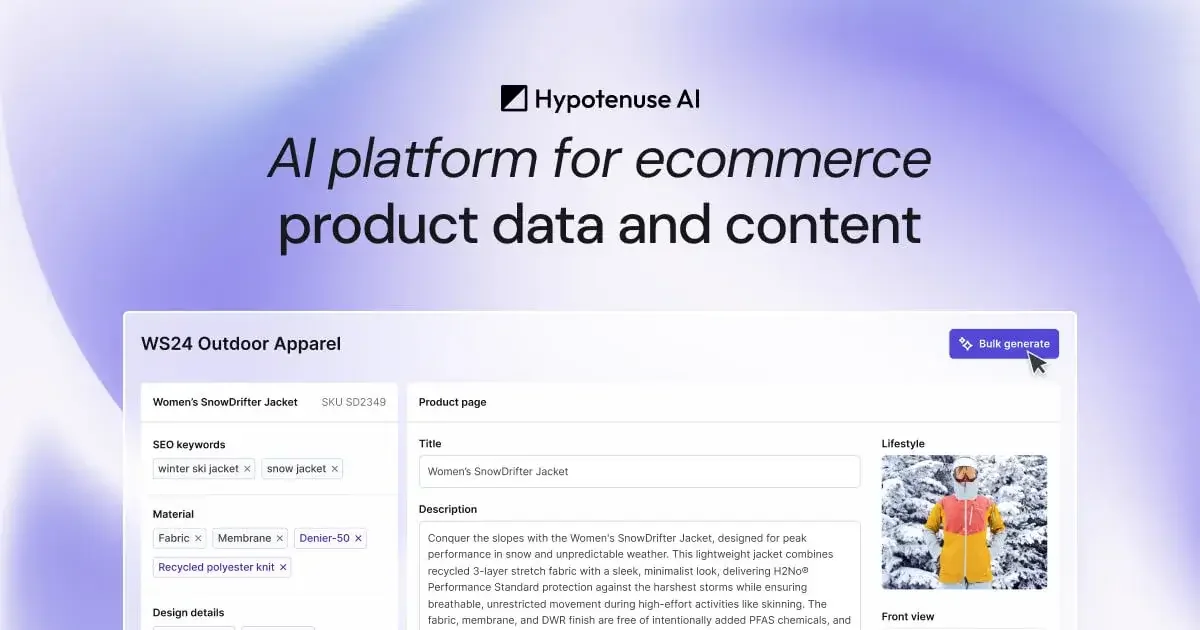
    Hypotenuse AI is an AI-powered product information management (PIM) platform for e-commerce designed to manage and enrich product data, create content, optimize images, and monitor product performance within a unified workflow. The platform enables the creation of thousands of search-engine-optimized product titles and descriptions that reflect the brand’s voice, and automatically enriches product data by filling in missing attributes and standardizing data using sources such as images, web pages, UPCs, and specification sheets, as well as extracting specifications, colors, and other product details from images; applying tags and classifications based on custom taxonomies or classifications compatible with Google and Amazon; and standardizing formats and correcting errors. It also enables content creation and optimization through product descriptions, titles, meta descriptions, category pages, blog posts, and more, with the ability to apply brand guidelines, custom formats, and localize and translate content into over 40 languages. The platform offers AI-powered product image optimization, including background replacement, background and shadow generation, cropping and resizing with smart fill, resolution enhancement, detail improvement, noise reduction, and the creation of product images within realistic contexts. It also enables monitoring of product page performance across Google, Amazon, Walmart, and others; keyword discovery and suggestions; and verification of content compliance with brand guidelines, legal requirements, and channel requirements prior to publication. The platform supports collaborative workflows, import and export via CSV and XLSX, direct publishing to websites and sales channels, and custom integrations with PIM, ERP, and e-commerce systems. It can be used as a central system for managing product content, attributes, and images for teams that do not use a PIM or DAM system, while teams that do use these systems can connect Hypotenuse AI to them to enrich data, create and verify content, and prepare images in a shared workspace. The platform notes that it imposes no fixed limit on the number of SKUs and works with retailers and distributors managing anywhere from a few thousand to millions of SKUs, with collaborative workflows designed to handle large catalogs. Its tools include HypoChat for instant web search, HypoArt for text-to-image conversion, and tools for summarization, rewriting, and content generation, as well as product content tools such as the Product Description Generator, Category Description Generator, Meta Title Generator, Meta Description Generator, and Product Image Description Generator, along with features like AI Product Tagging, AI Attribute Mapping, AI Bulk Translate, AI Brand Voice, Bulk Content Generation, Product Data Enrichment, Product Categorization, SEO Monitoring, and the AI PIM Solution. The platform also supports integrations with Webflow, WordPress, Wix, Shopify, Salsify, Amazon, Walmart, WooCommerce, Target, Stibo, BigCommerce, Plytix, and PIMcore.