Features
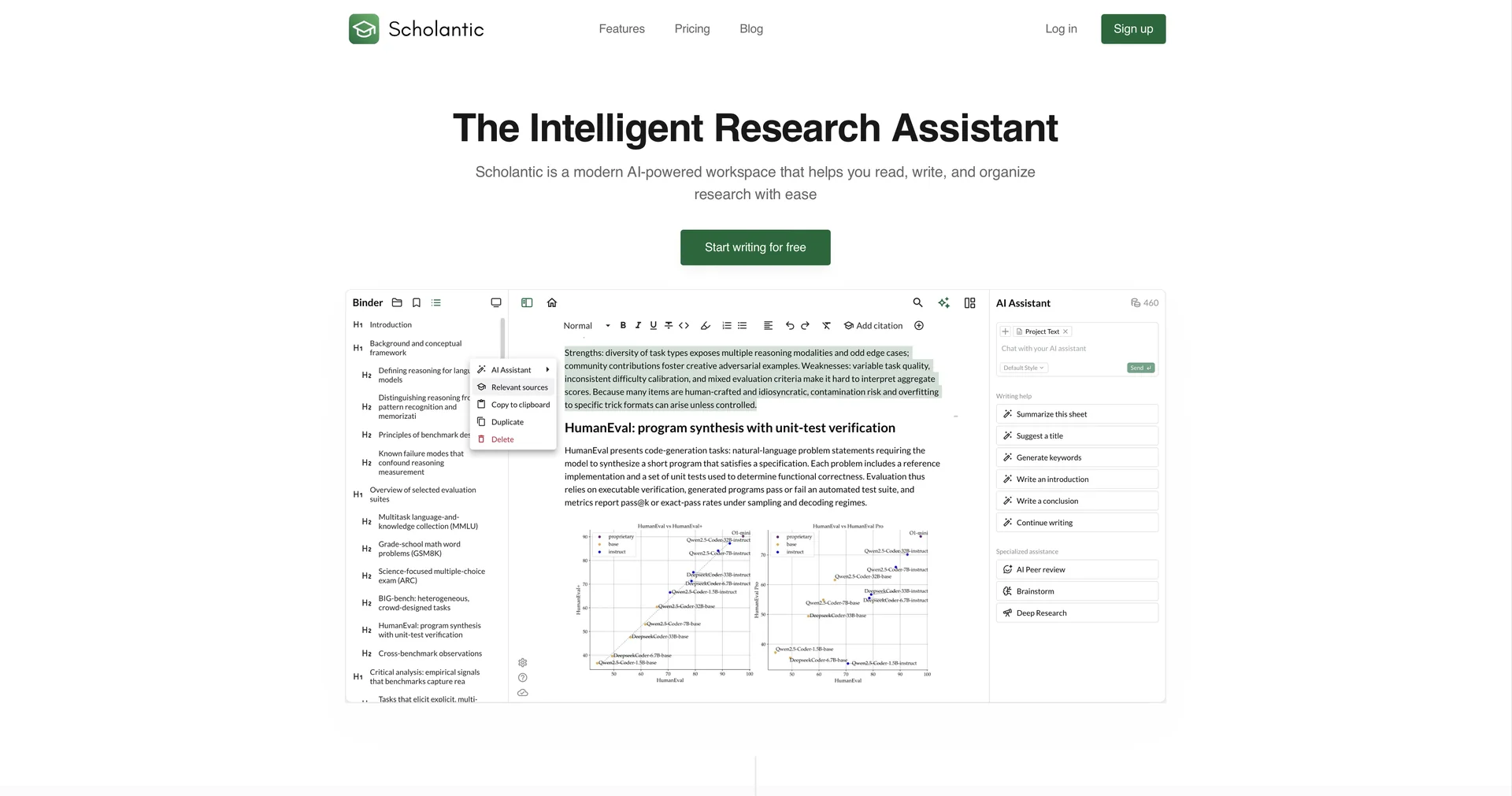
- Distraction-free editor with context-aware suggestions per paper section
- Synthesizes scholarly literature to help find research gaps
- AI peer review of clarity, evidence alignment and structure
- Finds, verifies and inserts citations in APA, MLA, Chicago and more
- Built-in plagiarism checks and documentation of AI use
- Translates academic concepts into fluent academic English
- Brainstorm tool that generates a full outline
Pricing Details
💵 Pricing & Plans (February 2026 Status) Scholantic offers tiered access based on the depth of research required: Plan Price (Monthly) Key Features Basic (Free) $0 Basic AI editor; Limited research queries; Standard citation support. Scholar ~$12.00 Unlimited writing assistance; Full access to research synthesis; Advanced grammar. Research Pro ~$25.00 AI Peer Review; Bulk PDF analysis; Team collaboration; Priority server access. 🎁 How to Get Started: Visit scholantic.com. Start by creating a project and typing a brief description of your thesis. Use the "Brainstorm" feature to generate a full outline, then use the "Research" tool to populate it with credible citations.