AI Bosala

العربية

AI Tools in Digital Asset Management

213 results

Open the Digital Asset Management category page

  1. Hypotenuse AI

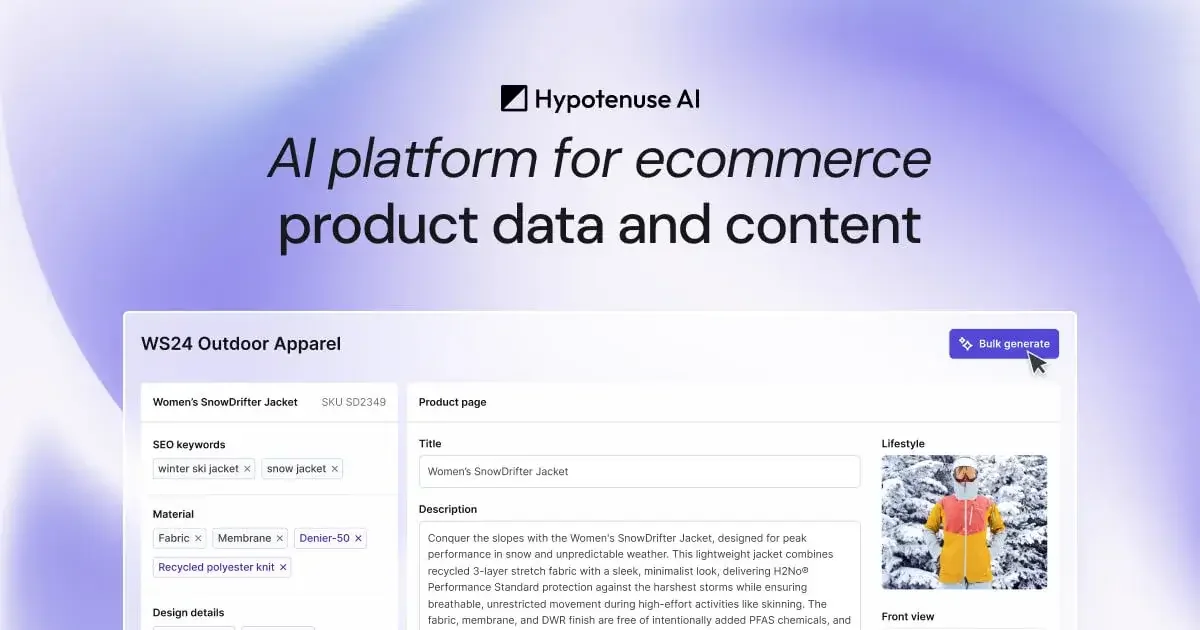
    Hypotenuse AI is an AI-powered product information management (PIM) platform for e-commerce designed to manage and enrich product data, create content, optimize images, and monitor product performance within a unified workflow. The platform enables the creation of thousands of search-engine-optimized product titles and descriptions that reflect the brand’s voice, and automatically enriches product data by filling in missing attributes and standardizing data using sources such as images, web pages, UPCs, and specification sheets, as well as extracting specifications, colors, and other product details from images; applying tags and classifications based on custom taxonomies or classifications compatible with Google and Amazon; and standardizing formats and correcting errors. It also enables content creation and optimization through product descriptions, titles, meta descriptions, category pages, blog posts, and more, with the ability to apply brand guidelines, custom formats, and localize and translate content into over 40 languages. The platform offers AI-powered product image optimization, including background replacement, background and shadow generation, cropping and resizing with smart fill, resolution enhancement, detail improvement, noise reduction, and the creation of product images within realistic contexts. It also enables monitoring of product page performance across Google, Amazon, Walmart, and others; keyword discovery and suggestions; and verification of content compliance with brand guidelines, legal requirements, and channel requirements prior to publication. The platform supports collaborative workflows, import and export via CSV and XLSX, direct publishing to websites and sales channels, and custom integrations with PIM, ERP, and e-commerce systems. It can be used as a central system for managing product content, attributes, and images for teams that do not use a PIM or DAM system, while teams that do use these systems can connect Hypotenuse AI to them to enrich data, create and verify content, and prepare images in a shared workspace. The platform notes that it imposes no fixed limit on the number of SKUs and works with retailers and distributors managing anywhere from a few thousand to millions of SKUs, with collaborative workflows designed to handle large catalogs. Its tools include HypoChat for instant web search, HypoArt for text-to-image conversion, and tools for summarization, rewriting, and content generation, as well as product content tools such as the Product Description Generator, Category Description Generator, Meta Title Generator, Meta Description Generator, and Product Image Description Generator, along with features like AI Product Tagging, AI Attribute Mapping, AI Bulk Translate, AI Brand Voice, Bulk Content Generation, Product Data Enrichment, Product Categorization, SEO Monitoring, and the AI PIM Solution. The platform also supports integrations with Webflow, WordPress, Wix, Shopify, Salsify, Amazon, Walmart, WooCommerce, Target, Stibo, BigCommerce, Plytix, and PIMcore.
  2. Pics.io

    Pics.io is an advanced digital asset management platform (Digital Asset Management – DAM) that brings together images, videos, audio files, documents, and design files into a central library, helping teams find, organize, manage, and share digital assets. The platform can integrate with Google Drive and Amazon S3, allowing companies to use their existing storage infrastructure instead of relying on the platform’s proprietary storage. Pics.io offers advanced search and natural-language search, filters, a folder tree, and previews for more than 236 file types, as well as the ability to save recurring searches, as well as version management—enabling users to replace one asset with another while preserving existing links, visually compare versions, lock approved assets, set expiration dates, and maintain a complete audit trail of changes with the ability to revert. It also provides Approval Workflows and Commenting for reviewing designs and files, with comments on images and videos, time-stamped comments, mentions of team members, and notifications via email and Slack, as well as “Approve” and “Request Changes” statuses and due dates. Sharing Portals provide branded sharing portals, the ability to automatically convert files upon download to the required sizes and formats, public or password-protected portals, and links with expiration dates and terms of use. It also includes Expiration + Analytics for managing asset usage rights, automatically deactivating links and portals when rights expire, sending alerts, and providing audit trails and bulk cleanup of expired files. Inbox Portals allows you to collect files from contributors via upload links without requiring an account, while enforcing metadata fields such as tags, rights, and campaign, and automatically routing files to groups and owners. It also includes Roles + Permissions to manage viewing, editing, and sharing permissions, as well as apps and integrations with Google Drive, Amazon S3, Dropbox, Figma, Slack, Salesforce, HubSpot, Zoho, Adobe Creative Cloud, Zapier, Google Workspace, Monday.com, ClickUp, Trello, Shopify, and WordPress.

  3. GPT Mate

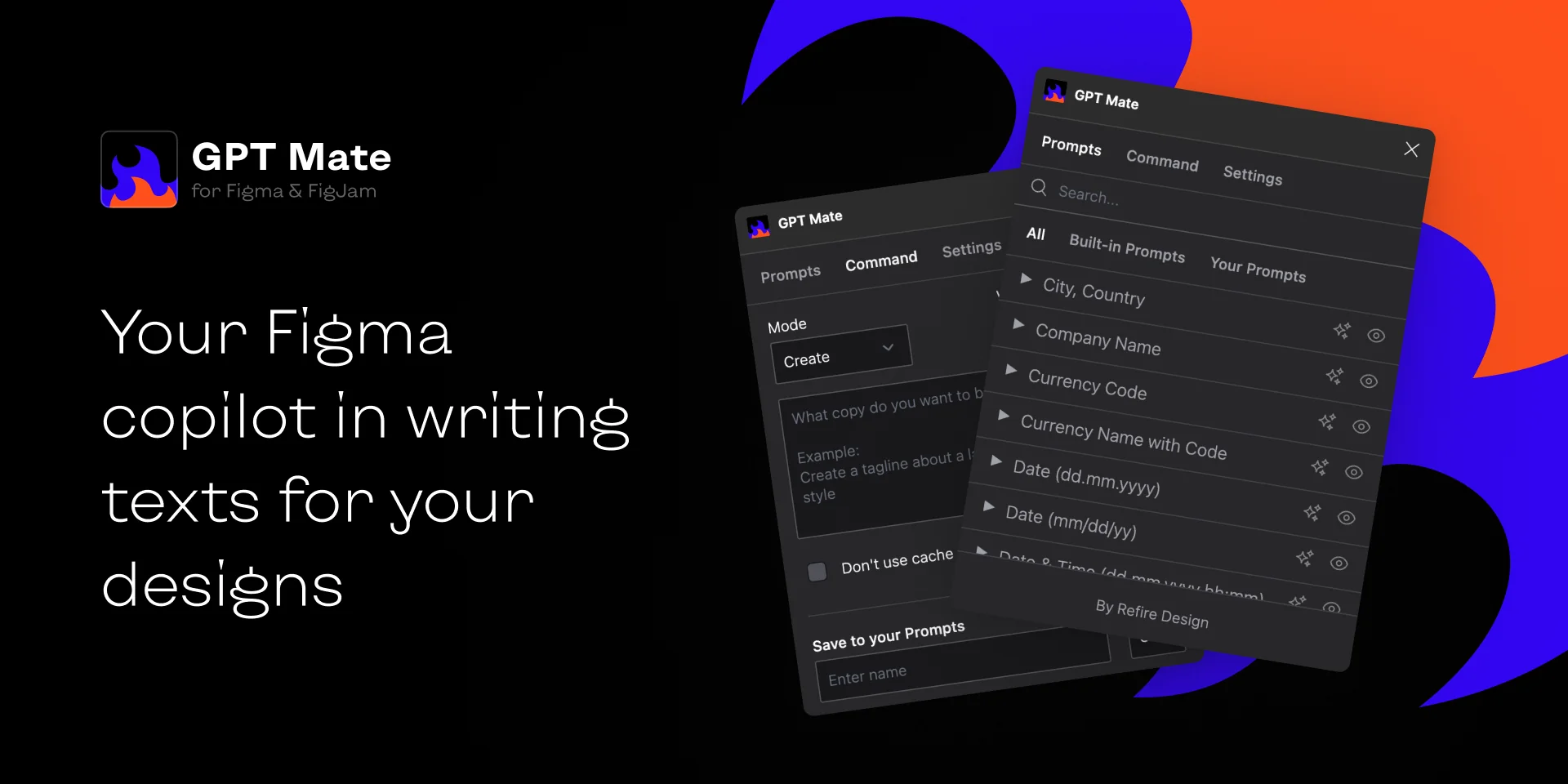
    The Figma Community features an extensive library of community-created resources, including files, libraries, plugins, icon sets, and more, with the ability to search for resources such as portfolios. It also offers Skills—reusable instructions for the Figma Agent that help speed up work—allowing you to browse skills created by the community or publish new ones, including “document-component-migration” by Brett McMillin with counts of 70 and 70, “balise-ux-writing” by Steven H-A with 172 and 326, “catch-me-up” by Cai Charniga with 46 and 154, “camera-pan-and-zoom” by the Figma Community with 155 and 301, and “usability-test-guide” by the Figma Community with 419 and 723 views, and “create-anatomy” by Ian Guisard with 211 and 390 views. Figma Make also allows you to create apps, websites, and prototypes that can be remixed using prompts; examples include Fortune Cookie! From Da Wei, which is free with 3.7k and 23.9k views; “Interactive Eye-Following Card” by Thierry, which is free with 8.5k and 37k views; “Shader Reminder” by Daniela Muntyan, which is free with 7k and 26.3k views; “Button effect” by Soundharya M, which is free with 3.8k and 19k views, and “Minimalist sidebar component” by Joshua Guo, which is free with 2.6k and 58.9k views; and “3D ASCII Model Viewer” by Daniel Destefanis, which is free with 2.3k and 13.7k views. It also offers Figma Weave, a suite of AI-powered tools that can be run within Figma to generate, edit, and automate creative work, including “Texturize” with 74 and 6.4k views, On-brand icons with 70 and 5.3k, Generate mockup with 44 and 5.1k, Sticker pack with 31 and 4.9k, Grainy airbrush with 50 and 4.9k, and “Image to vector” with 41 and 4.7k, "Monochrome pixel art" with 36 and 4.6k, "Transfer style" with 17 and 3.8k, "Product shoot" with 19 and 3.1k, and "Stamp machine" with 28 and 2.9k. The platform also showcases a selection of its favorite content creators, including Miggi from Figgi, associated with Data Mosh Shader and Maker Week Beat Maker; Adanna O. who is associated with “Free Shadow Icons,” Daniela Muntyan, associated with “Config 26 Motion Deep Dive Examples” and “Ripple Effect Prototype,” ˗ˏˋ rogie ˎˊ˗, associated with “Dither yourself” and “Clippy — Add attachments to your Figma files!”, and Bruno, associated with “Implementing Accessibility in Design Systems — EDIT & IxDA Meetup” and “What’s in a Portfolio — 101 Booklet,” and Vic, associated with “Component Properties (Case Study)” and “Bead patterns.” Figma also features partners from resource providers, including Apple, which showcases macOS 27 and iOS and iPadOS 27; Material Design, which showcases Slots Playground and Personalized theme and brand with Material 3; and Microsoft, which showcases Measurements and Microsoft Store Asset Guidance.

  4. IONI.ai

    IONI is an AI-powered food safety compliance software platform designed specifically for food and beverage manufacturers, It analyzes standard operating procedures (SOPs), HACCP plans, recipes, supplier certificates, and certificates of analysis (COAs) to build audit-ready systems covering HACCP, supplier compliance, critical control point (CCP) monitoring, and internal audits.

  5. Journey.io

    Journey.io is a platform for organizing and sharing content on a single, interactive, and well-organized page, rather than sending multiple attachments and links separately via email. The platform allows you to compile presentations, documents, PDFs, videos, case studies, and other supporting materials into a single Journey, so that the recipient has all the information they need in one place and in a clear, organized order.

  6. Finpilot

    Finpilot is a platform specializing in AI-powered knowledge management, designed to help investment allocators, limited partners (LPs), wealth managers, and registered investment advisors (RIAs) to focus on strategic decision-making, while AI handles research, analysis, and document processing.

  7. Altero AI

    Altero is a platform that provides domain name registration, purchase, and management services, allowing users to choose from a variety of domains with different extensions—such as .ai, .io, .tech, .com, and others—to build a digital identity for projects and companies.

  8. Quiki.io

    Quiki.io is a platform for organizing and managing visual content saved from TikTok, YouTube, and Instagram using artificial intelligence; it transforms users’ personal video libraries into a searchable and analyzable knowledge base. The platform allows users to add videos by pasting a video link directly or importing a batch of links, then automatically analyzes the content, generates AI-powered summaries, extracts keywords, and categorizes the videos into organized, searchable folders.

  9. LANDR

    LANDR offers a comprehensive platform for music production, processing, and distribution, combining audio mastering tools, music distribution, sound samples, professional plugins, music education, and collaboration tools for artists. The platform leverages artificial intelligence technologies to provide services such as Unlimited AI Mastering, which allows for unlimited audio mastering using an AI-powered mastering engine, as well as the LANDR Mastering Plugin, which allows users to integrate the mastering engine into their digital audio workstations (DAWs).

  10. Easywrite.pro

    Easywrite.pro is an AI-powered writing platform that helps produce content ten times faster. The platform uses natural language processing to create content from just a few words, allowing users to save time and effort on writing tasks. The platform is mobile-friendly, making it available wherever you are. A three-day free trial is available, with periodic updates.

  11. eMastered

    eMastered is an AI-powered platform that enhances song quality and processes audio to deliver professional-grade results suitable for artists, producers, and content creators. The platform allows users to upload audio files, which are then automatically analyzed and processed to produce high-quality mastering, while also providing additional tools such as audio track separation, music distribution, the creation of artist landing pages, and the ATOM Synthesizer tool.

  12. GenVid

    Genvid is an AI-powered production platform designed for production studios and professional film and content creation teams, and focuses on managing the entire generative content production cycle within a unified environment that combines content creation, asset management, governance, budget tracking, approvals, and content provenance.

  13. Conforma

    Conforma is an enterprise-level communication and content management platform based on the “one message, many formats” concept, whereby a single, organization-approved central message is created and then automatically converted into multiple formats such as video, audio, infographics, and text summaries, while maintaining complete consistency across all versions and linking each format to its traceable original source.

  14. Plotaverse

    Plotaverse and Tapestry offer a different approach to traditional social networks, focusing on the idea of “Take back your audience”—that is, empowering users to own their audience, content, and revenue rather than relying on third-party platforms. The concept involves creating a social system or app tailored to a specific user or brand, thereby building an integrated “ecosystem” where the audience lives within a single environment that is wholly owned by its creator.