AI Bosala

العربية

Integrations & APIs

Tools in Integrations & APIs

1,738 tools

Filter and sort these tools

  1. Faceless Automator

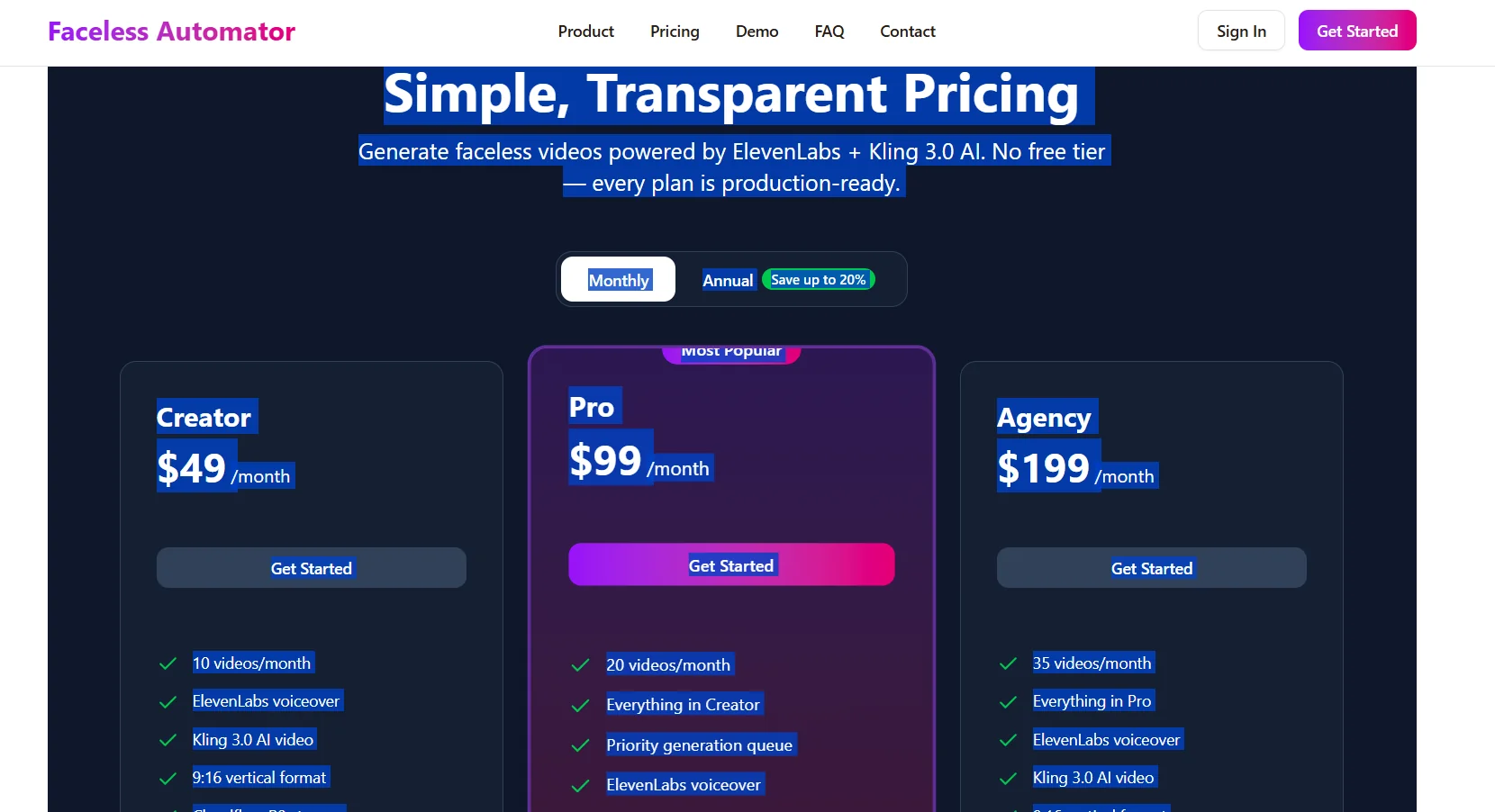
    Faceless Automator offers a tool for creating AI-powered Faceless videos, allowing users to turn any topic into a polished video in minutes without the need for a camera, a production team, or manual editing. The tool is aimed at content creators who want to quickly produce YouTube Shorts, TikToks, and Instagram Reels, as well as marketing agencies that need to produce video content for clients at scale, and companies looking to grow their social media presence without hiring a video team. The process consists of three main stages, starting with AI Script Generation using Claude AI to create industry-specific scripts, followed by Natural Voiceovers using professional voices powered by ElevenLabs, and finally Instant Video Assembly to combine the script, voiceover, and footage into a video ready for publication. The platform currently relies on ElevenLabs + Kling 3.0 AI and provides 9:16 HD-quality videos suitable for vertical video platforms. Video creation typically takes 2–5 minutes on average, though the duration may vary depending on the length of the script and the voiceover selection.

  2. AuditAE

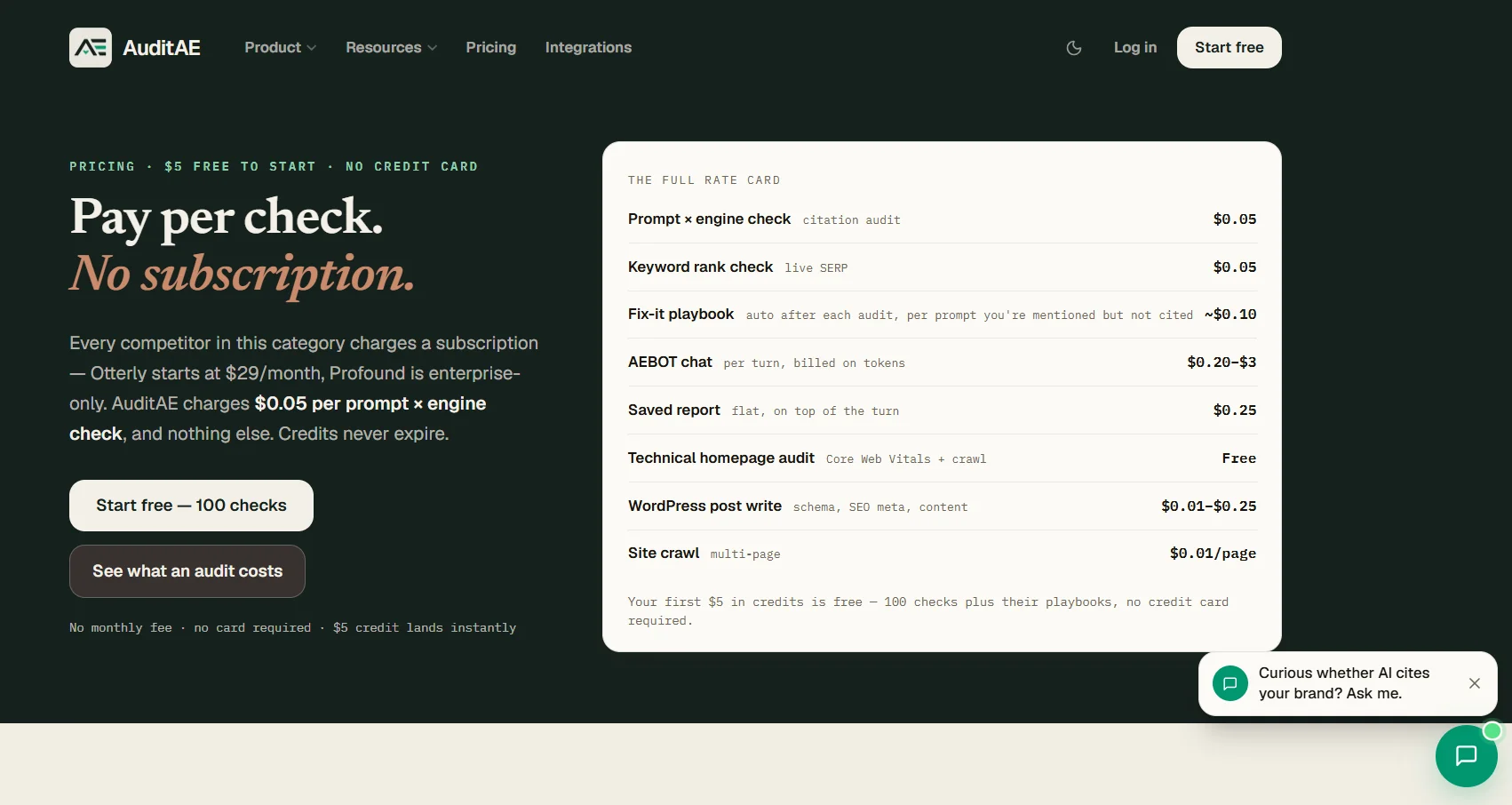
    AuditAE is a platform for tracking brand mentions in AI-powered search engine responses, and focuses on determining whether ChatGPT, Perplexity, Google AI Overviews, and Gemini mention the brand or reference its website when users ask questions related to its products or category. The platform allows users to specify up to 10 claims per audit, run them through the four AI engines, and see whether the brand received a mention, which link was cited, and which competitor appeared in its place. It also consolidates Google keyword ranking data and Core Web Vitals metrics into a single workspace and provides citation gap analysis to identify claims where competitors receive citations but the brand does not. AuditAE also supports tracking competitors and their share of citations, saving audit results, scheduling weekly or monthly tracking, and integrating with Google Analytics 4 and Google Search Console, as well as WordPress integration that provides tools related to schema markup, SEO data, alt text, llms.txt, and redirect rules. Technical audits for the homepage are also available, covering Core Web Vitals, H1 structure, canonical tags, robots.txt, and sitemaps.

  3. WelcoChat

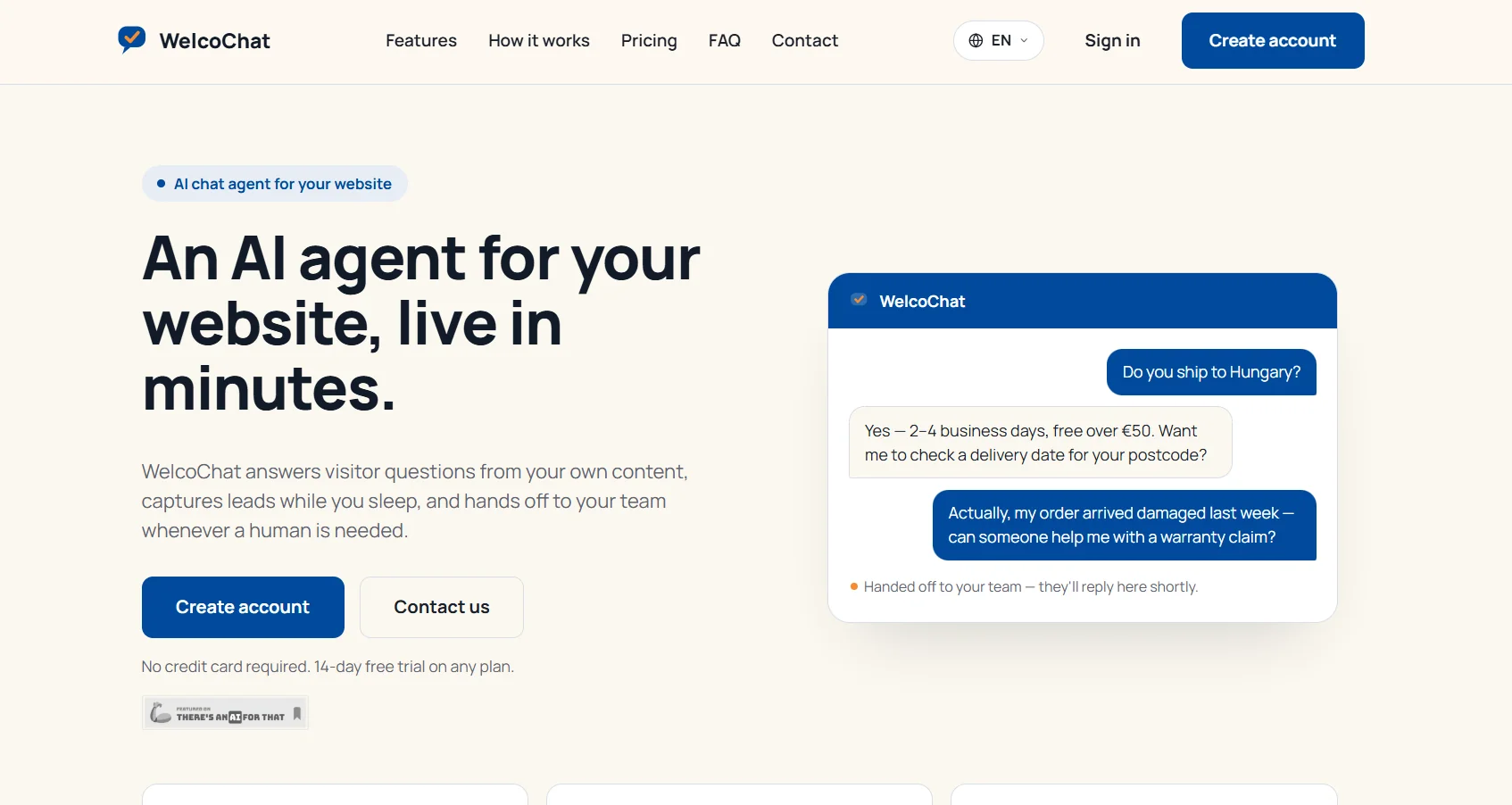
    WelcoChat is an AI-powered chatbot for websites that answers visitors’ questions based on the site’s content, helps capture leads, and transfers the conversation to the support team when human intervention is needed. The platform relies on a knowledge base built by automatically crawling the website or by uploading documents, PDFs, and FAQs. You can customize the bot’s name, avatar, colors, and welcome message, and then embedding it on the website with a single line of code. It also allows you to review conversations and unanswered questions through the control panel to improve the knowledge base over time. The agent transfers the conversation to a live representative when unsure of the answer or when the visitor requests to speak to a person. The platform includes a knowledge base for the website, a fully embeddable and customizable widget interface, and the ability to capture lead data—including name, email, company, and intent—for every qualified conversation, and direct handoff to the support team so that the team is notified and can respond directly within the conversation itself from the WelcoChat portal, as well as a metrics dashboard displaying conversation volume, conversion rates to employees and captured leads, and the status of the knowledge base. It also provides notifications via Slack, Teams, and Webhooks that can be used with Zapier, Make, or any other tool. Available in the Business plan and above is a WhatsApp channel that allows users to link their WhatsApp Business number so the agent can respond directly there, with the option to forward messages to an employee. It also includes team accounts that allow team members to be invited to manage the agent and handle live conversations together. You can also use a custom logo, choose to place the widget in the bottom left or bottom right corner, and enable image support so that visitors can send photos and the agent can respond based on the image and website content using real-time computer vision, and multilingual support so that the agent automatically detects the visitor’s language and responds in it. The Enterprise plan includes a Custom CSS feature, which allows for the use of custom CSS confined within the widget’s Shadow DOM so that it does not affect the rest of the page. The platform also explains that the widget loads asynchronously so as not to block page loading, and it works on phones and tablets, The linked website URL can be updated, and uploaded documents and notes can be edited at any time via the portal; WelcoChat continuously re-learns new content without interrupting service.

  4. Imprezia

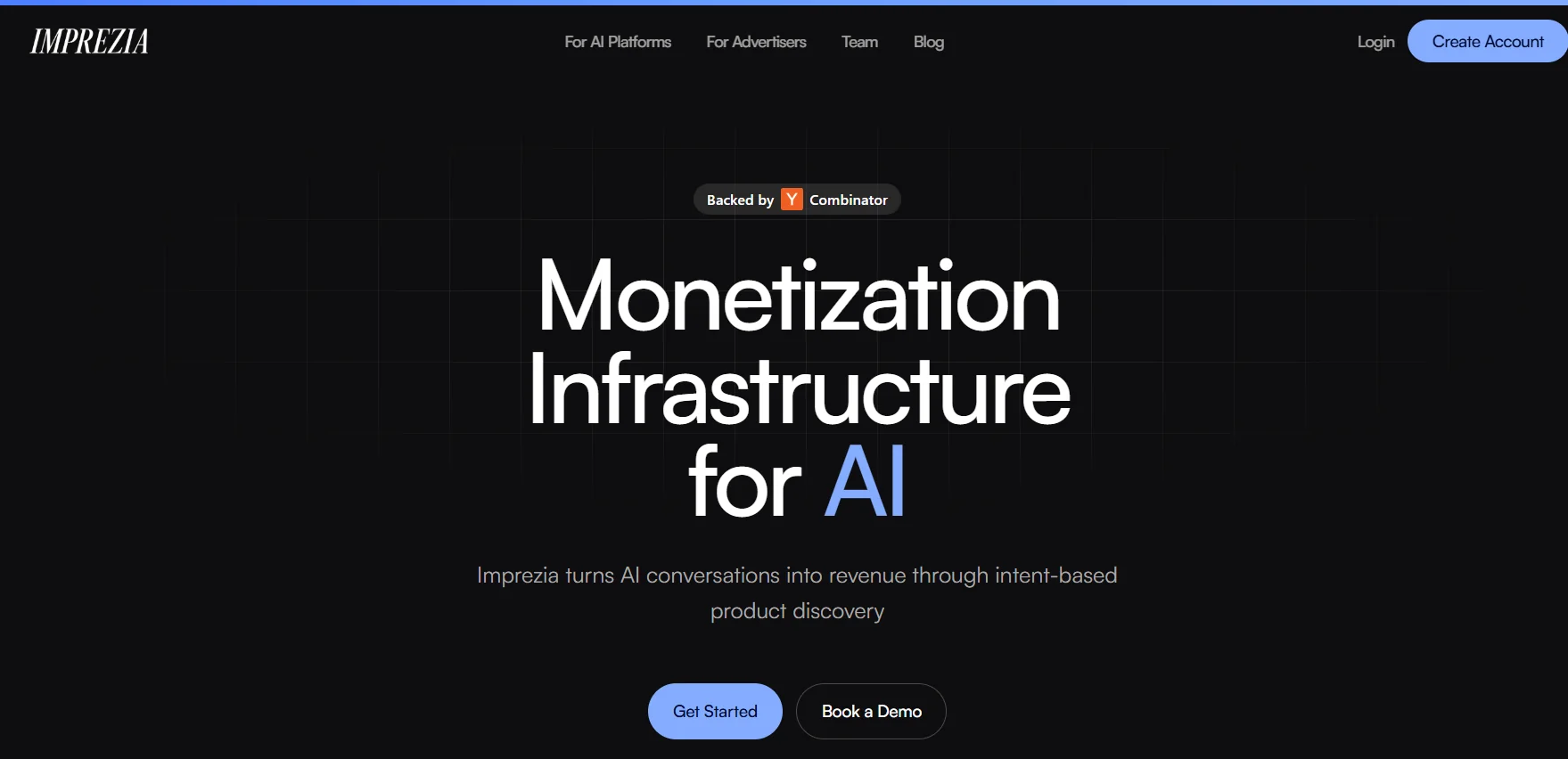
    Imprezia is an infrastructure for monetizing AI applications; it transforms conversations with AI applications into revenue opportunities by discovering products based on user intent. The platform targets AI app developers and advertisers; It allows developers to integrate native ads into chat apps, chatbots, and virtual assistants using an SDK, while giving advertisers access to users the moment they exhibit a specific purchase intent or interest. The platform relies on real-time contextual matching between conversation content, user intent, and ad offers, while handling matching, billing, and attribution. The website provides an example: when a user asks about a place to stay in Tokyo, the platform recognizes the intent “tokyo traditional hotel” and then displays a relevant ad within the conversation. Imprezia also provides real-time analytics, impression reports, and performance tracking, noting that integration can be completed in about 5 minutes using a single SDK that works with various LLM models.

  5. Since.dev

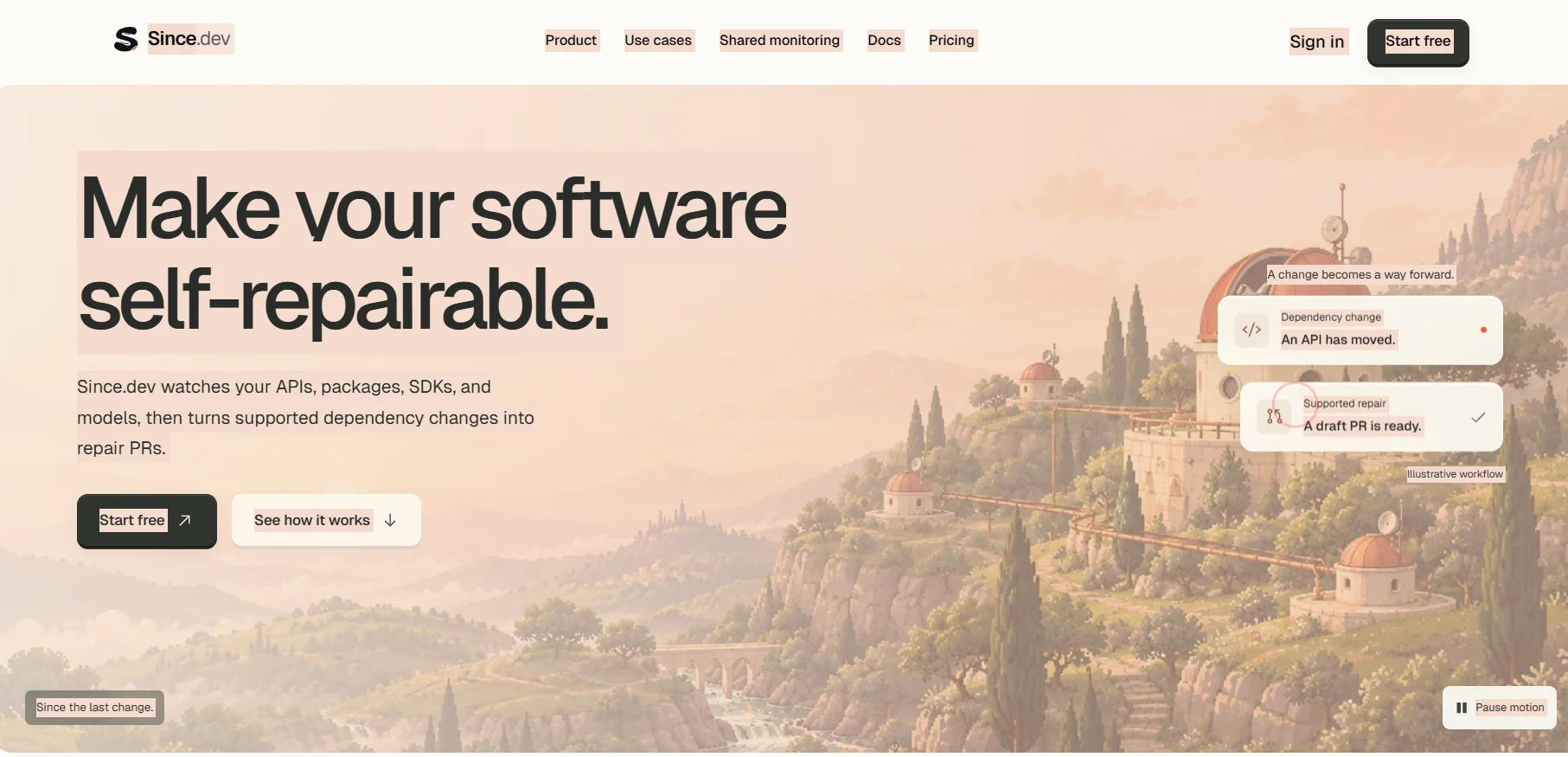
    Since.dev is a platform for monitoring software and making it self-healing; it monitors APIs, packages, SDKs, and models, then converts changes to supported dependencies into pull requests (PRs) for fixes. The platform allows you to connect a GitHub repository to see what has changed, find the affected code, and review a supported fix. The workflow includes detecting external changes, determining their impact on the code, preparing a small supported fix, and then reviewing it through the user’s CI. Sources that can be monitored include npm, GitHub, PyPI, Rust, OpenAPI, and RubyGems. It also supports monitoring API changes, SDK updates, deprecations, and provider changes. The API Contract feature links a documented API change to the calls that use it, with the ability to review a supported fix for an endpoint, parameter, or version, An example of this is changing the endpoint from /v1/messages to /v2/messages within src/integrations/messages.ts. The platform provides supported fixes and draft PRs, while testing is conducted within the user’s repository and the user chooses what to ship; nothing is automatically merged or deployed; Draft PRs use the user’s existing CI system, with the ability to request modifications and review the updated patch within the PR itself. Since.dev also offers the World State feature, which allows agents to verify their assumptions against the latest recorded observation before performing any action; the external state includes facts, versions, and service provider conditions. The Verification feature allows you to check whether recorded information remains valid without performing a new fetch, noting that an “Unknown” status does not necessarily mean the information has not changed; For example, if `example-sdk.version = 19.0.0` has changed to `20.0.0`, the agent receives evidence for review when the observation differs, and must verify the observation timestamp and source status. The platform also offers Shared Evidence, where the public source is checked once for everyone, while each Watch retains its own instructions and notifications; users can specify the changes that matter to them, such as API changes, security fixes, and new releases. Since.dev allows agents to submit the changes they need via MCP, HTTP API, or Signed Webhooks, and uses Durable Cursor to preserve the user’s position, so that a read operation does not move the cursor, while Acknowledge is executed after processing and then the work is resumed from the remaining position. It also supports issue tracking, fact-checking, coverage analysis, and change tracking through the tools used by the agent. The MCP setup includes the URL https://api.since.dev/mcp with an Authorization header, It also provides Integration Guides, which offer context for each change, including the statuses “breaking,” “deprecated,” “behavioral,” “additive,” and “advisory.” The official page explains that monitoring sources are checked on a scheduled basis rather than as a real-time feed, and that coverage includes packages, repositories, specifications, public pages, and supported status sources, while it does not include private sources, those protected by login, or those closed to automated reading.
  6. Kapso

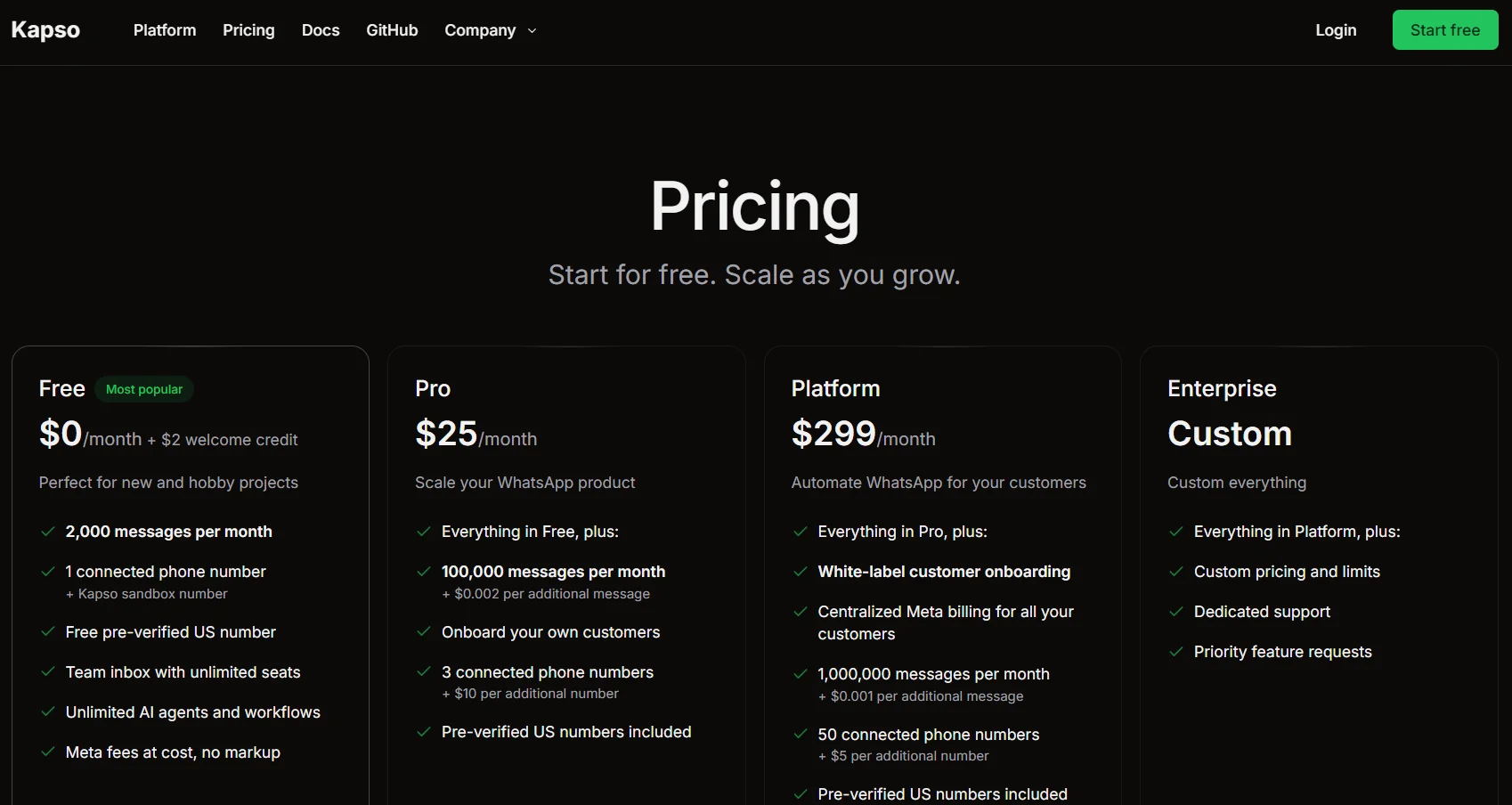
    Kapso is a platform for developers that allows them to integrate the official WhatsApp into their products and applications. It provides the necessary infrastructure to send and receive messages, manage templates and chats, receive events via Webhooks, and build workflows, automations, and AI agents. The platform describes itself as a fast way to add the official WhatsApp to products, with access to WhatsApp’s user base of over 3 billion users, and notes that it is trusted by more than 30,000 developers worldwide. It also positions itself as an official partner within the Meta ecosystem.