AI Bosala

العربية

Integrations & APIs

Tools in Integrations & APIs

1,743 tools

Filter and sort these tools

  1. Qlik Sense

    Qlik Sense is the product that established the Qlik experience in data analysis, while Qlik Cloud Analytics expands these capabilities through AI-powered insights, trusted data, agentic automation, and the Qlik Analytics Engine, enabling data to be unified, analyzed, and acted upon at the point of decision-making. The platform enables the management and integration of data from multiple sources and transforms it into interactive dashboards and analytics, with the ability to connect to multiple data sources and use the analytics engine to uncover patterns, correlations, and insights within the data. It also provides self-service analytics, visualizations and dashboards, embedded analytics, reports, artificial intelligence, predictive analytics, and AI-powered anomaly detection, in addition to Qlik Answers and agent-based analytics capabilities. Qlik also provides a foundation for trusted data that can be used with AI, analytics, and operations, with capabilities for data integration, creating trusted data products, and connecting various data sources. The Qlik ecosystem includes Data Integration products such as Qlik Talend Cloud, Agentic Data Engineering, Data Movement & CDC, Data Transformation, Data Quality and Governance, Data Products, Open Lakehouse, Data Warehouse Modernization, and Application & API Integration, while the Analytics category includes Qlik Cloud Analytics, Agentic Analytics, Conversational AI, Predictive AI, AI Anomaly Detection, Visualization & Dashboards, Embedded Analytics, and Enterprise Reporting. The platform also provides no-code automation for building workflows and executing actions across cloud systems, and enables the delivery of reports, forecasts, and analytics to the actual workplaces where they are used. Qlik Cloud supports a subscription model based on data volume for analytics, while customer-managed versions of Qlik Sense continue to be priced on a custom basis.
  2. Hypotenuse AI

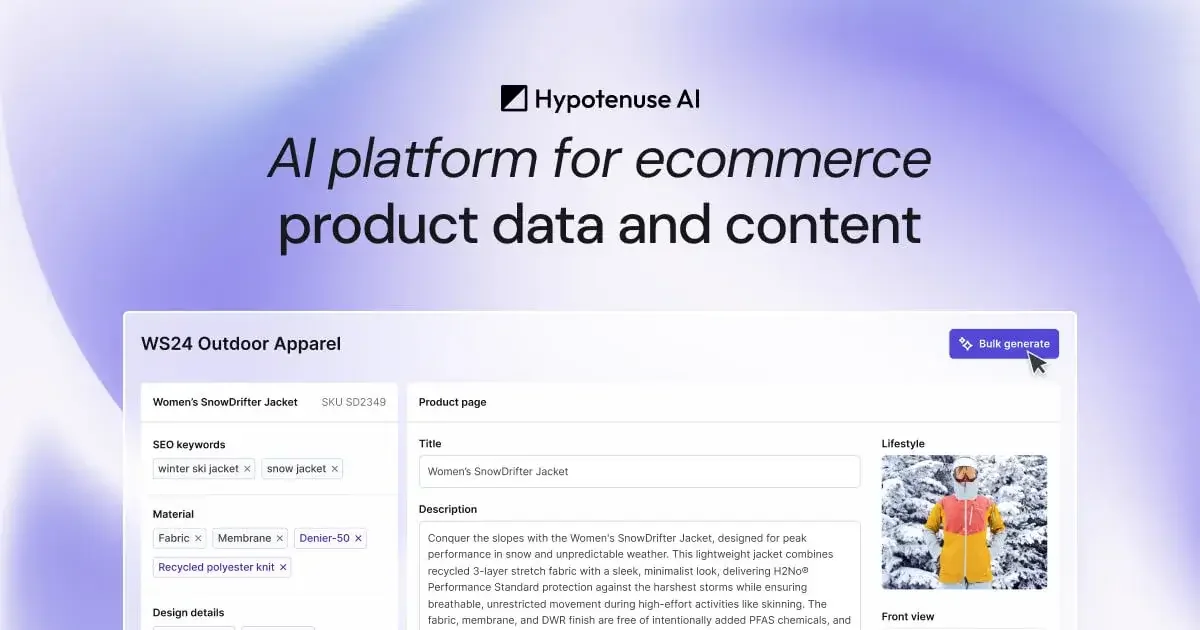
    Hypotenuse AI is an AI-powered product information management (PIM) platform for e-commerce designed to manage and enrich product data, create content, optimize images, and monitor product performance within a unified workflow. The platform enables the creation of thousands of search-engine-optimized product titles and descriptions that reflect the brand’s voice, and automatically enriches product data by filling in missing attributes and standardizing data using sources such as images, web pages, UPCs, and specification sheets, as well as extracting specifications, colors, and other product details from images; applying tags and classifications based on custom taxonomies or classifications compatible with Google and Amazon; and standardizing formats and correcting errors. It also enables content creation and optimization through product descriptions, titles, meta descriptions, category pages, blog posts, and more, with the ability to apply brand guidelines, custom formats, and localize and translate content into over 40 languages. The platform offers AI-powered product image optimization, including background replacement, background and shadow generation, cropping and resizing with smart fill, resolution enhancement, detail improvement, noise reduction, and the creation of product images within realistic contexts. It also enables monitoring of product page performance across Google, Amazon, Walmart, and others; keyword discovery and suggestions; and verification of content compliance with brand guidelines, legal requirements, and channel requirements prior to publication. The platform supports collaborative workflows, import and export via CSV and XLSX, direct publishing to websites and sales channels, and custom integrations with PIM, ERP, and e-commerce systems. It can be used as a central system for managing product content, attributes, and images for teams that do not use a PIM or DAM system, while teams that do use these systems can connect Hypotenuse AI to them to enrich data, create and verify content, and prepare images in a shared workspace. The platform notes that it imposes no fixed limit on the number of SKUs and works with retailers and distributors managing anywhere from a few thousand to millions of SKUs, with collaborative workflows designed to handle large catalogs. Its tools include HypoChat for instant web search, HypoArt for text-to-image conversion, and tools for summarization, rewriting, and content generation, as well as product content tools such as the Product Description Generator, Category Description Generator, Meta Title Generator, Meta Description Generator, and Product Image Description Generator, along with features like AI Product Tagging, AI Attribute Mapping, AI Bulk Translate, AI Brand Voice, Bulk Content Generation, Product Data Enrichment, Product Categorization, SEO Monitoring, and the AI PIM Solution. The platform also supports integrations with Webflow, WordPress, Wix, Shopify, Salsify, Amazon, Walmart, WooCommerce, Target, Stibo, BigCommerce, Plytix, and PIMcore.

  3. Texta.ai

    Texta AI is a platform dedicated to monitoring brand mentions in AI answer engines and performing GEO operations, It monitors prompts, mentions, and citations across major answer engines, enabling teams to track brand visibility on ChatGPT, Gemini, Claude, Perplexity, and others, while capturing trends at the prompt level to help teams identify pages and topics that influence visibility share. The platform includes AI Visibility Tracking to monitor prompt coverage, mention share, and citation quality; Citation Intelligence and source analysis; Prompt Coverage Monitoring to track visibility across branded, category, and competitor prompts with market-specific trends; Citation Gap Detection to identify citation gaps; Competitive GEO Alerts to track changes in competitors’ visibility; and a Unified Visibility Dashboard to view visibility signals in one place. It also enables continuous monitoring of prompts, responses, and citations to identify gains and losses in visibility, and directs priority changes to content, SEO, and PR teams to update content, correct citations, and respond to competition, plus Executive Reporting to measure mention share, citation quality, and subsequent results through custom dashboards for growth and SEO teams. Texta also offers Workflow Automation to route visibility signals to planning, reporting, and execution processes, with integrations including Supabase, Claude, ChatGPT, Make, Vercel, Slack, Figma, Stripe, and Gemini. In addition to the GEO platform, Texta offers a suite of free tools, including AI Content Writer, AI Marketing Copy Generator, AI Question Generator, AI Email Generator, AI Text Summarizer, AI Resume Generator, AI Story Generator, AI Script Generator, AI Name Generator, and AI Business Document Generator, as well as AI Chat with Your Text Data, AI Chat with Your Website Data, AI Chat with Your Document & Data, AI Chat with Your PDF Document & Data, and AI Chat with Your Word Document & Data; tools for converting PDF, DOCX, HTML, Webpage, CSV, JSON, XML, and Notion to Markdown; as well as tools for creating and analyzing sitemaps, and other tools such as Best AI Prompt Generator, AI Prompt Optimizer, AI Reply Generator, AI Answer Generator, Chatbot ROI Calculator, AI Chatbot Conversation Analysis, Email Signature Generator, and Customer Service Script Generator. The platform describes itself as built for AI visibility and GEO operations.

  4. Uncensored AI

    Uncensored AI is a multimedia AI platform that provides access to a range of AI models for conversation, generation, voice, media, and programming, as well as APIs. It allows users to ask questions, explore ideas, role-play, solve problems, and be entertained, as well as receive, create, and retrieve media—including media generated or retrieved from the web—conduct real-time information searches, and engage in voice interactions. Its capabilities include advanced conversational models, instant web search, voice interaction, Code Mode, AI-powered predictive input, and vision models for multimedia processing. It also provides an image generator based on in-house models and Flux.1 models, allows users to compare more than 50 models, and offers an API for developers. According to the official website, available models include Claude, DeepSeek, Gemini, GPT, Grok, Kimi, Qwen, GLM, MiniMax, and others, with the selection continuously updated. The platform was first launched in beta in December 2022.

  5. Domo

    Domo Analytics is a cloud-based platform for analytics, business intelligence, data, and smart applications that combines data integration, preparation, transformation, analysis, visualization, and the creation of dashboards, applications, and workflows into a single platform. The platform enables users to connect data from multiple cloud and on-premises sources, with over 1,000 pre-built connectors, as well as the ability to create custom connections using APIs, SDKs, and Webhooks. It also enables data transformation using drag-and-drop tools, SQL DataFlows, and DataSet Views, with the ability to analyze data in its original location without needing to move or duplicate it.

  6. Alteryx One Platform

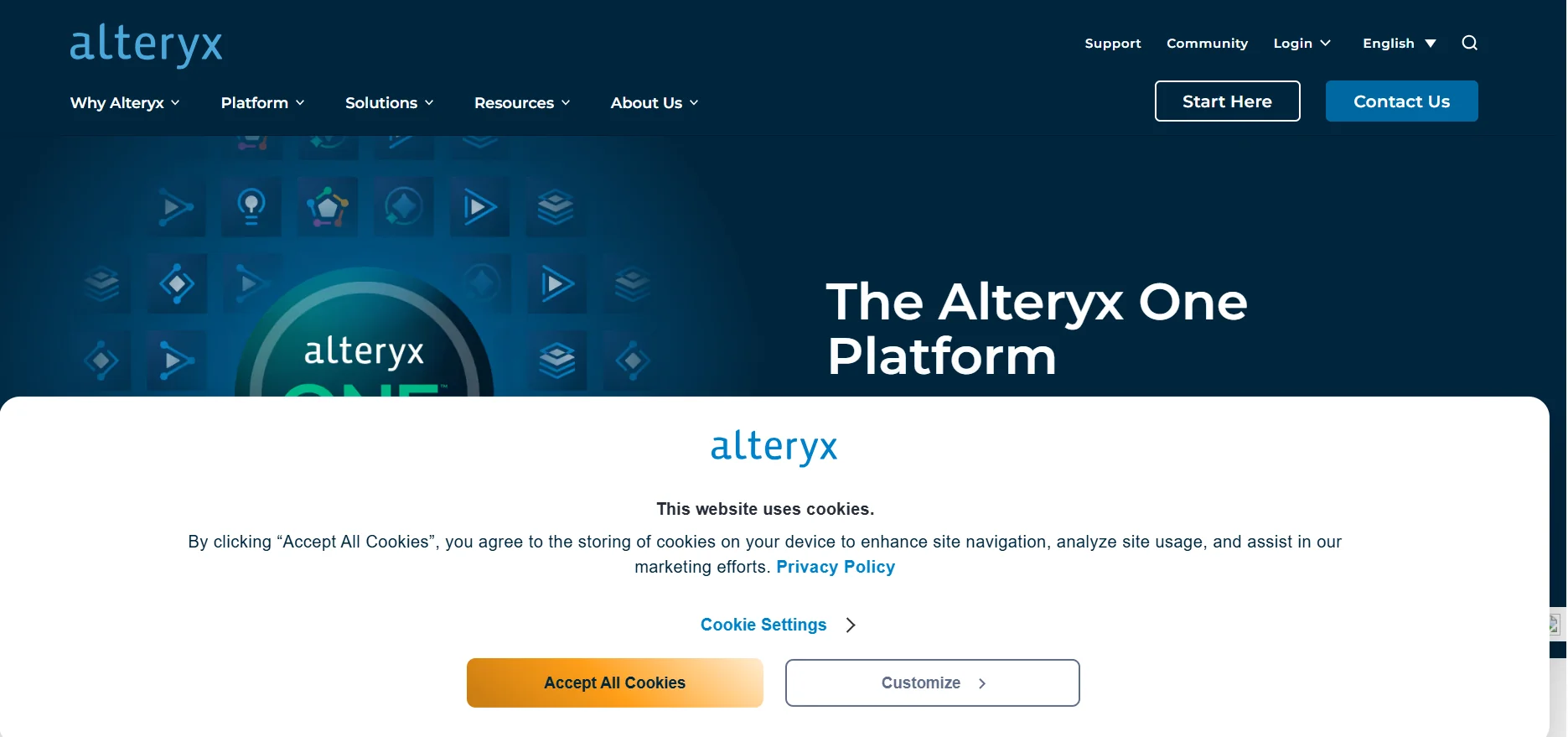
    Alteryx One is a unified analytics platform that combines data preparation, analysis, artificial intelligence, and workflow automation into a single platform, designed to help teams move from data to insights and then to decisions and actions within a unified, reusable workflow. The platform provides drag-and-drop tools for data preparation, integration, and analysis, with the ability to use artificial intelligence within analytics workflows to help clean data, discover patterns, outliers, and trends, and generate insights and summaries in natural language.

  7. OverallGPT

    OverallGPT is a platform that allows users to compare the responses of different AI models side by side, with the goal of helping users understand the differences between the models’ outputs and assess how well they meet their needs. The official website explains that the platform is designed to compare the responses of different AI models and gain a clearer understanding of their performance in various scenarios.

  8. Anakin.ai

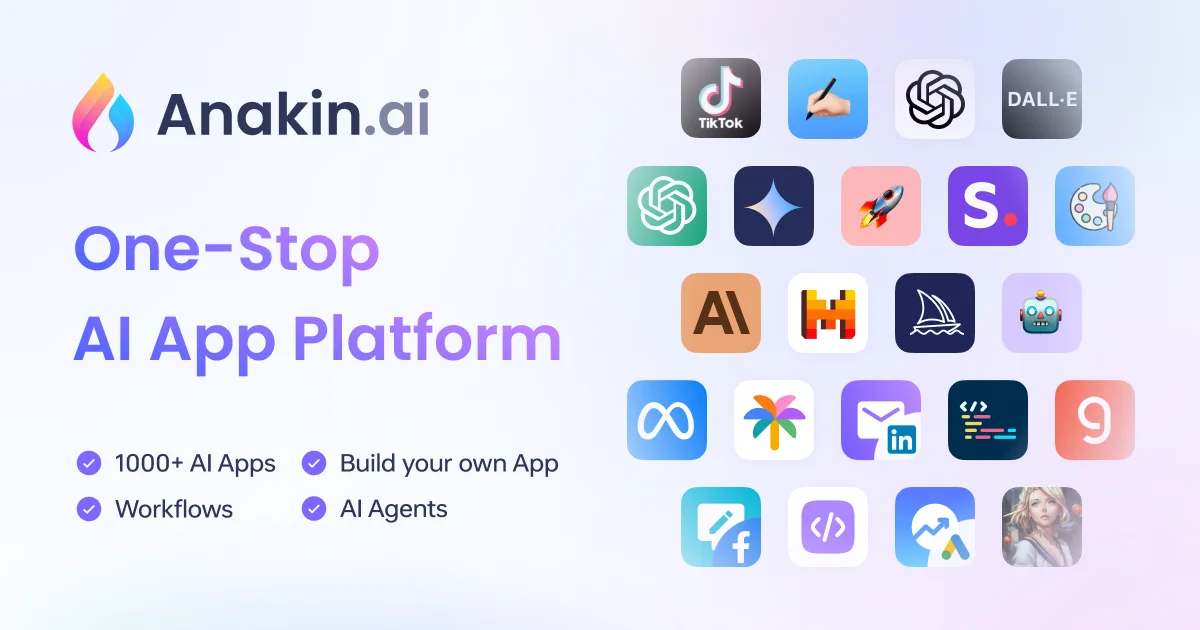
    Anakin is an integrated AI platform designed to boost productivity by bringing together a wide range of AI models, tools, and applications in one place. The platform enables content creation, text writing, Q&A, and the generation of images, videos, and audio, as well as intelligent agents, automated workflows, and custom AI applications—all without requiring specialized expertise. The platform provides access to models such as OpenAI, Claude, DeepSeek, Stable Diffusion, DALL·E, Gemini, Mistral, and Meta Llama.

  9. Soniox

    Soniox is an audio platform that provides application programming interfaces (APIs) for speech processing, speech-to-text conversion, text-to-speech conversion, and speech translation, with support for more than 60 languages. The platform enables real-time or asynchronous speech transcription and operates on a usage-based pricing model, whereby users pay for the Speech-to-Text and Text-to-Speech services they actually use. Soniox offers the stt-rt-v5 model for real-time transcription—which is the currently active model according to the official documentation—as well as the stt-async-v5 model for asynchronous processing of audio files. The stt-rt-v5 model offers improvements in recognition accuracy, speaker separation, spoken language identification, real-time translation, faster speech termination, context handling, and recognition of structured data such as numbers, dates, email addresses, names, addresses, and codes.

  10. Inworld TTS

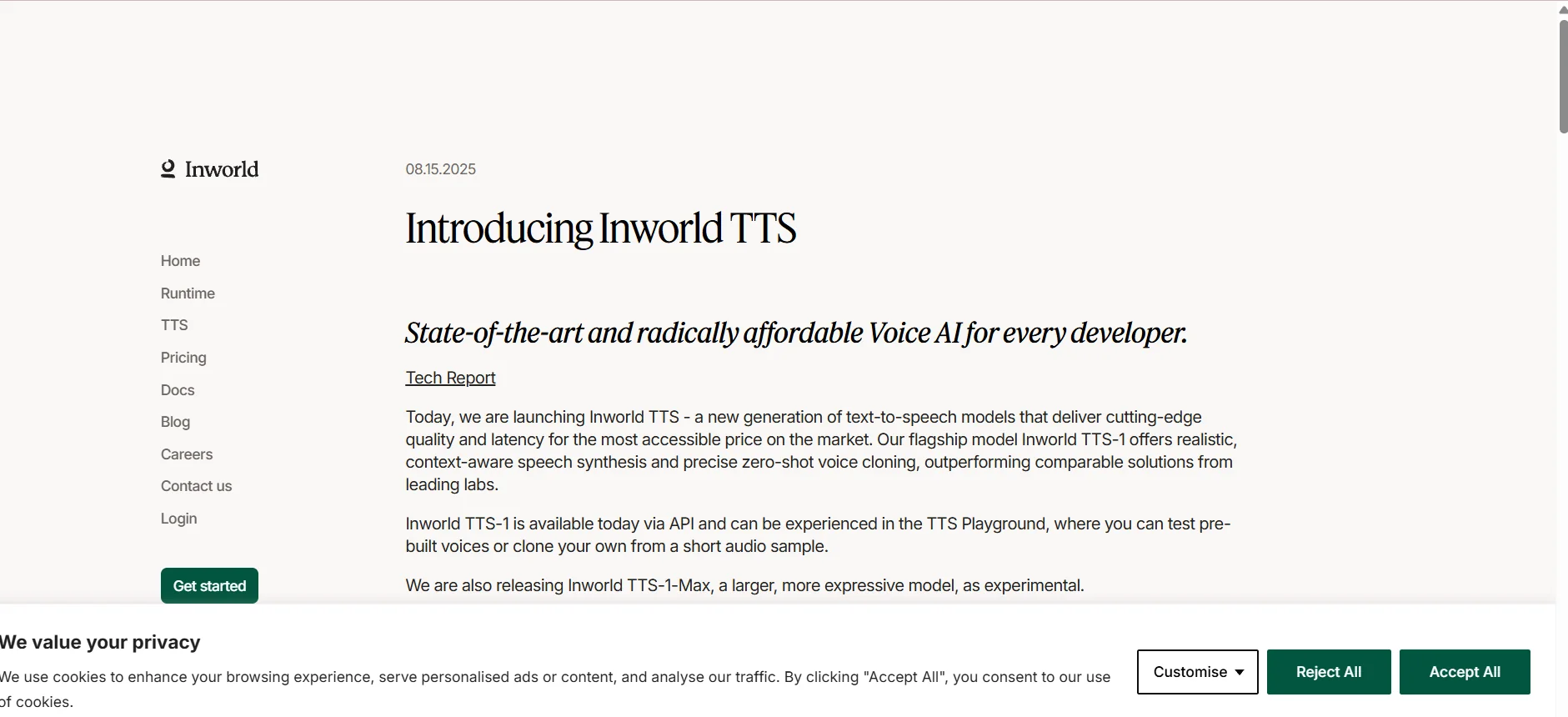
    Inworld Realtime TTS is a real-time text-to-speech technology from Inworld that provides voice models designed for applications requiring fast, realistic, and interactive speech generation. The platform includes Realtime TTS-2, the current flagship model, and Realtime TTS-2 Flash, designed for applications requiring low latency and lower cost, as well as previous Realtime TTS models such as Realtime TTS 1 and Realtime TTS 1-Max. Realtime TTS-2 offers advanced vocal expression and the ability to control delivery style using natural language instructions; it also supports nonverbal cues such as laughter, sighs, breathing, coughing, yawning, and throat-clearing, and a single voice can be used across multiple languages. The platform offers instant voice cloning using a short voice sample, as well as Voice Design for creating custom voices. It also supports control over speech rate, pitch, custom pronunciation, timestamps, and alignment data. Realtime TTS-2 offers a latency of less than 100 ms based on server-side TTFB measurements, while Realtime TTS-2 Flash reaches 25 ms, according to the official website. The current models also support more than 200 languages with multilingual capabilities and language switching using BCP-47 codes.

  11. Deep Realms

    Deep Realms offers an AI-powered writing and storytelling platform that allows users to create and explore characters, narratives, and worlds using an AI writer. Users can create worlds that include story text and “World Lore”—a collection of facts, rules, and descriptions that help the AI maintain the context of the world the user has created.

  12. MagicPost

    MagicPost is a platform specializing in managing and growing your presence on LinkedIn, bringing together content creation, scheduling, publishing, performance analysis, audience engagement, and lead generation all in one place. It offers an AI-powered LinkedIn post generator, AI-generated visuals and images, carousel post creation, idea and hook generation, an inspiration library, the ability to browse over 2 million posts, and content creator analytics, along with post and comment scheduling, tracking statistics and metrics, engagement and response tools, and lead generation. It also offers agency-specific features, including client account management, secure connection to LinkedIn accounts, sharing posts and calendars, submitting content for approval, engaging on behalf of clients, and creating white-label LinkedIn reports.

  13. Writio

    Writio is an AI-powered content writing platform, focused on creating personalized, search engine optimized (SEO) content to help businesses and website owners boost their digital presence, attract and engage potential customers, and convert them into clients. The platform allows users to create articles without needing advanced writing or SEO expertise, and provides AI writers that can be customized to a brand’s style, industry, expertise, and perspectives, in addition to writing in the user’s style and from their perspective, real-time news and event coverage, multiple article formats, support for languages and dialects, image generation, custom formatting, AI-powered topic suggestions, bulk import of topics, scheduling and queuing of topics, analytics, and multiple integration and publishing options. Writio also offers integration with WordPress, allowing content to be published automatically as a draft or directly, in addition to other CMS options and an API.

  14. Pics.io

    Pics.io is an advanced digital asset management platform (Digital Asset Management – DAM) that brings together images, videos, audio files, documents, and design files into a central library, helping teams find, organize, manage, and share digital assets. The platform can integrate with Google Drive and Amazon S3, allowing companies to use their existing storage infrastructure instead of relying on the platform’s proprietary storage. Pics.io offers advanced search and natural-language search, filters, a folder tree, and previews for more than 236 file types, as well as the ability to save recurring searches, as well as version management—enabling users to replace one asset with another while preserving existing links, visually compare versions, lock approved assets, set expiration dates, and maintain a complete audit trail of changes with the ability to revert. It also provides Approval Workflows and Commenting for reviewing designs and files, with comments on images and videos, time-stamped comments, mentions of team members, and notifications via email and Slack, as well as “Approve” and “Request Changes” statuses and due dates. Sharing Portals provide branded sharing portals, the ability to automatically convert files upon download to the required sizes and formats, public or password-protected portals, and links with expiration dates and terms of use. It also includes Expiration + Analytics for managing asset usage rights, automatically deactivating links and portals when rights expire, sending alerts, and providing audit trails and bulk cleanup of expired files. Inbox Portals allows you to collect files from contributors via upload links without requiring an account, while enforcing metadata fields such as tags, rights, and campaign, and automatically routing files to groups and owners. It also includes Roles + Permissions to manage viewing, editing, and sharing permissions, as well as apps and integrations with Google Drive, Amazon S3, Dropbox, Figma, Slack, Salesforce, HubSpot, Zoho, Adobe Creative Cloud, Zapier, Google Workspace, Monday.com, ClickUp, Trello, Shopify, and WordPress.

  15. Peppertype.ai

    Pepper is a platform and engine for organic growth that combines SEO, GEO, content, creativity, strategy, and AI agents into a single ecosystem, with the goal of boosting brand visibility on Google, YouTube, Reddit, and AI-powered search engines such as ChatGPT, Gemini, Perplexity, and Google AI Overviews. The platform offers Pepper’s GEO Platform to measure Brand Visibility, Domain Prompt Presence, and Share of Voice, while Agent Atlas enables teams to build, manage, and operate AI agents to automate SEO, GEO, and content tasks. It also offers Content services for producing e-books, white papers, reports, thought leadership content, blogs, and product content, Creative services for producing videos, designs, and creative campaigns, as well as Strategy services that include Enterprise Growth Audits, AI-Era Search Growth Plans, AI Transformation Workshops & Roadmaps, and Social Strategies and Audits. It also provides Talent services through on-demand experts, with the platform integrated with Google Analytics 4 and Google Search Console, and the ability to manage brands, competitors, personas, topics, and claims from within the workspace. Pepper notes that it serves more than 250 organizations and over 2,500 industry leaders, with companies such as Amazon, Atlassian, ClickUp, Google, HSBC Bank, Instacart, Unilever, and Xiaomi among its clients. The company also notes that Agent Atlas allows agents to be run on individual inputs or at scale using Sheet Runs, with the ability to build, clone, and run agents.

  16. WriteHuman

    WriteHuman is a tool for adding a human touch to AI-generated text, rewriting text from ChatGPT, Claude, Gemini, Grok, DeepSeek, and others while preserving the original meaning, and adjusting the rhythm, word choice, and sentence structure to make the writing sound more natural. The tool supports over 40 languages and can be used for articles, blog posts, marketing content, emails, landing pages, newsletters, and reports. WriteHuman offers two processing modes: Standard and Enhanced. It also includes an AI detector that displays the likelihood of each sentence being generated by AI, and allows users to adjust sentence length, rhythm, word choice, and mechanical transitions while preserving their own writing style. It also provides an API interface based on a single REST endpoint, with an average response time of about 20 seconds, and supports over 40 languages, with up to 120 requests per minute on the Premium plan; API pricing is based on word count. The service can also be used via a Chrome extension and apps for iOS, iPad, and Android.

  17. SEOWriting AI

    SEO Writing is a platform for creating and optimizing content for search engines, and it describes itself as a platform that automatically analyzes competitors in search engine results pages (SERPs) and creates optimized content for both traditional search engines and AI-powered search engines such as ChatGPT, Perplexity, and Google AI. It enables the creation of high-quality, long-form original content—including product roundups, product reviews, and how-to guides—by entering a brief summary and letting AI handle the writing process. It also enables the creation of detailed product lists up to 10 times faster by entering product URLs, and provides a Checker tool to optimize content for targeted keywords and achieve a 100% optimization score. The platform supports article creation in 48 languages, generates relevant images, and automatically publishes to WordPress. It also offers more than 20 pre-trained templates for affiliate marketing content, enabling the creation of titles, descriptions, outlines, pros and cons lists, short names, and product specifications. It supports creating articles using only a title or keyword, then generating and publishing them with a single click, in addition to Bulk Article Generation for creating large numbers of articles at once and automatically publishing or scheduling them to WordPress. It also offers features such as AI Editor, Content Score, Real-Time SERP, Super Pages, Rewriter Tool, Humanizer Tool, External Linking, Internal Linking, and Brand Voices, as well as an AI Image Generator, WordPress Integration, a Shopify app, and a WordPress MCP Server. The website states that the platform is used by more than 50,000 companies, blogs, agencies, content creators, and marketers around the world.

  18. Automated.ai Algorithm Cloud

    Automated.ai is an Algorithm Cloud platform designed for deploying and managing algorithms and models. It allows users to provide the platform with an algorithm or model from a Git repository or via direct upload, It then automatically generates an API around the algorithm and deploys it to the user’s cloud or to the Automated.ai cloud. The platform handles server setup, security, certificates, domain configuration, and the HTTPS API interface surrounding the algorithm, while providing deployment, management, and scheduling capabilities through the website. It also supports various deep learning environments, including TensorFlow and Caffe, and allows for the configuration of GPU, Elastic Inference, and CPU servers, with the ability to specify user-specific dependencies. The platform also provides algorithm version management, scheduling, and redeployment, It automatically generates Python code to access the API via the Automated.ai package on PyPI, Curl commands for using the APIs, and a jQuery HTML page for each published algorithm to demonstrate API usage, in addition to a Swagger file that enables the creation of access tools in various languages. Algorithm Cloud Enterprise also offers a version tailored to enterprise needs, with a dedicated business publishing portal and the option to host the platform in the enterprise’s own cloud or with a cloud provider, as well as the ability to isolate the platform from the internet or the cloud provider’s network according to the enterprise’s configuration.

  19. Phrasly AI

    Phrasly is an AI-powered writing and editing platform that combines content creation, rewriting, optimization, and proofreading, with a particular focus on making AI-generated text sound more natural while preserving the writer’s intended meaning and overall style. The platform offers Phrasly Pages as a document editor that brings writing tools together in one place, along with AI Humanizer & Paraphraser for rephrasing text, AI Writer / Content Generator for creating new content, AI Detector for analyzing the likelihood that a text was generated by AI, and Plagiarism Checker for checking for similarity and plagiarism, in addition to Translator, Thesis Generator, and other tools. Phrasly reports that it has more than 3 million students and writers using its tools.

  20. Spellbook

    Spellbook is an AI platform specializing in legal work, with a primary focus on reviewing, drafting, and managing contracts. It works directly within Microsoft Word and also offers integration with Google Docs and a web-based document editor. The platform enables users to review contracts and analyze their clauses to identify risks, errors, inconsistencies, and unusual terms, then suggests legal amendments and drafting suggestions that lawyers can review, modify, or accept. It also offers a “Draft” feature for creating legal clauses and documents from scratch or leveraging existing templates in the organization’s library, and an “Ask” feature that allows users to ask questions about documents, generate new text, and search the web and legal sources. It also includes Playbooks for applying custom review rules and instructions to contracts, and Associate, an AI agent for handling multi-document legal matters. The platform also offers capabilities for comparing contracts, searching past contracts, and extracting information from them, as well as managing, indexing, and searching signed contracts using natural language.

  21. Promptessor

    PrompTessor is an AI workspace designed to improve the quality of text prompts before more expensive AI models need to be used, It enables users to create, analyze, optimize, refine, reverse-engineer, organize, and save prompts all within a single workspace. The platform supports context-aware, multilingual prompts and prioritizes privacy and security in prompt handling. Its features include Prompt Generator for creating professional prompts, Prompt Analysis for analyzing a prompt’s strengths and weaknesses, Prompt Optimizer for converting initial prompts into optimized versions, Prompt Refinement for iteratively refining existing prompts, Reverse Prompt for reengineering images, videos, URLs, and text into reusable prompts, and Prompt Library to save, organize, and reuse prompts, and Prompt History to track prompt versions through the processes of generation, optimization, refinement, and reengineering.

  22. SAP SuccessFactors

    SAP SuccessFactors HCM is an integrated cloud-based human capital management suite that brings together human resources operations, talent management, employee data, analytics, payroll, and workforce planning within an interconnected, AI-driven ecosystem. SAP describes its current approach as “Autonomous HCM,” which aims to use artificial intelligence and bots to automate processes from start to finish, deliver business-context-aware decisions, and improve workforce operations at scale.