Cursor is an AI-powered software development platform that functions as an advanced AI coding agent. It enables developers to turn ideas into code and perform complex programming tasks semi-automatically, using AI agents capable of writing, modifying, testing, and optimizing code within an integrated development environment.
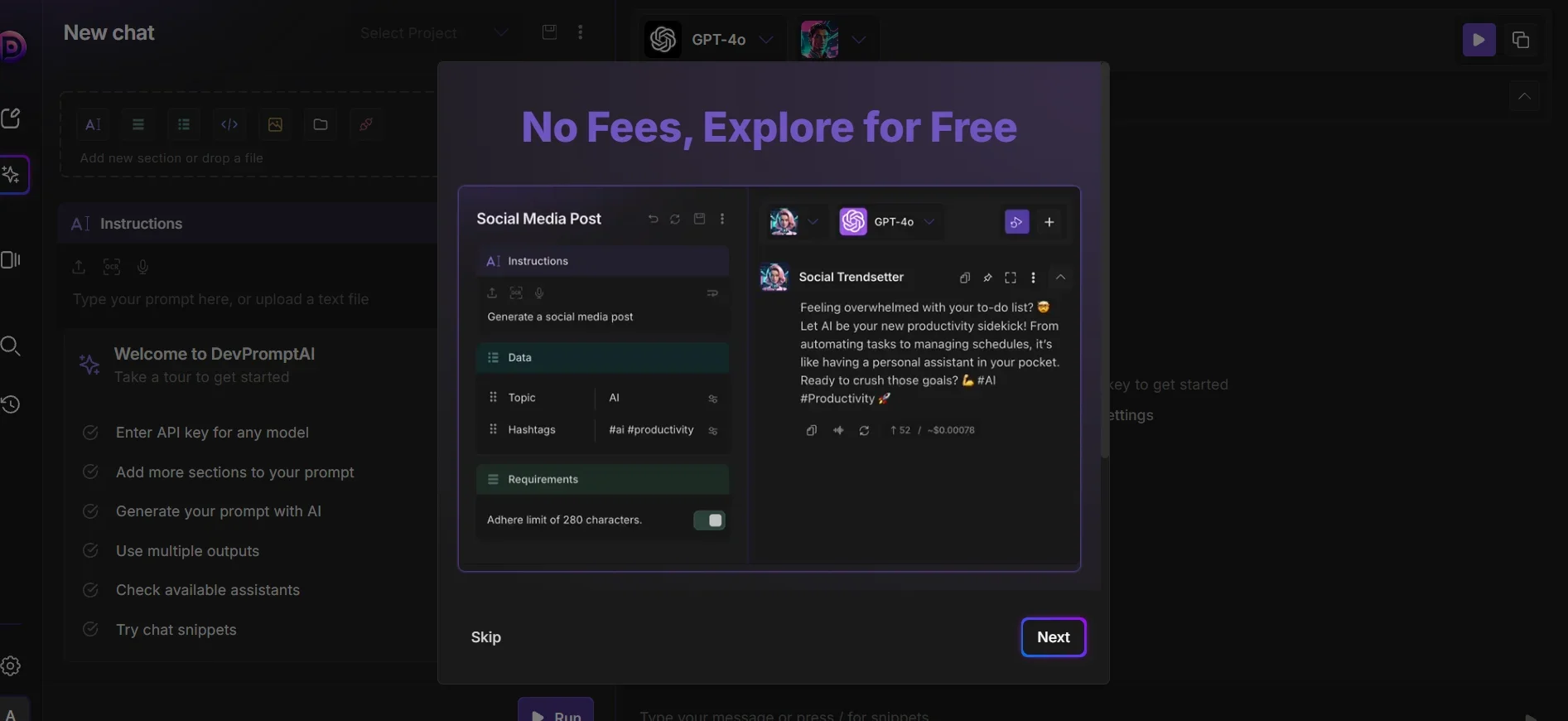
DevPrompt AI provides a platform for managing and using prompts in an organized manner within an AI-powered environment. The tool aims to facilitate the creation, testing, and organization of prompts within a referenceable library, with support for different levels of usage depending on the plan.
Code Autopilot is an AI-powered software development team that helps developers speed up the coding process. Thanks to its integration with GitHub, it can easily synchronize with GitHub issues, provide bug fixes, implement new features, and review pull requests. Autopilot is compatible with all programming languages and provides a secure API for storing code snippets. It can analyze the entire code base to improve efficiency and team collaboration.
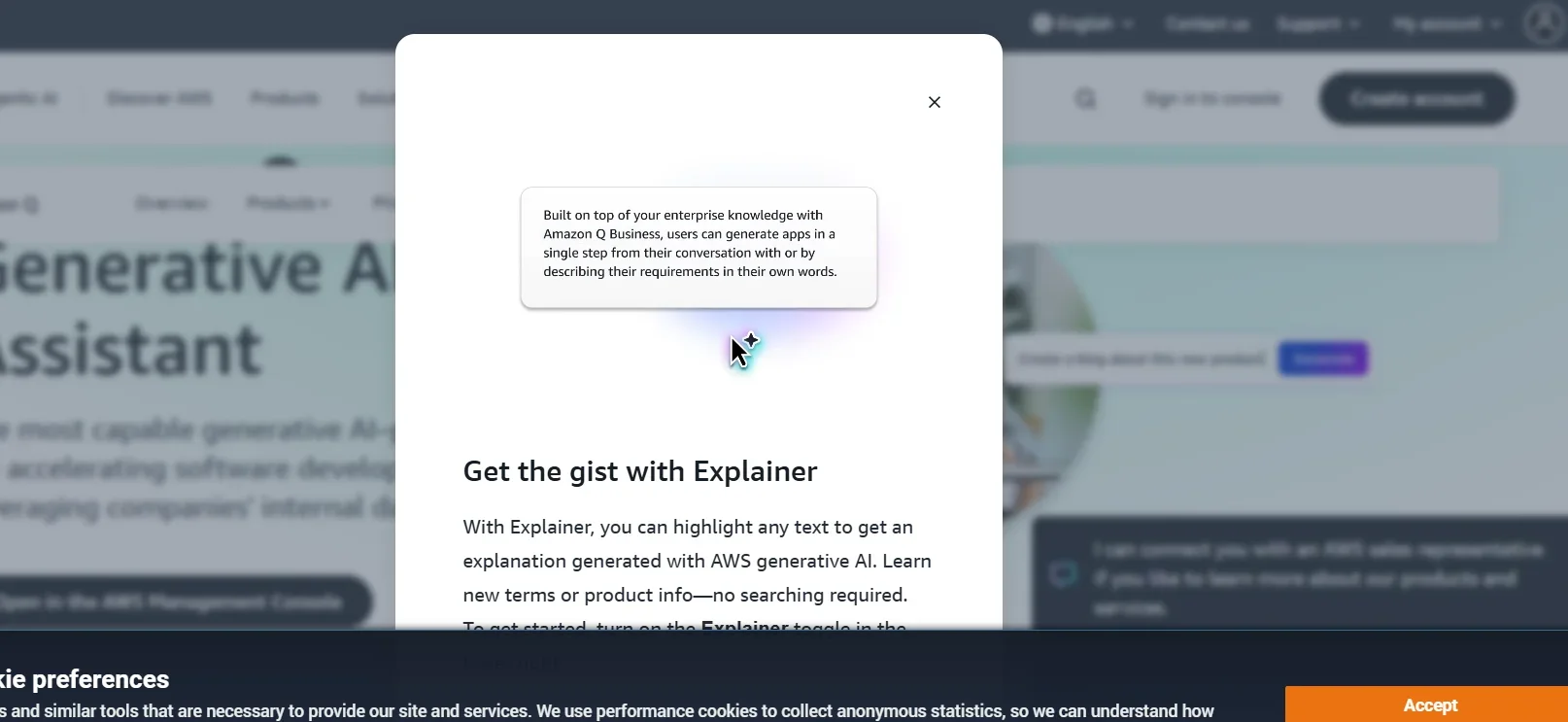
Amazon Q is a powerful generative AI assistant, designed to accelerate software development and optimize access to internal company data. It automates code generation, testing, debugging, and multi-step planning based on developer requests, enabling efficient transformation and execution of new code. In addition, Amazon Q connects to enterprise data warehouses to summarize and analyze business data, making it easy for employees to get answers on topics such as company policies, product details, and business results through logical summaries and interesting conversations. This tool boosts productivity by simplifying knowledge management and supporting tasks safely and efficiently within enterprise systems.
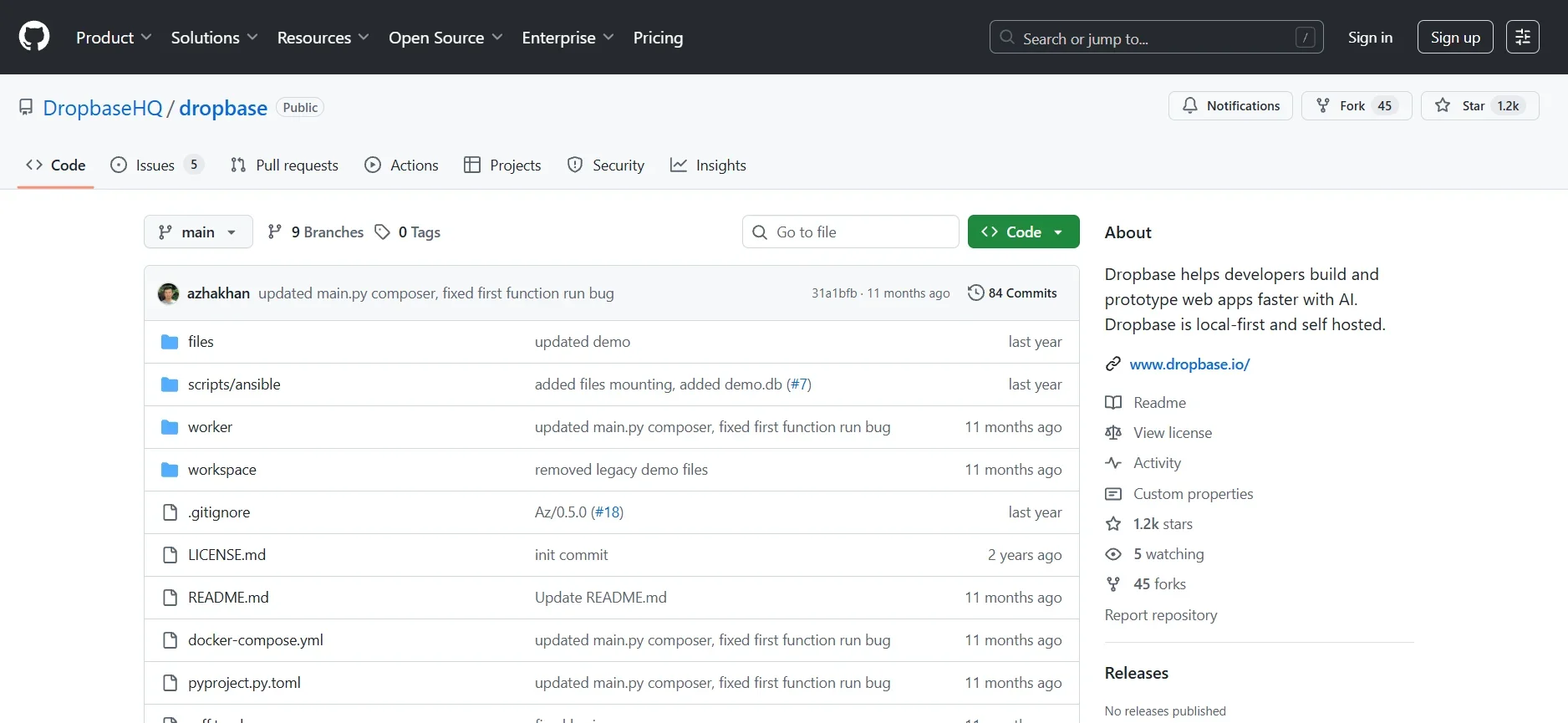
DropBase is a tool designed to help developers accelerate the process of building web application prototypes using artificial intelligence. The platform provides a locally hosted platform that combines the ease of use of a drag-and-drop app builder with the flexibility of programming, allowing the creation of custom business logic and the use of off-the-shelf UI components without the need for external libraries. Developers may want to use DropBase to quickly develop different types of web applications, such as dashboards, back-office tools, billing dashboards, and internal engineering tools, with the added benefit of AI-generated code to simplify development and learning. Its integration with Python and the ability to import any PyPI package further enhances its appeal for developing fast and customizable applications.
Databutton is an AI-powered app development platform designed to enable users, regardless of their coding experience, to quickly build and deploy software-as-a-service (SaaS) products. The platform makes it easy to build apps by interpreting natural language commands, graphs, and screenshots to create complex React user interfaces and Python APIs, while connecting them to various services and APIs to extend their functionality. Users may want to use Databutton to quickly prototype and launch app ideas, reduce development time from weeks to days, and overcome the technical barriers typically associated with full app development, making it an attractive tool for entrepreneurs, non-developers, and companies seeking to innovate quickly.
BaseAI is a web-based AI framework that enables developers to build, configure, and deploy AI-powered products using large language models. It enables users to create AI agent workflows, which are workflows that integrate various AI tools and memory components. The framework emphasizes composability, supports multiple language models, and provides easy deployment via Langbase, a serverless AI cloud. Developers may choose BaseAI for its simplicity, modularity, scalability, and customization options, making it an effective solution for creating complex AI systems without requiring extensive AI expertise or infrastructure management.
Diaflow is an enterprise platform that simplifies the integration and deployment of AI into business processes. It offers a no-code editor for creating AI-based applications, workflow automation, and data management tools. Users can build chatbots, assistants, and internal tools without the need for programming skills. The platform is designed for different departments within organizations, from marketing to IT, and is especially useful for companies looking to expand AI into their operations. Diaflow's ease of use, speed, cost-effectiveness, and broad integration make it an attractive solution for companies looking to leverage AI to drive innovation and efficiency.
EarlyAI is an AI-powered development tool that automatically generates high-quality unit tests for software developers. It integrates with Integrated Development Environments (IDEs) to create comprehensive tests, including beta tests and test cases, while optimizing code coverage. Developers can use EarlyAI to save time, improve code quality, increase productivity, and simplify test-driven development. This tool is useful for individual developers, teams, and organizations seeking to streamline their testing processes and deliver more reliable software faster.
Aire is an AI-powered, no-code, low-cost app builder that enables users to quickly and efficiently create customized web applications and databases for business processes. It uses AI to create complex data models, charts, workflows, user interfaces, and dashboards through text prompts, while providing easy-to-use tools for further customization. This tool is ideal for non-technical users and experienced developers who want to quickly build and deploy custom business applications without the high costs and time that usually accompany custom development.
GenFuse AI is a no-code automation platform that transforms instructions written in plain English into integrated AI-powered workflows. Designed by former Google engineers, the platform replaces complex drag-and-drop tools and rigid if-then logic with intelligent and adaptable AI agents. Users simply describe their goals - such as searching for companies, automating emails, or synchronizing data - and the platform builds the entire workflow on the fly. With seamless integration with popular tools like Gmail, Slack, Notion, and Google Sheets, GenFuse enables users in sales, marketing, productivity, and customer management to eliminate manual tasks. It makes automation fast, easy to use, and accessible to non-technical users in seconds.
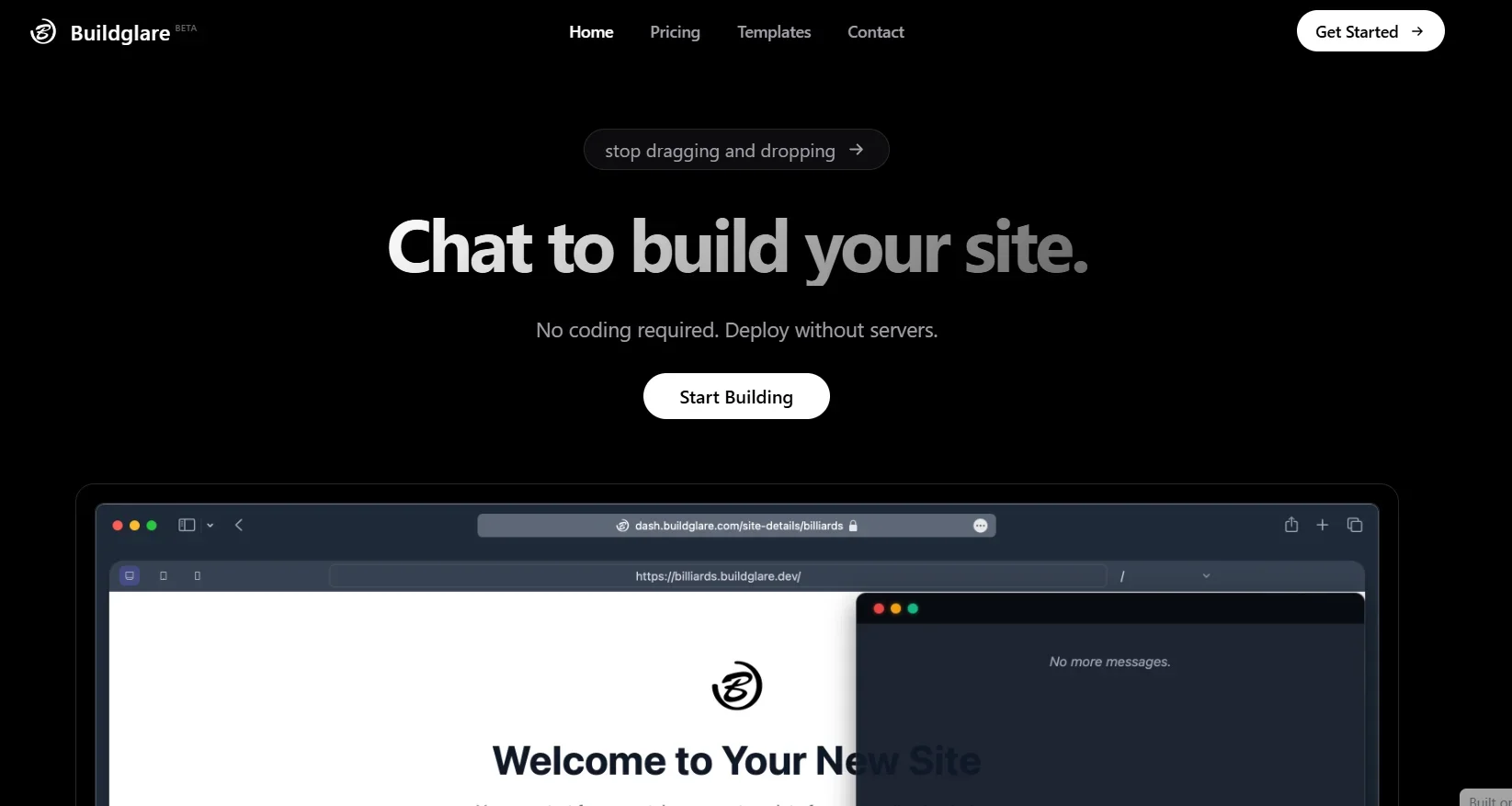
Buildglare is a low-code, AI-powered platform for building SaaS applications quickly and easily. It uses natural language input to create pages, modules, and database configurations, simplifying the development process. With features like real-time collaboration, version control, and one-click deployment, Buildglare is ideal for developers, entrepreneurs, and small teams that want to build functional SaaS products efficiently and without the need for extensive programming knowledge.
Code2.AI is an AI-powered development tool that converts existing code bases into compact, ready-to-use versions, enabling more efficient interaction with AI models for code generation and analysis. The tool supports all programming languages, provides a comprehensive project context for AI prompts, and generates complete and efficient code that integrates seamlessly with existing projects. Developers can use Code2.AI to accelerate development, update legacy code, assist with code reviews, or quickly turn design concepts into working prototypes, saving time and improving code quality across all types of projects.
An AI platform for generating web applications entirely from text, aimed at developers and entrepreneurs who want to build products quickly without heavy coding effort.
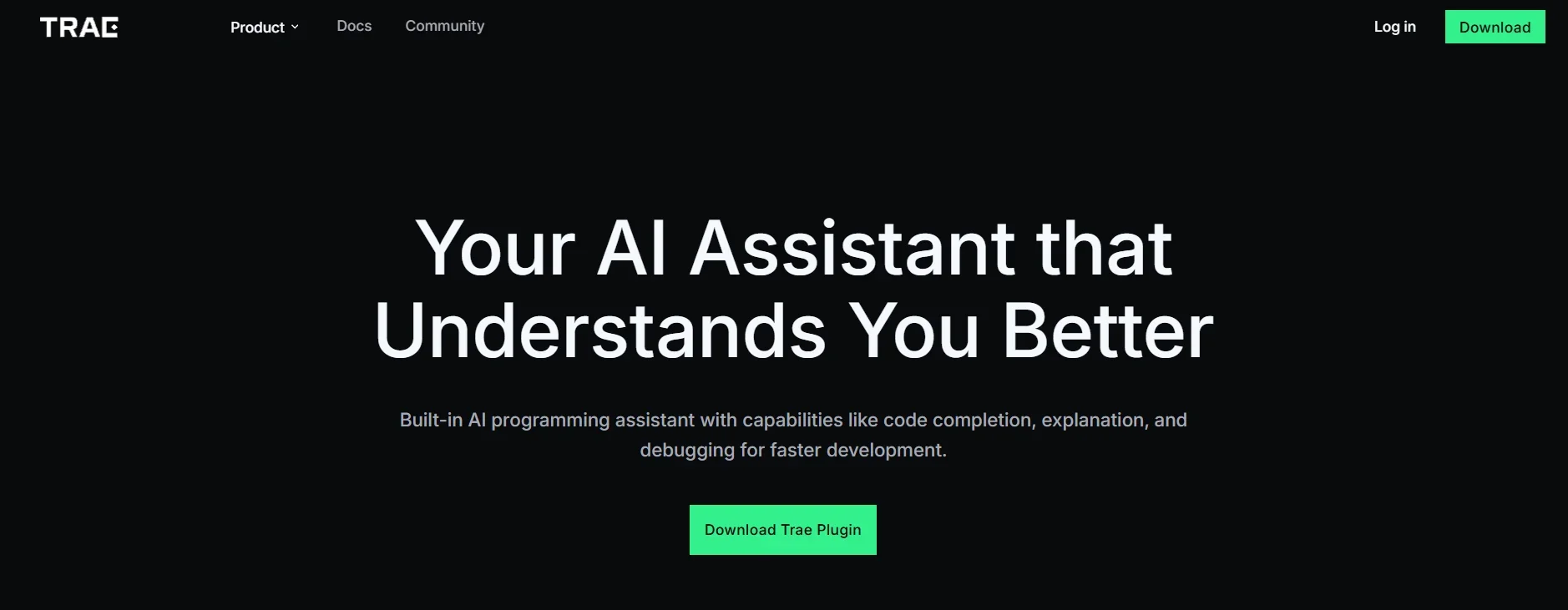
MarsCode is a cloud-based Integrated Development Environment (IDE) with artificial intelligence (AI) that simplifies software development by providing a comprehensive set of features, including code completion, generation, annotation, and debugging using AI, which enables developers to write code more efficiently through natural language interaction, provides a set of development tools for plugin development and deployment, and simplifies project setup with features such as schema management and deployment. MarsCode enables developers to write code more efficiently through natural language interaction, provides a suite of development tools for plugin development and deployment, and simplifies project setup with features such as schema management and one-click deployment. The secure and configuration-free cloud development environment supports creating projects from templates or Git repositories. MarsCode is designed for novice and expert developers alike who want to improve productivity, reduce development time, and focus on writing scripts instead of dealing with operational complexities, making it a powerful tool for a wide range of programming tasks.
A no-code AI tool that empowers users to turn their data into ROI by building AI models in minutes, not months. The tool features model building, deployment, monitoring, integration, sharing, and expert support. Case studies, success stories, and blog posts are provided to illustrate the tool's capabilities.
Opal is a no-code AI app building tool from Google Labs that enables anyone to create customized AI-powered apps through natural language commands and visual workflows. The tool turns user descriptions into functional applets leveraging Google's advanced AI models, including Gemini and Imagine, without requiring any coding knowledge. Users can build multi-step processes that combine various AI capabilities, such as image creation, text analysis, and data processing, and then edit and visually optimize these workflows through an intuitive interface. Opal is characterized by its seamless integration with the Google ecosystem, its ability to share creations as web links for others to use or remix, and its accessibility for non-technical users looking to automate tasks or build specialized tools. This experimental platform makes AI application development accessible to everyone, allowing creators, professionals, and innovators to quickly prototype ideas and build practical solutions that would normally require significant development resources.
Open Lovable is an open source AI-powered tool that enables users to instantly turn any website into a modern React app through natural language conversation. Leveraging powerful and large language models from providers like Anthropic, OpenAI, Groq, and Gemini, developers can simply describe what they want to clone or create, and the AI will generate the corresponding React code. The tool combines web data mining capabilities through Firecrawl with secure local execution via the E2B environment, allowing users to extract designs and content from existing websites while maintaining full control over their code. Unlike proprietary alternatives, Open Lovable gives developers full ownership of the generated code with a MIT license, and only requires paying to use their API while maintaining privacy through local execution, making it ideal for web developers seeking to accelerate development, prototype quickly, or learn from existing website structures.
Pixoai appears to be an AI-powered web app builder that enables users to build and deploy apps using natural language commands. This likely enables non-technical users to quickly turn their ideas into functional web applications without the need for programming skills. Some may want to use this tool to quickly prototype concepts, create simple business tools, or launch digital products with minimal development time and technical expertise required.
Refact.ai is an AI-based, cloud-hosted programming assistant that provides statistics for every user. It provides quick code completion and powerful tools for code optimization. Users can download the tool for JetBrains or VS Code.act supports several code management programs, including GPT-4, Code LLama, StarCoder, and WizardCoder, allowing users to choose the model that best suits their needs. The tool recognizes the context of the code base through "fill-in-the-middle" technology, and offers options for users concerned about code privacy, including self-hosted versions.act helps users auto-complete lines of code,actor, analyze, fix bugs, and answer code-related questions via chat.
Second Dev Tool is an automated code porting tool for developers. It helps to port and upgrade code bases, including resolving dependencies, updating build systems, updating tests, and more. It is powered by artificial intelligence and uses specially designed modules to avoid instant deviation. Interacts with developers via pull requests from GitHub, Bitbucket, or Gitlab, and can run locally or within a user's virtual private network.
AI Script Generator specializes in automatic and fast script generation, supports various programming and automation languages, and targets non-programmers and technical teams alike.
Tybee is a Python-based tool designed to help developers easily build data-driven and AI-driven web applications. The tool allows for easy-to-use graphical user interfaces (GUIs) to be built using Python code, enabling a quick transition from simple pilot projects to production-ready applications. With features such as cache control, selective graphical updates, built-in data optimizers, and a variety of integrations with leading data platforms, Tybee is optimized for performance and big data support. It is suitable for data scientists, Python developers, decision makers, and business analysts seeking to improve productivity and streamline development. Tybee's ability to handle complex tasks, support multi-user environments, and ease of customization make it an attractive option for those looking to develop robust and scalable web applications without compromising performance or scalability.
V0 is a user interface generation system developed by Vercel Labs and powered by artificial intelligence. It generates Shadcn UI and Tailwind CSS-compliant React code, based on text prompts. Users can choose from three AI-generated UI options, customize them, and copy and paste the code for their projects. V0 is trained on a mix of custom code, open source datasets, and synthetic datasets, and user-generated prompts can be used for further improvements. The tool is currently in private beta, with plans to expand support for different UI libraries and design systems. User data can be deleted upon request, and commercial use is subject to Vercel's terms.