Description

️ Tool Name: 🖼
Beamery


Categories: 🔖
Human Resources and Recruitment
Prediction and Applied Machine Learning
Data and Analytics
Automation and Smart Agents
Business and Operations Management
Compliance, Governance, and Policies
Integrations and APIs
Analytics and Dashboards
No-Code Workflows


️ What does this tool offer? ✏
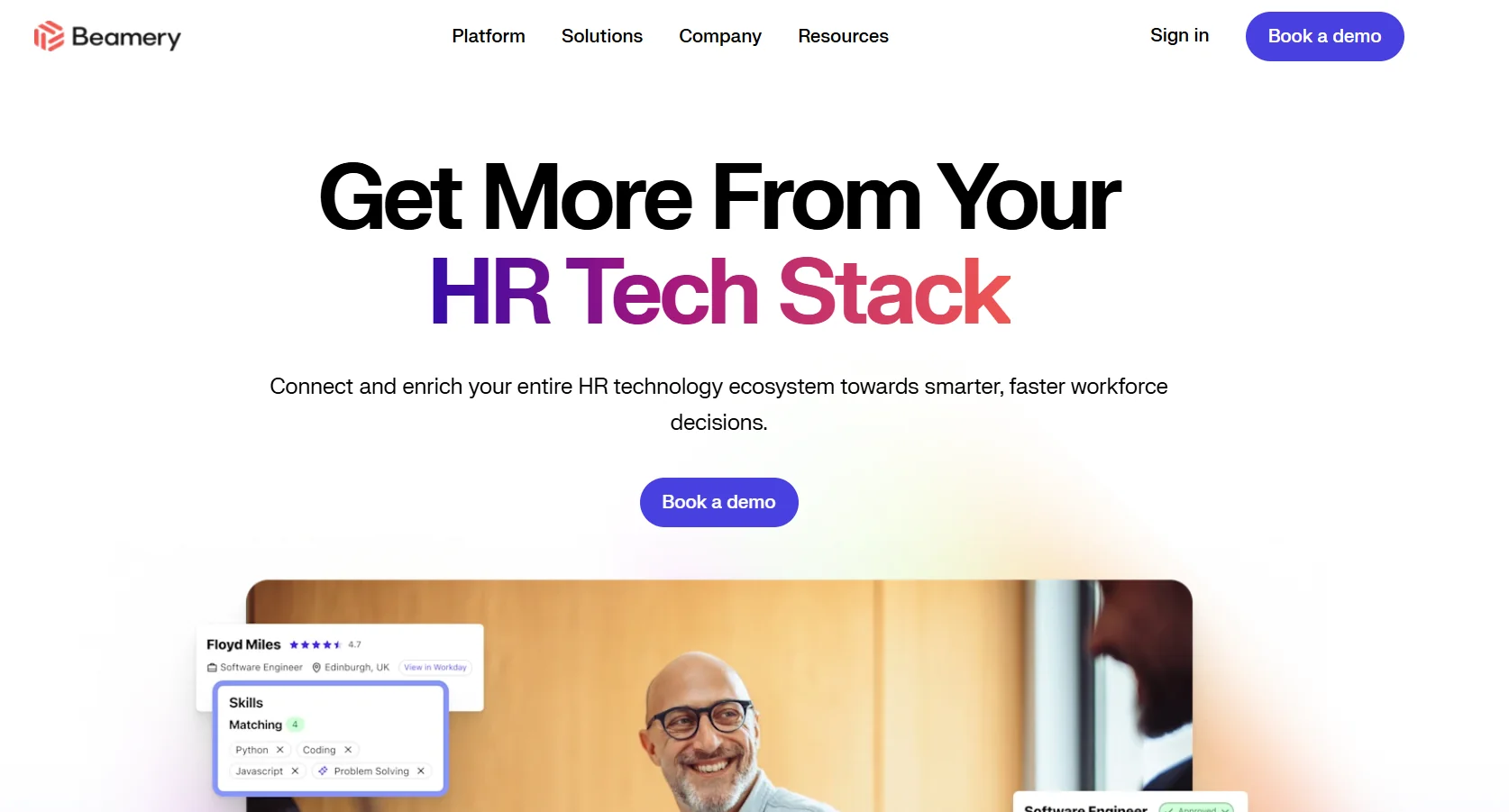
Beamery is an advanced AI platform for workforce management and transformation, leveraging “Skills Intelligence” to unify employee, skills, job, and labor market data within a single intelligent system.

The platform aims to help organizations make better decisions in hiring, development, and planning by transforming scattered HR data into a single, unified, and accurate source.

Its core capabilities include:

  • Centralized management of skills and workforce data
  • Analysis of the labor market and skills within and outside the organization
  • Job design and role restructuring
  • Workforce planning
  • Intelligent matching of skills to jobs
  • Supporting internal mobility
  • Advanced workforce analytics

The platform also enables organizations to simulate various workforce scenarios and analyze the impact of automation and artificial intelligence on jobs, helping them plan more strategically.

It relies on integrating data from HR systems such as Workday, SAP, and others with external market data to create a comprehensive picture of skills and roles within the organization.


What does it actually offer based on user experience? ⭐

  • Improved skills-based hiring instead of job titles
  • Reducing time-to-hire and increasing recruitment efficiency
  • Improved quality of HR decisions and planning
  • Improved discovery of internal skills within the company
  • Supporting long-term workforce planning
  • Reducing hiring bias through artificial intelligence
  • Increase organizational flexibility within institutions

Does it involve automation? 🤖
Yes, it relies on AI-powered automation, including:

  • Automatic matching of skills to jobs
  • Resume analysis and skill extraction
  • Smart recommendations for hiring and internal mobility
  • Automation of HR data flows between systems
  • Automatic workforce scenario simulation
  • Automated support for hiring and restructuring decisions

Pricing Model: 💰
Custom Pricing – Designed for large enterprises


🆓 Free Plan Details:

ItemDetails
Free PlanNot available
TrialDemo available only by contacting sales
NotesNo official Free Plan

Paid plan details: 💳

PlanPriceFeatures
Talent Intelligence PlatformCustom PricingSkills Management + Smart Recruitment + Workforce Analytics
Workforce Planning SuiteCustom Pricing (Higher)Scenario Planning + Role Analysis + Restructuring
Enterprise IntegrationCustom PricingIntegration with Workday, SAP, and Oracle + APIs
NotesPricing dependson the number of employees, units, and integrations required

How to access the tool: 🧭

MethodDetails
WebCloud platform via the official website
AppNot specified
APIAvailable for integration with major HR systems
AddIntegrations with Workday, SAP, LinkedIn, and others

Demo link or official website: 🔗
Beamery Partners

Pricing Details

The official way to find out the price of the Beamery platform is through direct contact only, as the company does not rely on fixed subscription plans but instead offers customized pricing based on each organization’s needs. You can request a demo via the official website https://beamery.com/ by selecting the “Book a demo” option and filling out your company’s information. The sales team will then contact you to understand your requirements and provide a suitable quote. You can also use the direct contact page https://beamery.com/contact/ to specify your organization’s needs more precisely—such as company size and intended use—so a custom quote can be generated. Beamery’s pricing is based on several key factors, including the number of employees and the modules used, such as Talent CRM, Skills Intelligence, Internal Mobility, and Workforce Planning AI, as well as the number of countries, compliance requirements such as GDPR, the level of integration with HR systems like Workday, SAP, and Oracle, and the organization’s size—specifically whether it falls into the Enterprise category.