AI Bosala

العربية

Customer Support & CRM

Tools in Customer Support & CRM

1,128 tools

Filter and sort these tools

  1. Shakespeare

    Shakespeare AI is an AI-powered marketing tool that acts as a marketing assistant 24 hours a day, 7 days a week. It leverages data-driven insights and AI models to help marketing teams make data-driven decisions rather than relying on intuition. The platform includes three key capabilities: Targeting AI for audience targeting, Creative AI for creative automation, and Optimization AI for real-time campaign performance optimization.

  2. Subject Line Generator

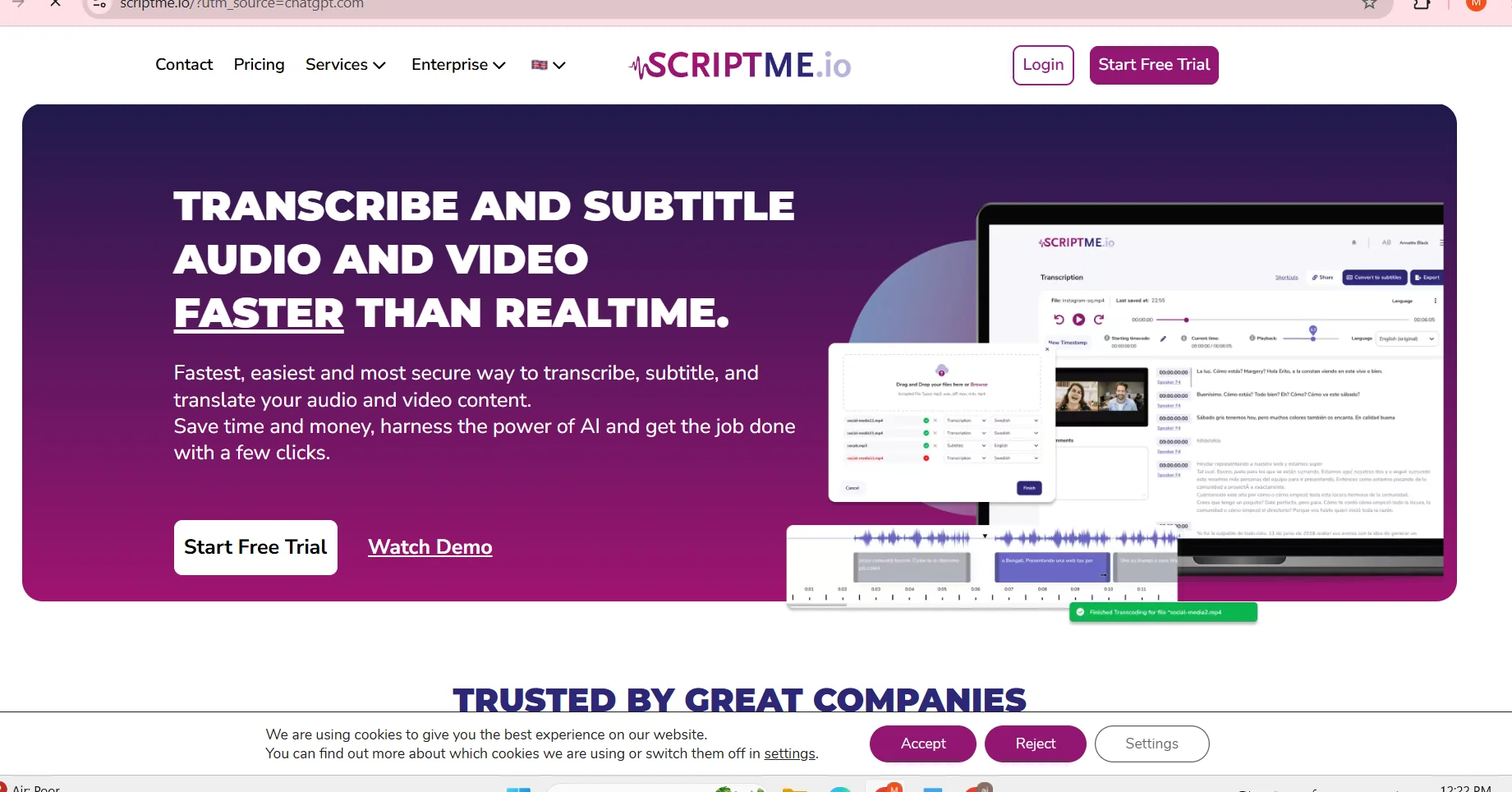
    YAMM is a platform for automating and managing email campaigns. It integrates with Gmail and Google Workspace and offers a suite of AI-powered email tools, including the Subject Line Generator, Email Writer, Sentiment Analyzer, Grammar Fixer, and Tone Rewriter. The AI Subject Line Generator allows you to create personalized email subject lines based on the email text, with a maximum length of 2,500 characters, with the ability to specify the tone of the message before generating the subject lines. It uses OpenAI’s gpt-4o-mini for generation, with the option to use gpt-4o via GPT for Work add-ons for improved quality.

  3. Cohesive AI

    Cohesive is an AI-powered growth platform designed for companies that sell locally, with the goal of automatically finding, reaching, and engaging with local businesses. The platform targets service-based businesses that sell in local markets, including sectors such as commercial cleaning, painting and coating, roofing, facades, heating, ventilation, and air conditioning (HVAC), plumbing, mechanical services, facility services, real estate services, and other local businesses that sell to nearby businesses, property managers, homeowners, and commercial properties.

  4. Snow park

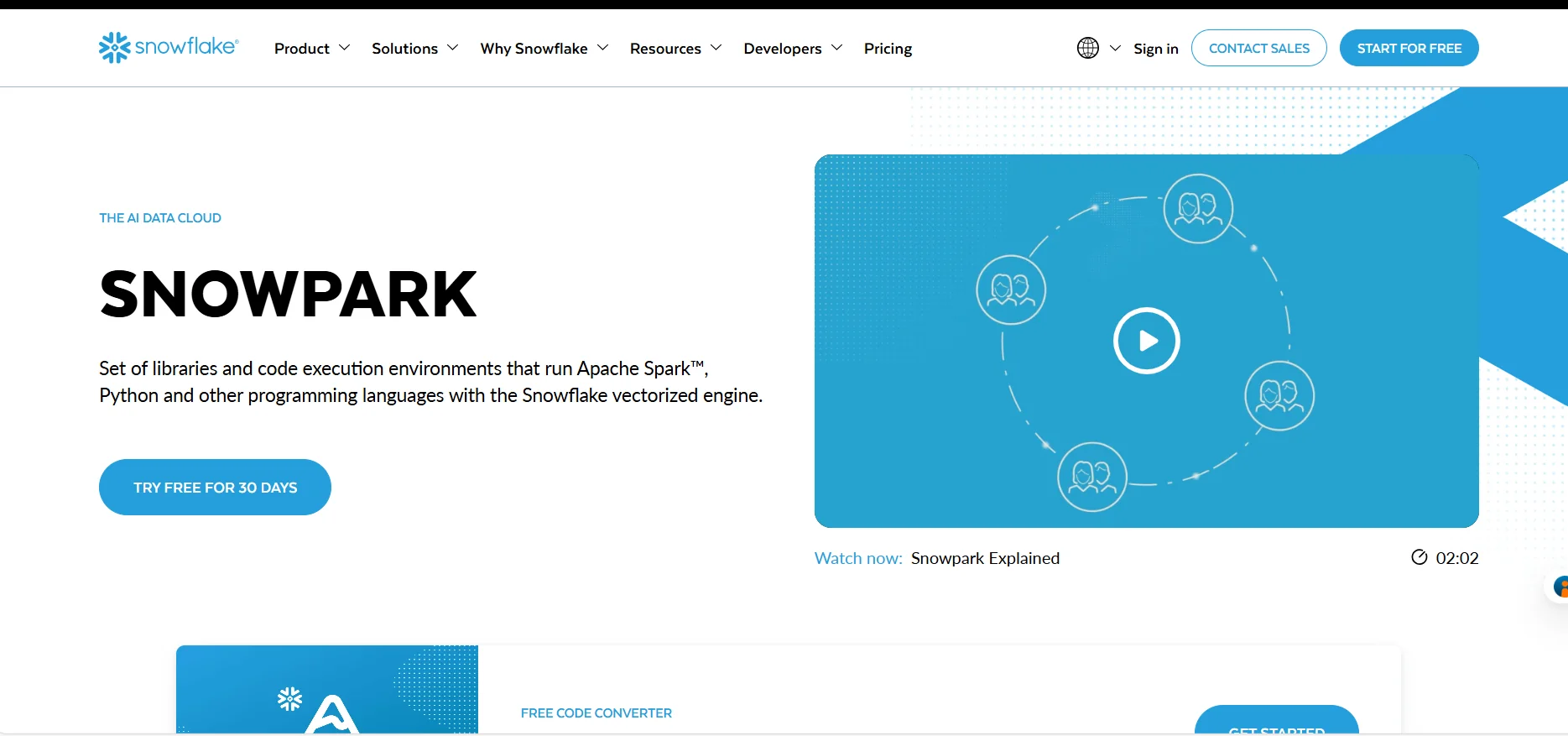
    Snowpark is a collection of libraries and code execution environments within Snowflake, It enables the execution of non-SQL code such as Python, Java, and Scala, as well as integration with Apache Spark™, using Snowflake’s vector engine, so developers can use the programming language of their choice with data stored within Snowflake without having to move it. Snowpark provides a unified, scalable environment for data processing with built-in governance and security. It supports Snowpark DataFrames for DataFrame-based programming, Python, and pandas on Snowflake, which provides a familiar pandas API for data transformation and analysis, as well as integration with the PyData ecosystem; user-defined functions and stored procedures for writing and executing custom code; and custom procedural code. It also provides Snowpark Connect for Apache Spark to run Apache Spark DataFrames, SQL, and UDFs for data processing, with the ability to set up a Spark client, as well as Snowpark for Data Engineering to use Python to transform raw data into structured and prepared formats within data pipelines. Snowpark enables the creation of scalable data pipelines by transforming data from a data lake, data warehouse, or Iceberg tables within Snowflake. It also offers Snowpark Migration Accelerator, a free application for converting existing code to the Snowpark framework, available as both a GUI and a CLI. Snowflake provides a hands-on lab for building data engineering pipelines using Snowpark in Snowflake Notebooks, Snowpark Connect for Apache Spark content, an e-book titled *Building Applications with Snowpark for Dummies*, and Quickstart guides for building your first Python pipelines, exploring more advanced Python pipelines, and moving EDA into production using pandas. Snowflake notes that more than 50% of its customers use Snowpark weekly as of April 2024, and reports that customers have achieved, on average, 4.6x faster performance and 35% cost savings when using Snowpark compared to managed Spark services, based on customer production use cases and proof-of-concept exercises that compared speed and cost from November 2022 to May 2025. Snowflake clarifies that these results are based on real customer data and not on synthetic datasets used in benchmark tests.

  5. Pecan AI

    Pecan is an AI-powered predictive analytics platform for businesses that provides forecasts for customer churn, demand, revenue, and other business metrics, with the ability to deliver those predictions to the database, data warehouse, or CRM system your teams use. The platform is designed for teams that have data and need to make decisions based on predictions without having to deal with the burden of data preparation, model building, and validation, as the Pecan predictive agent automates data preparation and modeling and answers questions in plain language. Use cases include predicting customer churn, LTV modeling, lead scoring, demand forecasting, upselling and cross-selling opportunities, customer retention, fraud prevention and chargebacks, and campaign ROAS forecasting. The platform also provides solutions for marketing teams to forecast conversions, lifetime value, and campaign impact; for sales teams to evaluate leads and forecast sales; and for operations teams to forecast demand and inventory needs, for customer success teams to predict churn risk and customer health scores, and for finance teams to forecast revenue, cash flow, and risk. Pecan integrates with the data sources and tools used by these teams, including Snowflake, Databricks, Google BigQuery, Salesforce, Firebase, Adjust, Amazon Redshift, AppsFlyer, HubSpot, Singular, IBM Db2, Microsoft SQL, Oracle, PostgreSQL, Parquet, ClickHouse, GCS-Parquet, MySQL, and AWS S3. The official page explains that the platform offers a Predictive AI Agent, scheduled forecast delivery, additional forecast batches, and forecast monitoring, with the ability to use SSO, It also enables private deployment, detailed explainability, advanced monitoring, and custom dashboards when Predictive AI is needed at an enterprise scale.
  6. M-Files Aino

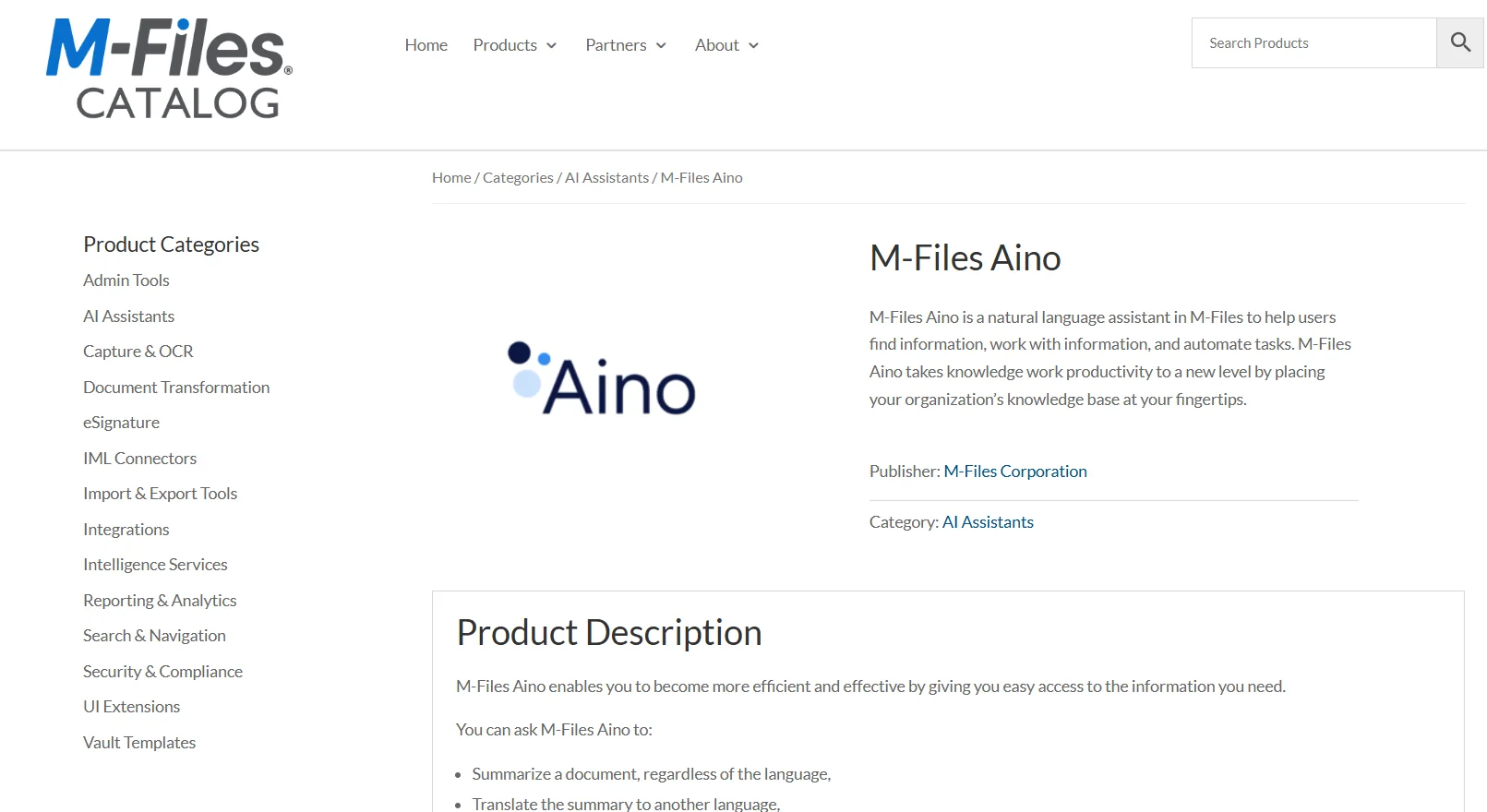
    M-Files Aino is a natural language AI assistant built into M-Files that helps users find and work with information, automate tasks, and access the organization’s knowledge base. Users can request summaries of documents regardless of their language, translate the summary into another language, find answers within documents, and save summaries and answers as metadata. Conversations with Aino are also automatically saved and can be reviewed in the conversation history. The latest versions allow users to find answers from anywhere within the Vault, obtain context-relevant answers—such as those related to a search, view, or business objects—and leverage specialized domain expertise in mathematics and calendar logic. Aino can understand documents and interact with users in most languages, while the administration interface is available in English only.

  7. ShortlyAI

    Shortly AI is a comprehensive AI-powered conversational platform that allows users to access more than 100 leading AI models from various companies and providers within a single workspace and through a single subscription, including models from Gemini, ChatGPT, Claude, Mistral, DeepSeek, Qwen, Grok, and others. These companies and providers include Alibaba, Amazon, Anthropic, Cohere, DeepSeek, Google, Meta, MiniMax, Mistral AI, Moonshot AI, NVIDIA, OpenAI, Tencent, Xiaomi, and Z.ai.

  8. Storywise

    Storywise is a platform designed for publishers and literary agents, providing an integrated workflow for managing submitted manuscripts and organizing the processes of receiving, sorting, and evaluating them. The platform was developed by people with firsthand experience in the publishing industry, with the goal of replacing processes that were previously managed through email chains, spreadsheets, and notes with a unified system that helps organize submissions, improve collaboration, and access past requests.

  9. Soniox

    Soniox is an audio platform that provides application programming interfaces (APIs) for speech processing, speech-to-text conversion, text-to-speech conversion, and speech translation, with support for more than 60 languages. The platform enables real-time or asynchronous speech transcription and operates on a usage-based pricing model, whereby users pay for the Speech-to-Text and Text-to-Speech services they actually use. Soniox offers the stt-rt-v5 model for real-time transcription—which is the currently active model according to the official documentation—as well as the stt-async-v5 model for asynchronous processing of audio files. The stt-rt-v5 model offers improvements in recognition accuracy, speaker separation, spoken language identification, real-time translation, faster speech termination, context handling, and recognition of structured data such as numbers, dates, email addresses, names, addresses, and codes.

  10. gpt-4o-transcribe

    GPT-4o-transcribe is an OpenAI model for speech-to-text conversion, developed as an upgrade to the Whisper model, with a focus on improving transcription accuracy and reducing the word error rate. It supports over 100 languages and works in environments involving noise, different accents, and varying speech rates; it also incorporates techniques for noise reduction and semantic speech activity detection. The model supports real-time speech-to-text conversion, allowing for continuous audio input and real-time text output. It can be used in call centers, for creating meeting minutes, in smart assistants, and in applications that require voice interaction.

  11. Strut

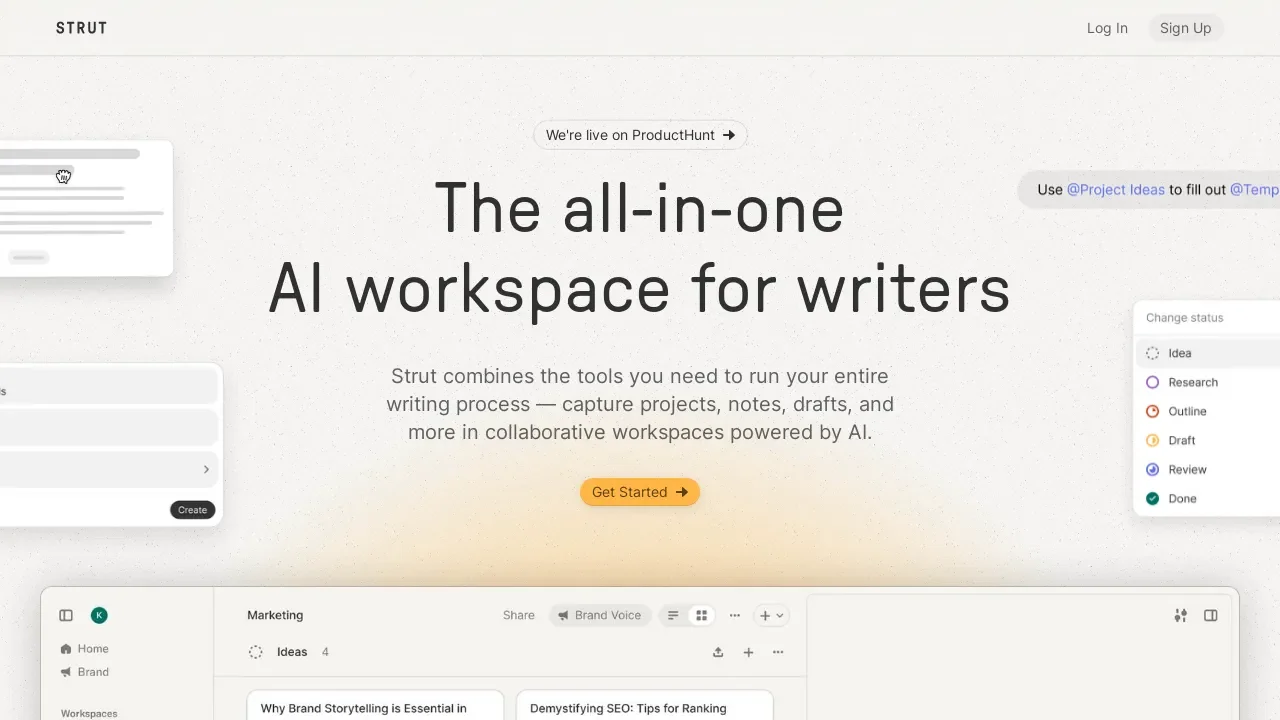
    Strut positions itself as an AI-powered workspace and notebook, designed to create, expand, and organize long-form written work—such as articles, reports, research papers, and manuscripts—starting from the user’s initial notes. The platform brings together initial notes, developed sections, structure, and the full draft within a single workspace. The process begins with capturing notes, ideas, quotes, and questions, then developing them by expanding on ideas and linking them to relevant content, followed by organizing the material into an outline, sections, or chapters while preserving the context of the sources, leading up to writing the complete draft and revising it using context-aware artificial intelligence that follows the user’s guidelines.

  12. MagicPost

    MagicPost is a platform specializing in managing and growing your presence on LinkedIn, bringing together content creation, scheduling, publishing, performance analysis, audience engagement, and lead generation all in one place. It offers an AI-powered LinkedIn post generator, AI-generated visuals and images, carousel post creation, idea and hook generation, an inspiration library, the ability to browse over 2 million posts, and content creator analytics, along with post and comment scheduling, tracking statistics and metrics, engagement and response tools, and lead generation. It also offers agency-specific features, including client account management, secure connection to LinkedIn accounts, sharing posts and calendars, submitting content for approval, engaging on behalf of clients, and creating white-label LinkedIn reports.

  13. Spellbook

    Spellbook is an AI platform specializing in legal work, with a primary focus on reviewing, drafting, and managing contracts. It works directly within Microsoft Word and also offers integration with Google Docs and a web-based document editor. The platform enables users to review contracts and analyze their clauses to identify risks, errors, inconsistencies, and unusual terms, then suggests legal amendments and drafting suggestions that lawyers can review, modify, or accept. It also offers a “Draft” feature for creating legal clauses and documents from scratch or leveraging existing templates in the organization’s library, and an “Ask” feature that allows users to ask questions about documents, generate new text, and search the web and legal sources. It also includes Playbooks for applying custom review rules and instructions to contracts, and Associate, an AI agent for handling multi-document legal matters. The platform also offers capabilities for comparing contracts, searching past contracts, and extracting information from them, as well as managing, indexing, and searching signed contracts using natural language.

  14. Textero AI Essay Writer

    Textero is an AI-powered academic writing assistant designed to help students and researchers create essays and academic papers, organize their ideas, and save time while writing. The essay generator can create various types of essays—such as argumentative, analytical, interpretive, narrative, and research essays—with the ability to tailor the content to the user’s topic and academic level. The user begins by entering the essay’s topic, type, and main points, and can upload files containing the professor’s instructions, grading criteria, or assigned reading materials and sources. Textero then generates a draft that can be reviewed and edited before downloading the final project or creating a Google Doc via the “Create Google Doc” option.

  15. SmartRecruiters

    SmartRecruiters offers an integrated platform for talent acquisition and recruitment management, designed specifically for companies and organizations that manage large-scale hiring processes or have complex hiring needs. The platform uses SmartOS as its foundation for managing the entire hiring process—from posting job openings and attracting candidates to hiring and onboarding new employees—with an AI layer called Winston that automates tasks and supports recruitment teams.

  16. Breezy HR

    Breezy HR offers an integrated platform for managing recruitment and hiring processes, from posting job openings and attracting candidates, through screening, interviewing, and gathering feedback, all the way to extending job offers and moving to the onboarding phase. The platform combines an applicant tracking system (ATS) with artificial intelligence features through Breezy Intelligence, while also allowing users to migrate from other platforms and manage the hiring process through customizable workflows.