
Glambase
An AI Influencer Creation Platform, empowering users to create ultra-realistic AI models and earn autonomously as their virtual personas engage with and generate exclusive content for audiences.
932 tools
An AI Influencer Creation Platform, empowering users to create ultra-realistic AI models and earn autonomously as their virtual personas engage with and generate exclusive content for audiences.

Animate historical photos with AI, bringing family memories alive.

Create better LinkedIn content 10x Faster with AI.

Rapidly prototype, test, and iterate design ideas.

AI-Driven Product Management Tool: From Ideation to Launch

Empower AI with intuitive computer vision tools, training, and deployment.

Optimize revenue strategies with AI-driven prescriptive analytics.

Automates marketing and sales with advanced AI-driven content and insights.

Revolutionize photo editing with AI-driven analysis, automated enhancements, and cloud accessibility.

AI-driven tool transforms design with seamless image editing.

Revolutionize image editing: AI-driven, bulk processing, customizable workflows.

Generate personalized visuals with AI-driven customization.

Revolutionize photo management with AI-curated, high-quality, customizable collections.

Revolutionize product photography with AI: enhance, edit, and monetize images effortlessly.

AI-driven content creation, simplifying digital engagement across languages.

AI transforms QR codes into engaging, custom artistic visuals.

Create emotionally intelligent, multilingual, customizable AI characters.

AI-powered tool for effortless, personalized book cover design.

Forewrite is a platform that brings together leading AI models in one place and offers a comprehensive suite of tools for writing, conversation, documents, images, voice commentary, and speech transcription.
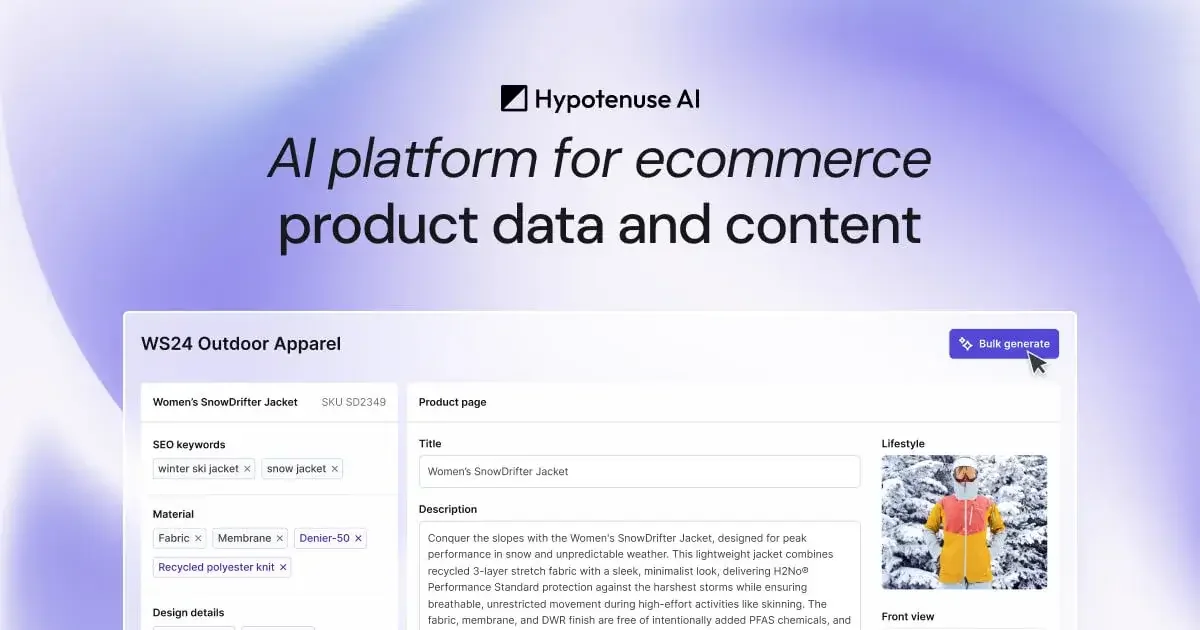
Hypotenuse AI is an AI-powered product information management (PIM) platform for e-commerce designed to manage and enrich product data, create content, optimize images, and monitor product performance within a unified workflow. The platform enables the creation of thousands of search-engine-optimized product titles and descriptions that reflect the brand’s voice, and automatically enriches product data by filling in missing attributes and standardizing data using sources such as images, web pages, UPCs, and specification sheets, as well as extracting specifications, colors, and other product details from images; applying tags and classifications based on custom taxonomies or classifications compatible with Google and Amazon; and standardizing formats and correcting errors. It also enables content creation and optimization through product descriptions, titles, meta descriptions, category pages, blog posts, and more, with the ability to apply brand guidelines, custom formats, and localize and translate content into over 40 languages. The platform offers AI-powered product image optimization, including background replacement, background and shadow generation, cropping and resizing with smart fill, resolution enhancement, detail improvement, noise reduction, and the creation of product images within realistic contexts. It also enables monitoring of product page performance across Google, Amazon, Walmart, and others; keyword discovery and suggestions; and verification of content compliance with brand guidelines, legal requirements, and channel requirements prior to publication. The platform supports collaborative workflows, import and export via CSV and XLSX, direct publishing to websites and sales channels, and custom integrations with PIM, ERP, and e-commerce systems. It can be used as a central system for managing product content, attributes, and images for teams that do not use a PIM or DAM system, while teams that do use these systems can connect Hypotenuse AI to them to enrich data, create and verify content, and prepare images in a shared workspace. The platform notes that it imposes no fixed limit on the number of SKUs and works with retailers and distributors managing anywhere from a few thousand to millions of SKUs, with collaborative workflows designed to handle large catalogs. Its tools include HypoChat for instant web search, HypoArt for text-to-image conversion, and tools for summarization, rewriting, and content generation, as well as product content tools such as the Product Description Generator, Category Description Generator, Meta Title Generator, Meta Description Generator, and Product Image Description Generator, along with features like AI Product Tagging, AI Attribute Mapping, AI Bulk Translate, AI Brand Voice, Bulk Content Generation, Product Data Enrichment, Product Categorization, SEO Monitoring, and the AI PIM Solution. The platform also supports integrations with Webflow, WordPress, Wix, Shopify, Salsify, Amazon, Walmart, WooCommerce, Target, Stibo, BigCommerce, Plytix, and PIMcore.
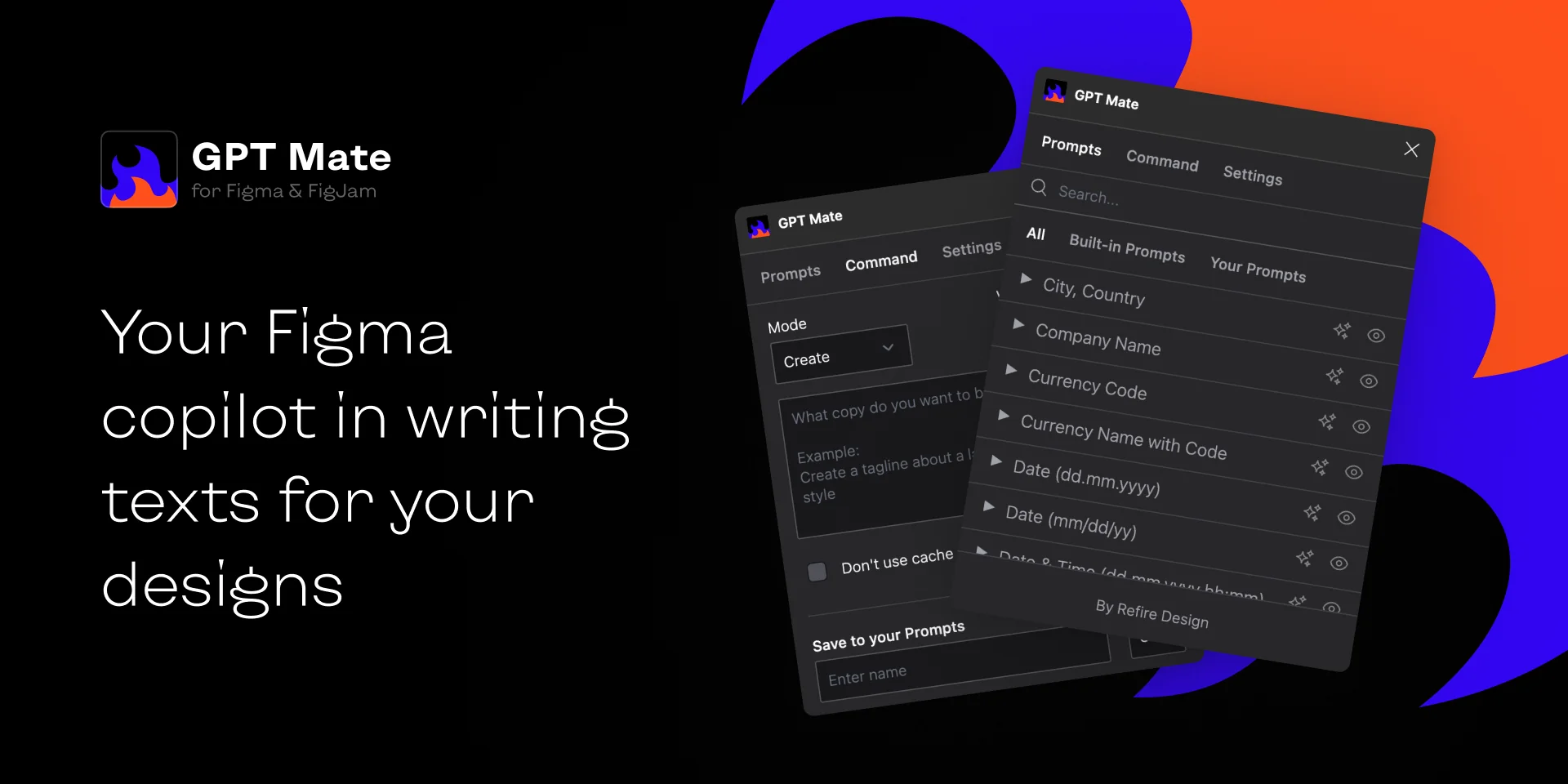
The Figma Community features an extensive library of community-created resources, including files, libraries, plugins, icon sets, and more, with the ability to search for resources such as portfolios. It also offers Skills—reusable instructions for the Figma Agent that help speed up work—allowing you to browse skills created by the community or publish new ones, including “document-component-migration” by Brett McMillin with counts of 70 and 70, “balise-ux-writing” by Steven H-A with 172 and 326, “catch-me-up” by Cai Charniga with 46 and 154, “camera-pan-and-zoom” by the Figma Community with 155 and 301, and “usability-test-guide” by the Figma Community with 419 and 723 views, and “create-anatomy” by Ian Guisard with 211 and 390 views. Figma Make also allows you to create apps, websites, and prototypes that can be remixed using prompts; examples include Fortune Cookie! From Da Wei, which is free with 3.7k and 23.9k views; “Interactive Eye-Following Card” by Thierry, which is free with 8.5k and 37k views; “Shader Reminder” by Daniela Muntyan, which is free with 7k and 26.3k views; “Button effect” by Soundharya M, which is free with 3.8k and 19k views, and “Minimalist sidebar component” by Joshua Guo, which is free with 2.6k and 58.9k views; and “3D ASCII Model Viewer” by Daniel Destefanis, which is free with 2.3k and 13.7k views. It also offers Figma Weave, a suite of AI-powered tools that can be run within Figma to generate, edit, and automate creative work, including “Texturize” with 74 and 6.4k views, On-brand icons with 70 and 5.3k, Generate mockup with 44 and 5.1k, Sticker pack with 31 and 4.9k, Grainy airbrush with 50 and 4.9k, and “Image to vector” with 41 and 4.7k, "Monochrome pixel art" with 36 and 4.6k, "Transfer style" with 17 and 3.8k, "Product shoot" with 19 and 3.1k, and "Stamp machine" with 28 and 2.9k. The platform also showcases a selection of its favorite content creators, including Miggi from Figgi, associated with Data Mosh Shader and Maker Week Beat Maker; Adanna O. who is associated with “Free Shadow Icons,” Daniela Muntyan, associated with “Config 26 Motion Deep Dive Examples” and “Ripple Effect Prototype,” ˗ˏˋ rogie ˎˊ˗, associated with “Dither yourself” and “Clippy — Add attachments to your Figma files!”, and Bruno, associated with “Implementing Accessibility in Design Systems — EDIT & IxDA Meetup” and “What’s in a Portfolio — 101 Booklet,” and Vic, associated with “Component Properties (Case Study)” and “Bead patterns.” Figma also features partners from resource providers, including Apple, which showcases macOS 27 and iOS and iPadOS 27; Material Design, which showcases Slots Playground and Personalized theme and brand with Material 3; and Microsoft, which showcases Measurements and Microsoft Store Asset Guidance.

Stable Diffusion Online is an online creative workspace that combines image and video generation, AI-powered image editing, photo effects, templates, and image enhancement tools. The platform allows users to create images using multiple generative models, along with Text-to-Image, Image-to-Image, Text-to-Video, Image-to-Video, Photo Effects, and Video Templates tools. The site currently features a number of new models, such as GPT Image 2, Seedream 5.0, Nano Banana 2, Nano Banana Pro, Seedance 2.0, Kling 3.0, and Kling O3.

Gaudio Studio offers a suite of AI-powered audio processing tools, most notably Vocal Remover for removing vocals and separating the vocal track from the music, Stem Splitter, which splits a song into separate instrumental tracks; and Noise Reduction, which removes background noise and improves speech and audio clarity. The platform is based on the GSEP (Gaudio Source SEParation) model, developed by Gaudio Lab to process and separate audio elements.

AI Audio Processing - Stem Separation enables you to upload an audio file and separate the vocals or lead vocal from the background music, as well as split the track into separate elements such as drums, bass, and guitar, using artificial intelligence.