Repo Prompt is an advanced AI tool for programmers that works as a native application on Mac. It aims to build code context quickly and accurately, while reducing token consumption and maintaining local privacy. It is a comprehensive solution for understanding complex software repositories.
GitHub is a software development and collaboration platform that allows developers and teams to manage source code, track changes, collaborate via pull requests, manage projects and issues, and set up automated CI/CD environments. The platform includes advanced AI tools such as GitHub Copilot, GitHub Models, and GitHub Advanced Security, as well as the integrated development environment GitHub Codespaces. GitHub supports all project sizes, from individual repositories to large enterprises with multi-organization management and advanced security.
OpenAI.fm is an interactive demo platform developed by OpenAI to showcase its latest technology in converting text to speech using artificial intelligence. The platform allows users to try out advanced models such as gpt-4o-mini-tts, which not only reads text but also generates expressive human-like speech capable of taking on different styles and roles. Users can choose from multiple voices and control the delivery style, such as tone, enthusiasm, formality, or calmness, making the tool suitable for producing voiceovers, podcasts, educational clips, or audio experiences within smart applications.
Replicate is an advanced cloud platform that allows AI models to be easily deployed via a unified API, without the need to manage infrastructure or have a deep understanding of machine learning details. It enables developers, companies, and product creators to use thousands of ready-made models or deploy and run their own models at scale with just one line of code. The platform takes care of server management, GPU, scaling, and performance, while the user focuses on developing the product or application.
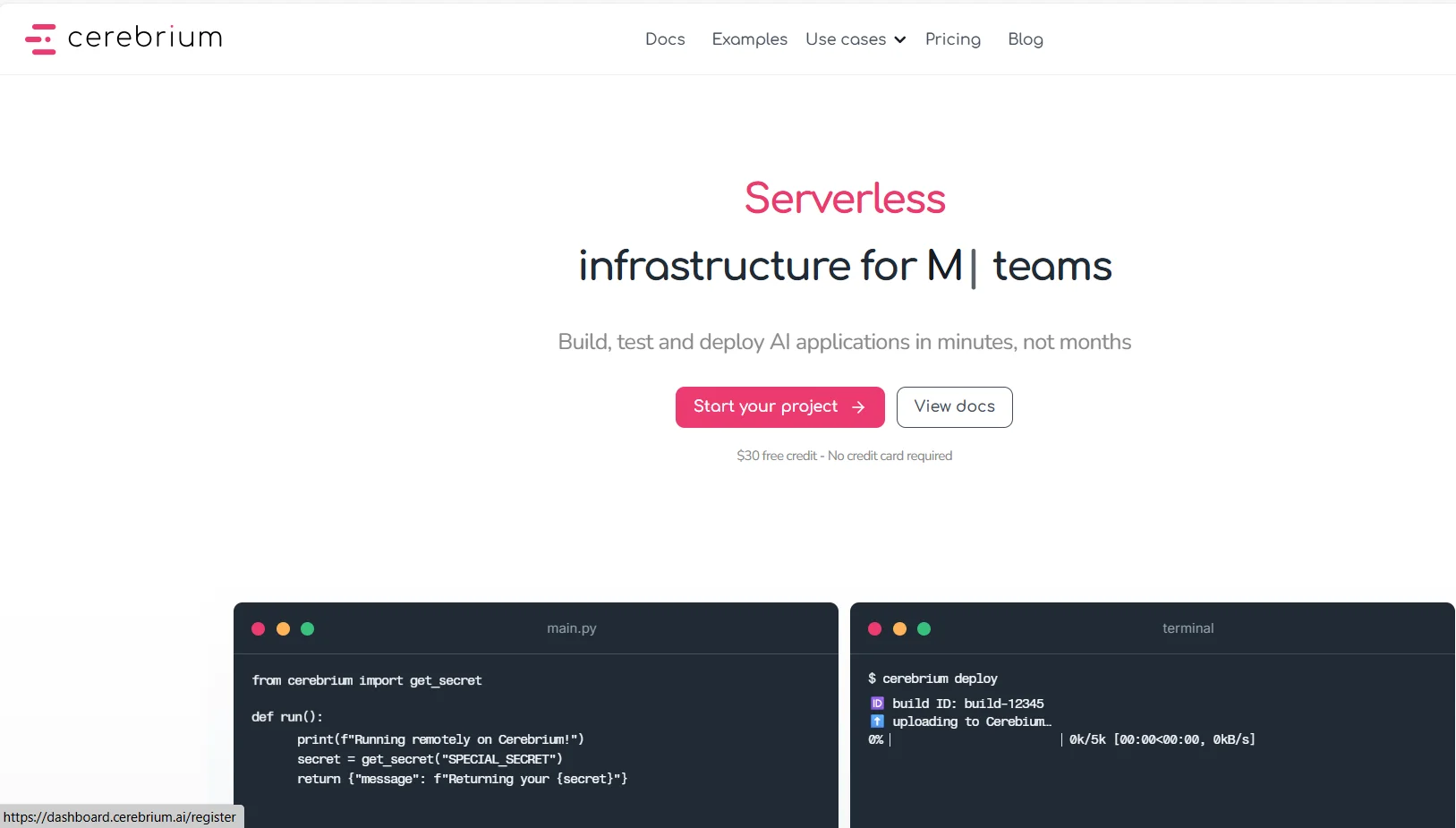
Cerebrium is a serverless platform for deploying and managing AI models at scale. With a focus on simplicity and cost-effectiveness, it enables developers to run machine learning models without managing infrastructure. The platform offers serverless GPU and CPU inference, global deployment, and a prebuilt model library, making it easier for developers to deploy AI applications quickly and efficiently. Cerebrium’s pay-as-you-go pricing model ensures flexibility, and the platform automates key tasks like scaling and infrastructure management, allowing developers to focus on building innovative AI solutions. Whether you're experimenting or deploying large-scale production applications, Cerebrium offers the tools needed for smooth deployment and operation of AI models.
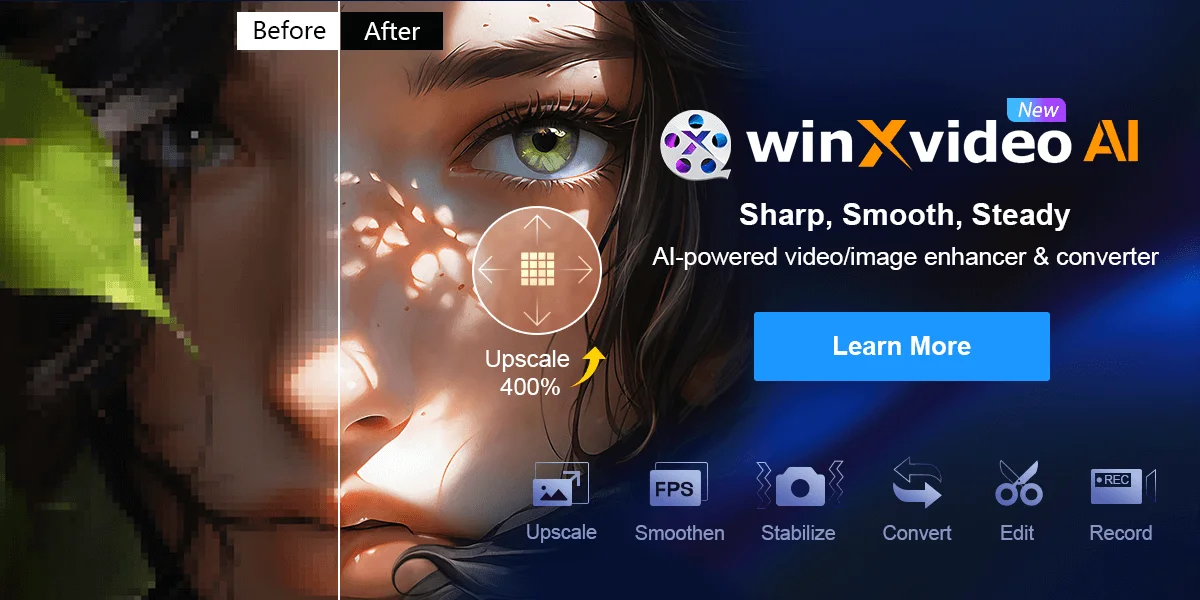
Your complete toolkit powered by AI. Enhance old, low-quality, noisy or blurry media file, upscale to 4K, stabilize shaky video, boost frame rate to 120/240fps, convert, compress, record, and edit 4K/8K/HDR video with full GPU acceleration, achieving cinema-grade visuals in every frame.
CodeAnt AI: An artificial intelligence platform for code inspection and review, as part of software development, review automation, software security, and code quality optimization tools in production environments.
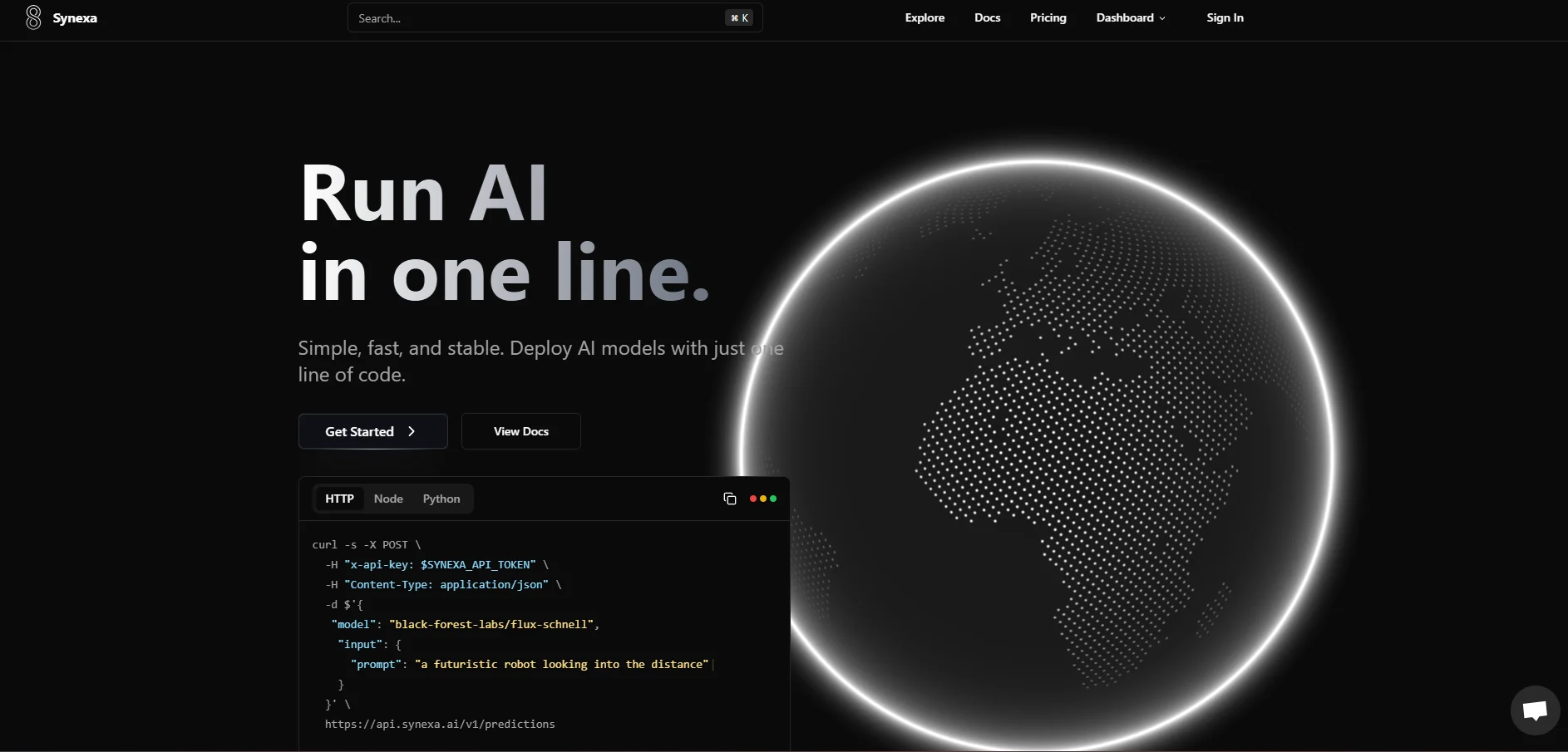
Synexa AI provides an integrated runtime environment for generative AI models, with a focus on high performance and reliability in production environments. Users can run image, video, and 3D generation models directly via ready-made and fast APIs. The platform supports multiple models such as FLUX.1 in various versions for image generation, Stable Diffusion XL, Wan 2.1 video models, and Hunyuan 3D models. Synexa AI offers the ability to integrate these models directly into applications, websites, and digital services without the need to manually manage the infrastructure, with support for Serverless operation to automatically shut down resources when not in use.
ClawCloud Run is an end-to-end cloud platform that simplifies the operation and deployment of cloud applications and services, with automated resource management without the need to manually set up servers or deal with complex details such as scaling and provisioning.
Panto AI is an AI tool dedicated to improving code quality within development teams that automatically analyzes code for bugs and vulnerabilities and provides intelligent and contextual feedback on pull requests, helping to improve quality, reduce the time spent on manual reviews, and ensure the code produced is safer and more efficient before deployment.
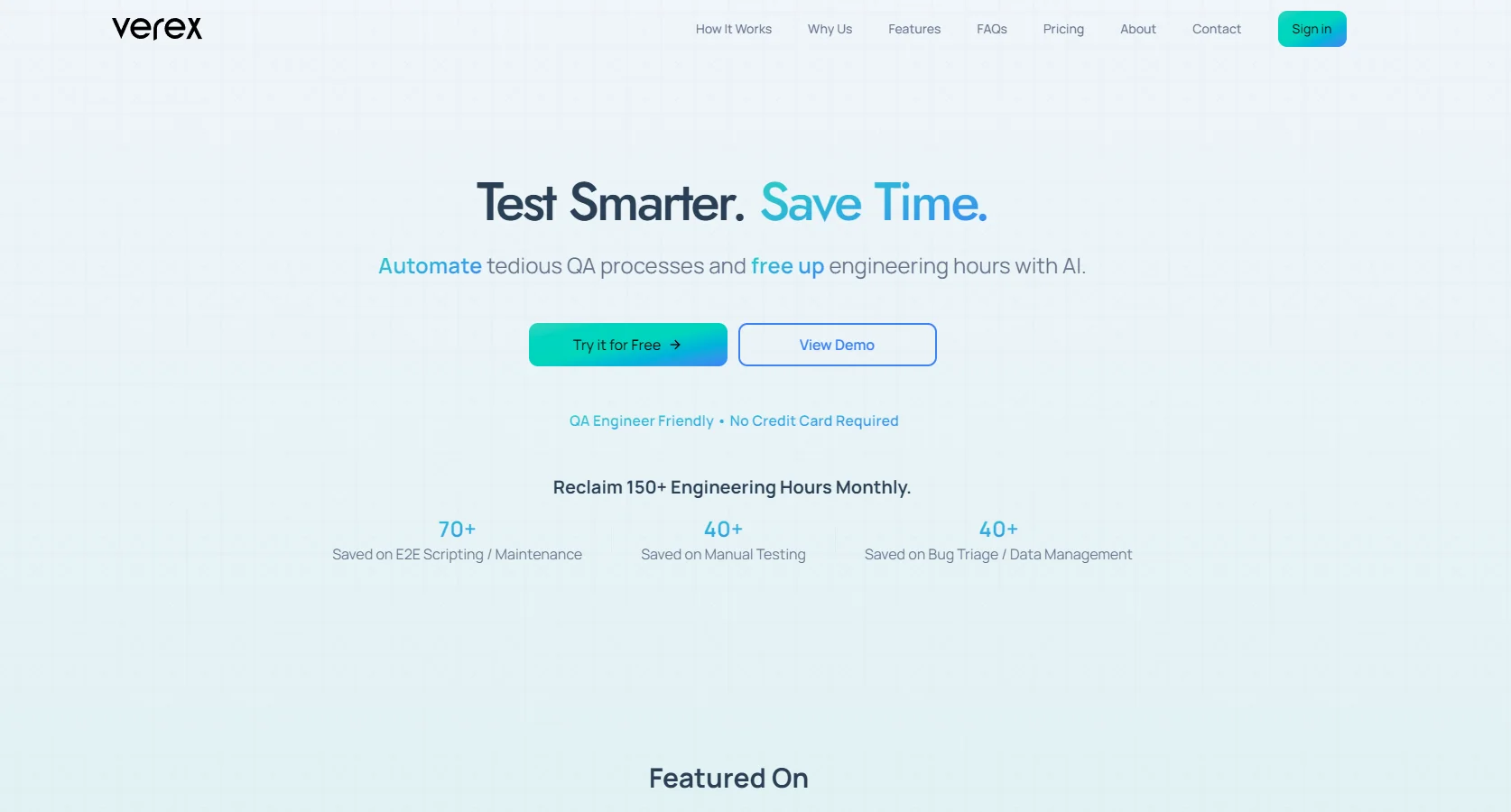
Verex is an AI platform for QA test automation that enables teams to automatically create and run web interface tests using natural language without coding, with real-time reporting, bug tracking, and integration with development tools.
Pig.dev was a platform that aimed to automate Windows desktop applications using artificial intelligence, so that an AI agent could be instructed to execute commands such as clicking and entering text via a chat or programming interface.